


Editors Pick
Latest Article

Top 10 Best Countries to Study Abroad
Top 10 Best Countries to Study Abroad
The top 10 best countries to study abroad currently include Canada, the United States, the United Kingdom, Australia, Germany, France, Japan, South Korea, China, and New Zealand. These destinations are consistently ranked among the best countries for international students because they offer high-quality education, strong job opportunities, globally recognised degrees, and post-study work visas.
Many international students prefer these countries as they provide English-taught programs, scholarships, safe student environments, modern campuses, and clear pathways to work after graduation. These study abroad destinations also offer excellent career growth in high-demand fields including engineering, IT, business, healthcare, finance, science, and emerging technology sectors.
*Want to Study Abroad? Let Y-Axis help you through application process.
How to Choose the Best Country to Study Abroad?
To choose the best country to study abroad, compare tuition fees, living costs, scholarship availability, and career opportunities. International students should also check university rankings, course suitability, English requirements, and visa rules. If working after graduation is a priority, review post-study work visas and job demand in your field.
Lifestyle, safety, and cultural environment also matter, as these factors influence your overall student experience and comfort.
|
Factors to Compare |
What to Check |
|
Cost of Study |
Tuition fees, accommodation, living expenses |
|
Scholarships & Funding |
Fully funded, partial funding, university and government scholarships |
|
Available Courses |
Program options, subject rankings, research or internship pathways |
|
Entry Requirements |
English test scores, academic criteria, interview or entrance exams |
|
Work Opportunities |
Part-time work rules, internship availability, post-study work visa duration |
|
Career Outcomes |
Industry demand, employer connections, long-term job prospects |
Best 10 Countries to Study Abroad for International Students
The best countries to study abroad are those offering high-quality education, recognised degrees, scholarships, and opportunities to work during or after studies. International students usually prefer destinations with English-taught programs, strong job markets, and safe student environments.
Based on global rankings, affordability, student experience, and career outcomes, the top study abroad countries include:
1. Canada
Canada is one of the best countries to study abroad because of affordable tuition, a welcoming environment, and clear pathways to work after graduation. Canada is popular for programs in IT, engineering, healthcare, data science, business, and nursing.
- Post-Graduation Work Permit (PGWP) up to 3 years
- Scholarships available for international students
- Pathways available for long-term settlement
2. United States
The US offers top-ranked universities, flexible study pathways, and strong research opportunities. It is especially attractive for students in STEM, AI, cybersecurity, business, and healthcare fields.
- Optional Practical Training (OPT) with STEM extension
- Access to global companies and internships
- Leading university network and research facilities
3. United Kingdom
The UK is one of the top countries for international students due to globally recognised degrees and short course duration. One-year master’s programs make study more affordable.
- Graduate Route visa for post-study work
- Strong business, finance, healthcare, and law programs
- Home to globally ranked universities
4. Australia
Australia offers high-quality education, scholarships, and strong post-study work rights. It is ideal for students interested in engineering, healthcare, IT, environmental science, or education.
- Graduate visa pathways
- Safe and multicultural student cities
- Part-time work rights during study
5. Germany
Germany is known for low or no tuition fees at public universities and strong engineering and STEM programs.
- Tuition-free options at many public universities
- 18-month post-study job seeker visa
- Strong links with companies like Siemens, Bosch, BMW
6. France
France offers affordable tuition and strong scholarship options for international students. It is well known for business, fashion, hospitality, and research degrees.
- English-taught programs increasing
- Scholarships through government and universities
- Strong global recognition in luxury, arts, and business
7. Japan
Japan offers high academic standards, a safe environment, and strong innovation-focused education.
- Scholarships like MEXT available
- Growing demand in robotics, AI, and engineering
- Increasing English-taught programs
8. South Korea
South Korea is becoming a preferred destination due to advanced technology, increasing English programs, and scholarship support.
- Affordable tuition and living costs
- Opportunities with global companies like Samsung and Hyundai
- Popular for engineering, biotech, IT, and gaming design
9. China
China is known for affordable study options, fully funded scholarships, and a rapidly growing education system.
- Many English-taught programs
- Strong job market in research, tech, and business
- Government and university scholarships available
10. New Zealand
New Zealand offers a safe environment, high living standards, and strong post-study work options.
- Post-study work visa available depending on qualification
- Popular for agriculture, IT, environmental science, and healthcare
- English-taught programs and supportive international student policies
Most Affordable Countries to Study Abroad for International Students
The most affordable countries to study abroad are Germany, France, China, South Korea, and Japan. These destinations are popular among international students because they offer low tuition fees, strong scholarship programs, and recognised degrees.
Many universities in these countries also provide English-taught programs, making them suitable for students who want high-quality education without high living or tuition costs.
|
Country |
Average Tuition Fees (Approx.) |
Scholarship Availability |
|
Germany |
€0 – €12,000 |
High |
|
France |
€2,500 – €15,000 |
High |
|
China |
USD 3,000 – 10,000 |
Very High |
|
South Korea |
₩5M – ₩15M |
High |
|
Japan |
¥600,000 – ¥1,200,000 |
High |
Which Country Provide 100% Scholarships for International Students?
Several of the best countries to study abroad offer fully funded scholarships for international students. These scholarships may cover tuition fees, accommodation, health insurance, and sometimes travel costs. These fully funded opportunities are highly competitive and usually available for postgraduate, research, or specialised fields.
Many international students search for these options to reduce study costs and access globally recognised qualifications without financial stress.
|
Country |
Fully Funded Scholarships |
|
Germany |
DAAD, Heinrich Böll, KAAD |
|
France |
Eiffel Excellence, Emile Boutmy |
|
China |
CSC Scholarship, Schwarzman Scholars |
|
Japan |
MEXT Scholarship, JASSO |
|
United States |
Fulbright, Knight-Hennessy |
|
United Kingdom |
Chevening, Commonwealth, Rhodes |
|
Australia |
Australia Awards, RTP |
|
Canada |
Vanier, Lester B. Pearson |
Top Global Universities to Study Abroad for International Students
Many international students look for the best universities abroad that offer strong academic rankings, industry partnerships, research opportunities, and high employability outcomes. These universities consistently appear in global rankings and attract students from around the world because of their advanced facilities, international faculty, and diverse study programs.
|
QS Rank |
University |
|
1 |
Massachusetts Institute of Technology (MIT) |
|
2 |
Imperial College London |
|
3 |
Stanford University |
|
4 |
University of Oxford |
|
5 |
Harvard University |
|
6 |
University of Cambridge |
|
7 |
ETH Zurich – Swiss Federal Institute of Technology |
|
8 |
National University of Singapore (NUS) |
|
9 |
University College London (UCL) |
|
10 |
California Institute of Technology (Caltech) |
Also Read...
Top Universities offering 100% Scholarships
Most Popular Courses to Study Abroad for International Students
Many international students choose courses that offer strong global recognition, good salary potential, and clear post-study work opportunities. Selecting the right program is an important step, as it can influence career growth, employability, and long-term pathways such as work visas or residency.
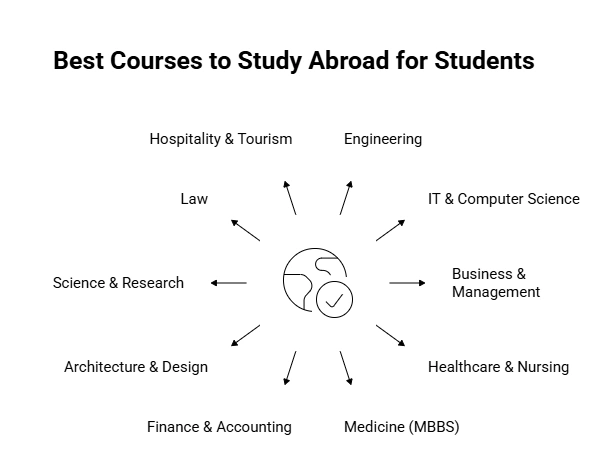
Top study abroad course choices include
- Engineering
- Information Technology (IT) & Computer Science
- Business & Management
- Healthcare & Nursing
- Medicine (MBBS)
- Finance & Accounting
- Architecture & Design
- Science & Research
- Law
- Hospitality & Tourism
Countries with Post-Study Work Visa Opportunities for International Students
Many international students look for the best countries to study abroad and work, especially where post-study visas help them gain experience and explore long-term career options. These work visas are especially beneficial for students in high-demand fields such as IT, engineering, business, healthcare, science, and technology.
|
Country |
Post-Study Work Pathway |
Duration |
|
Australia |
Temporary Graduate Visa |
2–4 years (qualification dependent) |
|
Canada |
Post-Graduation Work Permit (PGWP) |
Up to 3 years |
|
United Kingdom |
Graduate Route Visa |
2 years (3 years for PhD) |
|
United States |
OPT + STEM Extension |
1 year + up to 2 years |
|
Germany |
Job Seeker Residence Permit |
Up to 18 months |
|
France |
Job Search or Business Creation Visa |
12–24 months |
|
New Zealand |
Post-Study Work Visa |
1–3 years |
|
Ireland |
Third Level Graduate Programme |
Up to 2 years |
Eligibility Requirements for International Students to Study Abroad
Eligibility requirements vary depending on the country, university, and program, but most international students must meet academic standards, language criteria, and visa conditions. Meeting eligibility criteria early helps ensure a smooth university application and visa process for international students planning to study abroad.
Key eligibility requirements include:
- Academic transcripts and minimum grade requirements
- English language test scores (IELTS/TOEFL/PTE or accepted equivalents)
- Entrance exams (SAT, ACT, GRE, or GMAT if needed)
- Statement of Purpose (SOP)
- Letters of Recommendation (LORs)
- Proof of funds or financial capability
- Valid passport and visa eligibility
- Work experience (for certain professional or postgraduate programs)
Documents Checklist to Study Abroad for International Students
Most universities require a set of essential documents to complete the admission and visa process. Preparing these documents early helps avoid delays and ensures a smooth application experience.
Required documents typically include:
- Valid passport
- Academic transcripts and certificates
- English language test scores (IELTS, TOEFL, PTE or equivalent)
- Entrance exam scores (SAT, ACT, GRE, GMAT if required)
- Statement of Purpose (SOP)
- Letters of Recommendation (LORs)
- Resume or CV
- Proof of funds or bank statements
- University offer letter
- Medical or insurance documents (if required)
Step-by-Step Application Process to Study Abroad for International Students
Step 1: Choose your course and preferred study abroad country
Step 2: Review admission and eligibility requirements
Step 3: Prepare required documents
Step 4: Submit applications to universities before deadlines
Step 5: Wait for admission decisions and accept an offer
Step 6: Apply for your student visa and prepare for travel
*Need step-by-step guidance for studying abroad? Y-Axis can support you through every step.
FAQs
Which country is best for international students to study abroad?
The best country to study abroad depends on your goals, budget, and program. Popular choices include the United States, United Kingdom, Canada, Australia, and Germany. These destinations offer high-quality education, strong post-study work options, and great student support. Canada and Australia offer strong immigration pathways, while Germany provides affordable or low-tuition study options.
What are the top 10 best countries to study abroad?
The top 10 best countries to study abroad are the United States, United Kingdom, Canada, Australia, Germany, Ireland, New Zealand, Netherlands, France, and Sweden. These destinations are known for world-class education, global rankings, multicultural student life, and strong post-study career opportunities.
Which country offers the best post-study work options for international students?
Canada, Australia, the United Kingdom, and Germany offer some of the best post-study work options. Canada provides the PGWP, the UK offers the Graduate Route, Australia grants the Temporary Graduate Visa, and Germany allows graduates to stay and find employment, especially in STEM and engineering fields.
Which is the most affordable country to study abroad?
Germany is one of the most affordable countries to study abroad, with public universities offering low or zero tuition fees. France, Norway, and the Netherlands also provide cost-effective options. Students can further manage expenses through scholarships, part-time work, and budget-friendly study programs.
Which country has the best education system for international students?
The United States, United Kingdom, and Canada are known for world-leading education systems with top-ranked universities, advanced research opportunities, and strong industry connections. Australia, Germany, and the Netherlands also offer innovative and globally recognized education options.
Which country is best for studying and settling abroad?
Canada and Australia are top choices for studying and settling abroad due to clear pathways from study visas to permanent residency. The UK, New Zealand, and Germany also offer post-study work visas that can lead to long-term settlement based on employment and eligibility criteria.
Which country is best for scholarships for international students?
The United States, United Kingdom, Germany, and France offer some of the best scholarship opportunities, including government-funded, fully funded, and university-specific awards. Sweden, Ireland, and the Netherlands also provide excellent scholarships for master’s and research programs.
Which country is best for studying without IELTS?
Germany, France, the Netherlands, Ireland, and the UK offer alternative English requirements that allow students to study without IELTS. Canada and Australia also accept applications without IELTS in select cases. Admission depends on university policies, transcript language, and visa rules.
Which country is best for master's programs abroad?
The United States, United Kingdom, Canada, and Germany are top destinations for master’s programs abroad. The US offers wide specialization options, the UK offers one-year master’s programs, Canada provides strong job demand, and Germany is known for affordable education, especially in STEM fields.
Which country is best for international students to work while studying?
Australia, Canada, the United Kingdom, Ireland, and New Zealand allow international students to work part-time during their studies. Germany also offers excellent work opportunities, particularly in engineering and technology fields. Working while studying helps students manage expenses and gain valuable experience.
Posted on December 11 2025

Which Universities Offer January Intakes for International Students?
Which Universities Offer January Intakes for International Students?
Many universities in countries like the UK, Canada, Ireland, Europe, Australia, and the USA offer January (Winter) intake programs for international students. More than 150 institutions offer January entry options, including popular choices such as Coventry University, University of Birmingham, University of Greenwich, University of Manitoba, Centennial College, and Trinity College Dublin.
The January intake is a great option for students who need extra time to complete documents, improve language scores, or finalize finances. It offers smoother admissions, faster visa timelines, and strong availability in high-demand fields like Business, IT, Engineering, Data Science, and Health. For students who don’t want to wait until September, the January intake provides a flexible and practical pathway to start studying abroad earlier.
*Want to study abroad for January intake? Get expert guidance from Y-Axis.
Why Choose the January Intake for International Students?
The January intake is a strong option for students who prefer a flexible start date or need extra time to complete documents, English tests, or financial arrangements. With fewer applicants than the main Fall cycle, January intake universities often offer smoother admissions, faster decisions, and better course availability. Many January intake colleges also provide Winter-start pathways for Business, IT, Engineering, Data Science, and Health programs.
For those pursuing a study abroad January intake, this entry point helps maintain academic momentum while offering a timely and practical route to begin studies early in the year.
Top Countries Offering January Intake for International Students
Many leading study destinations offer a January intake, giving students a flexible alternative to the main academic cycle. These countries provide Winter-start programs across Business, IT, Engineering, Data Science, and Health, making the study abroad January intake a strong early-year option.
United Kingdom (UK)
The UK has 70+ January intake universities offering Business, IT, Engineering, Health, and postgraduate programs. With clear admission routes and fast visa decisions, the UK is one of the most popular choices for the January intake.
Canada
More than 80 January intake colleges in Canada open Winter admission for diplomas, undergraduate degrees, postgraduate programs, and co-ops. Canada is preferred for career-focused courses, flexible timelines, and smooth processing.
Ireland
Ireland offers January entry mainly for Business, IT, Health, and STEM programs. With strong postgraduate pathways and excellent employment outcomes, it’s a growing choice for the study abroad January intake.
Australia
Australia’s early-year (Feb/March) intake functions like January and offers top programs in IT, Engineering, Business, and Health. It provides strong graduate outcomes and globally recognised degrees.
Europe
Countries like Germany, France, Finland, and Austria offer January/Winter intakes for Engineering, IT, and Business programs. Europe stands out for affordable tuition, research opportunities, and English-taught courses.
United States (USA)
The USA’s January intake aligns with the Spring Semester, offering wide availability across Business, Computer Science, Engineering, and STEM fields. Flexible structures and strong support make it a reliable option.
Best Universities Offering January Intake for International Students
Many leading January intake universities across the UK, Canada, Ireland, Europe, Australia, and the USA open Winter-start programs for international students. These institutions offer strong academic pathways in Business, IT, Engineering, Data Science, and Health, making the study abroad January intake a flexible alternative to the main Fall cycle.
|
Country |
University |
|
United Kingdom (UK) |
Coventry University |
|
University of Birmingham |
|
|
University of Greenwich |
|
|
Northumbria University |
|
|
Teesside University |
|
|
University of Westminster |
|
|
Canada |
University of Manitoba |
|
Centennial College |
|
|
Durham College |
|
|
Seneca College |
|
|
Fanshawe College |
|
|
University of Saskatchewan |
|
|
Ireland |
Trinity College Dublin |
|
University of Galway |
|
|
University of Limerick |
|
|
Dublin City University |
|
|
Germany |
SRH University |
|
Berlin International University |
|
|
France |
Paris Sciences et Lettres (PSL) |
|
Finland |
University of Helsinki |
|
Austria |
University of Vienna |
|
Australia |
Monash University |
|
RMIT University |
|
|
University of Melbourne |
|
|
USA |
Michigan State University |
|
University of Arizona |
|
|
Oregon State University |
|
|
University of South Florida |
*Searching for the best January intake universities? Get expert support from Y-Axis.
Most Popular Courses Offered in the January Intake for International Students
Many January intake universities provide a wide selection of programs that allow students to begin their studies without waiting for the main academic cycle. These January intake courses are available across undergraduate, postgraduate, diploma, and pathway levels, making the Winter intake a flexible option for diverse goals.
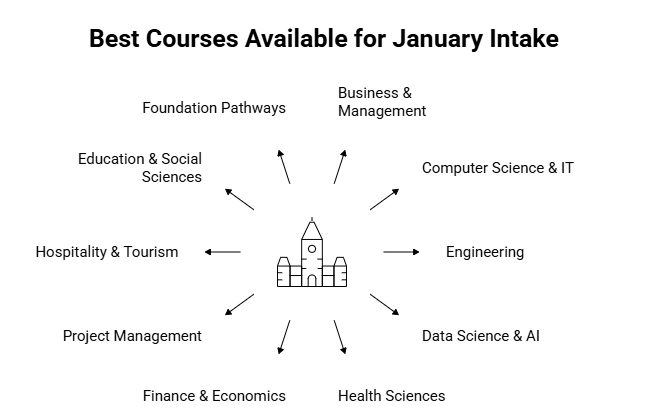
Some of the top programs available across January intake colleges include:
- Business & Management
- Computer Science, IT & Software Engineering
- Engineering
- Data Science, Analytics & Artificial Intelligence
- Health Sciences, Nursing & Public Health
- Finance, Accounting & Economics
- Project Management & Supply Chain
- Hospitality & Tourism
- Education & Social Sciences
- Foundation, Diploma & Pre-Master’s Pathways
January Intake Application Timeline for International Students
Applying to the January intake requires early planning, as many universities begin reviewing applications months in advance. A well-structured January intake application timeline helps students meet admission and visa deadlines smoothly. Most applicants should begin preparing 6–9 months before the start date.
|
Stage |
Recommended Timeline |
|
Research & Shortlisting |
May – July |
|
Prepare Documents |
June – September |
|
Submit Applications |
September – October |
|
Receive Offers & Arrange Finances |
October – November |
|
Apply for Student Visa |
November – December |
|
Travel & Pre-Departure |
December – January |
Eligibility Requirements to Apply for January Intake Universities
To apply for the January intake, students must meet specific academic and language requirements set by each institution. While criteria vary, most January intake universities follow a similar structure for undergraduate, postgraduate, and diploma programs.
Key Eligibility Requirements include:
- Academic transcripts that meet the program’s minimum entry score
- English test results (IELTS, TOEFL, PTE, or accepted alternatives)
- Statement of Purpose (SOP) explaining goals and motivation
- Letters of Recommendation (LORs) for postgraduate courses
- Updated CV/Resume for PG and MBA programs
- Valid passport for admission and visa processing
- Proof of funds as required by visa guidelines
- Additional documents, such as portfolios or work experience, for selected programs
Scholarships for January Intake International Students
Many January intake universities offer scholarships to support international students starting in the Winter cycle. Funding options include merit-based awards, entrance scholarships, program-specific grants, and external government-funded opportunities. Students applying early have the strongest chances, as many January intake scholarships close ahead of regular admission deadlines.
Popular scholarship options linked to the January intake include institutional awards from universities in the UK, Canada, Ireland, Europe, and the USA, along with major programs such as Chevening, Commonwealth Scholarships, and Erasmus+. These scholarships help reduce overall costs and make the study abroad January intake more accessible for qualified applicants.
Also Read...
Top Universities offering 100% Scholarships
Is January Intake a Good Choice for International Students?
Yes, the January intake is a strong option for students who want a flexible start date, smoother admissions, and more time to prepare documents or English scores. Many January intake universities offer excellent program availability in Business, IT, Engineering, Data Science, and Health, making it a valuable alternative to the main Fall intake.
With reduced competition, faster decisions, and easier timelines, the study abroad January intake provides a practical and timely pathway for students planning to begin their studies early in the year.
Step-by-Step Application Process for the January Intake
Step 1: Research January intake courses and shortlist universities
Step 2: Prepare documents and complete your English test
Step 3: Submit applications before priority deadlines
Step 4: Track applications, accept offers, and meet conditions
Step 5: Arrange finances and apply for your student visa
Step 6: Complete pre-departure tasks and prepare for your January start
*Need step-by-step guidance for January intake? Get expert support from Y-Axis professionals.
FAQs
Which universities offer January intakes for international students?
January intake universities are available across major study destinations, including Canada, the UK, Australia, Ireland, and Germany. Many January intake colleges offer business, IT, engineering, and health programs for international students who prefer a Winter start. Availability varies by institution, so students should check each university’s January or Winter intake list early to confirm which programs are open.
What are the benefits of applying to January intake universities?
January intake universities provide flexible timelines, lower competition, and quicker admissions for international students. January intake colleges open selected programs for students who miss Fall deadlines or need more time for documents and tests. This intake also offers smoother processing, good scholarship opportunities, and easier planning—making it ideal for students seeking an early-year start.
Which courses are available in January intake colleges?
Common January intake courses include business, engineering, computer science, data analytics, nursing, education, hospitality, and social sciences. Many January intake universities offer Winter seats for popular undergraduate and postgraduate programs based on industry demand. Course availability differs by institution, so students should review each university’s updated January/Winter intake list before applying.
When should I apply for January intake universities?
Students should apply to January intake universities between August and October, though some institutions open applications 9–12 months earlier. Preparing documents, English scores, SOPs, and financial proof early increases admission and scholarship chances. Early applications also help avoid visa delays and secure seats in competitive programs during the January intake.
What are the admission requirements for the January intake?
January intake universities typically require academic transcripts, English proficiency scores, a Statement of Purpose, Letters of Recommendation, a resume, and valid identification. Some January intake colleges may require portfolios or work experience for specific programs. Requirements vary, so applicants should check program-specific criteria and prepare documents early for smooth processing.
Do January intake colleges offer scholarships for international students?
Yes, many January intake colleges offer merit scholarships, entrance awards, and financial aid for international students. January intake universities may provide funding based on academic performance, leadership, or strong application materials. Scholarships often have early deadlines, so applying quickly increases the chances of receiving financial support.
Is it easier to get admission in the January intake?
Yes, January intake admissions can be easier because fewer students apply compared to the September intake. January intake colleges often have more available seats in business, IT, engineering, and health programs, offering greater flexibility. While competitive programs still require strong profiles, the January intake generally offers quicker decisions and smoother processing for early applicants.
Can I apply to January intake universities without IELTS?
Yes, some January intake universities accept alternatives such as TOEFL, PTE, Duolingo, MOI (Medium of Instruction), or university-specific English tests. Many January intake colleges also waive IELTS for students previously educated in English. However, visa requirements may still mandate language proof, so applicants must verify both university and visa rules before applying.
Which countries have January intake universities for international students?
Countries with January intake universities include Canada, the UK, Australia, Ireland, Germany, Dubai, and several European nations. January intake colleges in these regions offer Winter admission for programs in business, IT, engineering, management, and health. These destinations support flexible timelines and early-year starts, making January intake a popular choice among international students.
Is the January intake good for study abroad and career opportunities?
Yes, the January intake is a strong choice for study abroad because January intake universities offer the same academic quality, internships, co-op options, and career pathways as the September intake. January intake colleges provide flexible start dates, smaller class sizes, and faster processing. It is ideal for students who want to begin earlier in the year while benefiting from strong employment and networking prospects.
Posted on December 11 2025

10 Best Countries to get Permanent Residency After Studying in Canada
10 Best Countries to get Permanent Residency After Studying in Canada
Some of the best countries to get Permanent Residency after studying in Canada include Australia, New Zealand, the UK, Germany, Ireland, the Netherlands, Portugal, Singapore, the UAE and the United States. Australia offers around 185,000 skilled migration places yearly, while Germany continues hiring talent through the EU Blue Card. The UK offers PR after five years of sponsored work, and Ireland and the Netherlands are expanding skilled migration due to shortages in IT, healthcare and finance.
These countries recognise Canadian qualifications and offer clear pathways through points-based systems, employer sponsorship or skilled visas, making them strong options for graduates seeking faster PR and global career opportunities.
*Want to settle abroad after studying in Canada? Y-Axis helps you through every step of the way.
How to Choose the Best Country for Permanent Residency (PR) After Studying in Canada?
The best country for PR after studying in Canada depends on your eligibility, job skills and how quickly you want to settle. Each country has different visa rules, PR timelines and job market demand, so comparing requirements before applying is essential.
Your occupation, experience, and language skills will strongly influence which country offers the fastest and most suitable PR pathway.

Some of the Key factors to consider for PR
- PR processing time and eligibility criteria
- Whether you need a job offer to qualify
- Skilled occupation demand and labour shortages
- Salary potential and cost of living
- Language requirements and workplace expectations
- Visa fees, PR steps and citizenship waiting period
- Career opportunities, lifestyle and long-term stability
Best 10 Countries to Get Permanent Residency (PR) After Studying in Canada
Many graduates explore PR options after studying in Canada because some countries offer faster processing, easier eligibility and clearer pathways. Several destinations recognise Canadian qualifications and actively recruit skilled workers in growing sectors like IT, healthcare, engineering and finance.
Some of the top countries that offer strong job markets, structured immigration pathways and long-term residency opportunities for graduates:
1. Australia
Australia is one of the most popular options for PR due to its points-based system and high demand for skilled workers. Jobs in IT, engineering, trades, healthcare and education have strong sponsorship and PR pathways. With Canadian education and English ability, graduates may qualify faster through visas like Skilled Independent (189), Skilled Nominated (190) or Regional (491).
2. New Zealand
New Zealand offers a clear Skilled Migrant pathway for graduates with relevant experience. It’s ideal for those seeking a simpler process and English-speaking environment. Roles in healthcare, engineering, agriculture and trades are highly prioritised, and PR eligibility can be reached faster with a recognised qualification and job offer.
3. United Kingdom (UK)
The UK allows graduates to secure PR through the Skilled Worker Visa, leading to ILR after five years. Employers actively hire skilled workers in sectors like healthcare (NHS), IT, engineering, finance and education. The UK is a strong option for those wanting global work experience in a familiar English-speaking market.
4. Germany
Germany offers the EU Blue Card for skilled workers, especially in IT, engineering, manufacturing and healthcare. English-speaking jobs are increasing, and many employers recognise Canadian qualifications. PR may be possible after a few years of work and language proficiency, making it attractive for those targeting Europe.
5. Ireland
Ireland’s Critical Skills Employment Permit provides a fast pathway to PR, especially for IT, healthcare, finance and engineering professionals. With large global companies like Google, Meta, Amazon and Pfizer hiring talent, it’s a top choice for skilled graduates seeking stability and high salaries.
6. Netherlands
The Netherlands offers the Highly Skilled Migrant Visa and EU Blue Card options for qualified professionals. With strong English usage in workplaces and demand in tech, logistics, finance and engineering, the country provides practical and structured pathways to long-term residency.
7. Portugal
Portugal offers flexible work visa options and a pathway to PR after residency. It’s popular among skilled professionals due to affordable living, increasing job opportunities and access to EU rights. Tech visas and startup pathways also make it attractive for graduates exploring innovation-focused careers.
8. Singapore
Singapore provides the Employment Pass for skilled workers in finance, tech, engineering, logistics and biotech. After gaining relevant work experience, students may apply for PR. With competitive salaries and global companies, it’s appealing for candidates seeking a fast-growing Asian market.
9. United Arab Emirates (UAE)
The UAE offers long-term residency options through skilled employment and Golden Visa programs. With tax-free salaries and demand in sectors like aviation, healthcare, IT and finance, it provides strong career opportunities, although it's not a traditional PR model.
10. United States (USA)
The U.S. offers pathways like the H-1B and employment-based Green Card for skilled workers. Careers in STEM, software engineering, healthcare and research have strong sponsorship opportunities. Though competitive, it remains one of the most attractive destinations for long-term career and migration potential.
Which Country Offers the Easiest PR After Studying in Canada?
The easiest PR country after studying in Canada depends on your skills, work experience and occupation demand. However, Australia and New Zealand are commonly seen as the easiest options because their points-based systems favour international graduates with English ability and recognised qualifications.
Germany and Ireland also offer simplified PR pathways through programs like the EU Blue Card and Critical Skills Permit, especially for IT, engineering, healthcare and finance roles. If you prefer an English-speaking environment, the UK is another strong choice, with PR (ILR) available after five years of sponsored skilled work.
*Not sure which country to choose after your studies in Canada? Get expert guidance from Y-Axis.
Can I Get Permanent Residency After Studying in Canada?
Yes, you can get Permanent Residency after studying in Canada, but eligibility depends on your work experience, occupation demand and visa pathway. Most graduates first work through a post-study work permit or skilled visa before meeting PR requirements.
Countries like Australia, Germany, the UK, Ireland and New Zealand offer clear pathways for skilled workers, especially in sectors like IT, healthcare, engineering and finance. With a recognised Canadian qualification and relevant experience, graduates often have better chances of meeting PR criteria in countries that prioritise international talent.
Top In-Demand Careers for PR After Studying in Canada
Having the right skills can make it easier to secure PR after studying in Canada, especially in countries facing major labour shortages. Jobs in technology, healthcare, engineering, trades and finance are among the most in-demand across countries like Australia, the UK, Germany, Ireland, and the U.S. If your qualification aligns with one of these priority sectors, you may have a faster and more straightforward PR pathway.
|
Sectors |
In-demand Job Roles |
|
Information Technology (IT) |
Software Developers, Cybersecurity Analysts, Data Analysts, Cloud Engineers |
|
Engineering |
Civil, Mechanical, Electrical, Aerospace, Robotics Engineers |
|
Healthcare |
Nurses, Physiotherapists, Medical Technicians, Aged Care Workers |
|
Finance & Accounting |
Accountants, Auditors, Financial Analysts, Tax Specialists |
|
Skilled Trades |
Electricians, Welders, Carpenters, Plumbers, HVAC Technicians |
|
Education |
Early Childhood Educators, STEM Teachers, Special Needs Teachers |
|
Supply Chain & Logistics |
Procurement Specialists, Logistics Coordinators, Transport Planners |
Eligibility Criteria for Permanent Residency After Studying in Canada
Eligibility criteria for PR after studying in Canada will vary depending on the country you apply to, but most skilled migration programs assess qualifications, work experience and demand for your occupation. A Canadian education and strong English skills can make the process easier, especially in countries with points-based systems or employer-sponsored pathways.
Key eligibility requirements include:
- A recognised qualification such as a diploma, bachelor’s or master’s degree.
- A job offer or relevant work experience in a skilled or in-demand occupation.
- Meeting language requirements (IELTS/TOEFL or country-specific exams).
- Proof of funds or minimum income based on visa category.
- A valid work visa or post-study work permit (if required by the country).
- A clean police clearance certificate and medical fitness.
- Meeting the minimum points score or eligibility threshold for the country’s PR pathway.
Step-by-Step Process to Apply for PR After Studying in Canada
The process to get Permanent Residency after studying in Canada depends on the country you choose, but most follow a similar structure. Planning early and meeting eligibility requirements improves your chances.
Step 1: Choose your destination country
Step 2: Check PR eligibility requirements
Step 3: Gain relevant work experience
Step 4: Meet language requirements
Step 5: Gather required documents
Step 6: Apply for a skilled visa or sponsorship pathway
Step 7: Wait for processing and approval
Step 8: Receive PR and complete settlement requirements
*Planning to apply for permanent residency after studying in Canada? Get expert guidance from Y-Axis professionals.
FAQs
Is it possible to get Permanent Residency after studying in Canada?
Yes, it is possible to get Permanent Residency after studying in Canada through pathways such as Express Entry, Provincial Nominee Programs (PNP), and work experience gained through the PGWP. A Canadian degree, skilled employment, and strong language scores increase PR chances. If CRS scores are low or competition is high, some graduates explore PR-friendly countries like Australia, New Zealand, or Germany for faster residency options.
Which country is the easiest to get PR after studying in Canada?
Some of the easiest countries to get PR after studying in Canada include Australia, New Zealand, and Germany because they offer straightforward skilled migration systems and high demand for international talent. Australia’s points-based system especially benefits students with Canadian education and work experience. The best country depends on your skills, occupation demand, and eligibility.
Can I get PR in Canada after studying or should I consider other countries?
Yes, you can get PR in Canada after studying if you qualify under Express Entry or a PNP and gain relevant work experience through a PGWP. If competition is high or CRS scores are low, it may be wise to explore alternative PR options in countries such as Australia, the UK, Germany, or Ireland. The right choice depends on job opportunities, immigration eligibility, and personal settlement goals.
What factors should I compare before choosing a country for PR after studying in Canada?
Key factors to compare include job opportunities, PR eligibility requirements, processing time, salary levels, language rules, and sponsorship pathways. You should also consider occupation demand lists, cost of living, taxes, and citizenship benefits. Countries like Australia and New Zealand use points systems, while the UK requires employer sponsorship. Matching your skills to each country’s labour demand helps you choose the best PR destination.
Is Australia a good option for PR after completing studies in Canada?
Yes, Australia is a strong PR option for graduates because its immigration points system values skilled work experience, English proficiency, and international education. High-demand fields include IT, healthcare, engineering, and trades. Students often apply through subclasses 189, 190, or 491, which can lead to PR. Many choose Australia for faster processing and clear settlement pathways.
Can I get PR in the UK after studying in Canada?
Yes, you can get PR in the UK after studying in Canada if you secure a Skilled Worker Visa. After five years of sponsored employment, you may qualify for Indefinite Leave to Remain (ILR), which is equivalent to PR. The UK has rising demand in healthcare, IT, finance, engineering, and teaching fields, making it an attractive PR alternative for Canadian graduates.
Is the United States a viable PR option for graduates after Canada?
Yes, the United States can be a viable PR option, particularly for those in technology, healthcare, engineering, or research. Common pathways include H-1B, TN (for eligible nationalities), and employment-based Green Cards. Although competitive, the U.S. offers high salaries and strong career growth. Success largely depends on employer sponsorship and occupation demand.
Can I apply for PR in Europe after studying in Canada?
Yes, you can apply for PR in Europe after studying in Canada, especially in countries like Germany, Ireland, Portugal, and the Netherlands. Many European countries offer the EU Blue Card for skilled professionals in IT, engineering, STEM, and healthcare. Some require local language knowledge, while others accept English-speaking applicants. Europe offers strong career growth and long-term residency pathways.
How long does it take to get PR after studying in Canada?
PR timelines vary by country. In Canada, graduates typically achieve PR within one to three years through PGWP work experience and immigration programs like Express Entry or PNP. Australia and New Zealand may offer PR within one to two years depending on points and skilled occupation demand. The UK provides PR (ILR) after five years, while European countries may take two to five years. Planning early improves your chances.
What skills help international students get PR faster after studying in Canada?
Skills in high-demand fields such as IT, engineering, nursing, trades, finance, and data science help international students secure PR faster after studying in Canada. Strong English proficiency, industry experience, certifications, and employer sponsorship further boost PR success. Countries prioritize skilled workers who meet labour shortages, making a strong skillset essential for achieving Permanent Residency in Canada or abroad.
Posted on December 11 2025
Which Universities Offer January Intakes for International Students?
Which Universities Offer January Intakes for International Students?
Many universities in countries like the UK, Canada, Ireland, Europe, Australia, and the USA offer January (Winter) intake programs for international students. More than 150 institutions offer January entry options, including popular choices such as Coventry University, University of Birmingham, University of Greenwich, University of Manitoba, Centennial College, and Trinity College Dublin.
The January intake is a great option for students who need extra time to complete documents, improve language scores, or finalize finances. It offers smoother admissions, faster visa timelines, and strong availability in high-demand fields like Business, IT, Engineering, Data Science, and Health. For students who don’t want to wait until September, the January intake provides a flexible and practical pathway to start studying abroad earlier.
*Want to study abroad for January intake? Get expert guidance from Y-Axis.
Why Choose the January Intake for International Students?
The January intake is a strong option for students who prefer a flexible start date or need extra time to complete documents, English tests, or financial arrangements. With fewer applicants than the main Fall cycle, January intake universities often offer smoother admissions, faster decisions, and better course availability. Many January intake colleges also provide Winter-start pathways for Business, IT, Engineering, Data Science, and Health programs.
For those pursuing a study abroad January intake, this entry point helps maintain academic momentum while offering a timely and practical route to begin studies early in the year.
Top Countries Offering January Intake for International Students
Many leading study destinations offer a January intake, giving students a flexible alternative to the main academic cycle. These countries provide Winter-start programs across Business, IT, Engineering, Data Science, and Health, making the study abroad January intake a strong early-year option.
United Kingdom (UK)
The UK has 70+ January intake universities offering Business, IT, Engineering, Health, and postgraduate programs. With clear admission routes and fast visa decisions, the UK is one of the most popular choices for the January intake.
Canada
More than 80 January intake colleges in Canada open Winter admission for diplomas, undergraduate degrees, postgraduate programs, and co-ops. Canada is preferred for career-focused courses, flexible timelines, and smooth processing.
Ireland
Ireland offers January entry mainly for Business, IT, Health, and STEM programs. With strong postgraduate pathways and excellent employment outcomes, it’s a growing choice for the study abroad January intake.
Australia
Australia’s early-year (Feb/March) intake functions like January and offers top programs in IT, Engineering, Business, and Health. It provides strong graduate outcomes and globally recognised degrees.
Europe
Countries like Germany, France, Finland, and Austria offer January/Winter intakes for Engineering, IT, and Business programs. Europe stands out for affordable tuition, research opportunities, and English-taught courses.
United States (USA)
The USA’s January intake aligns with the Spring Semester, offering wide availability across Business, Computer Science, Engineering, and STEM fields. Flexible structures and strong support make it a reliable option.
Best Universities Offering January Intake for International Students
Many leading January intake universities across the UK, Canada, Ireland, Europe, Australia, and the USA open Winter-start programs for international students. These institutions offer strong academic pathways in Business, IT, Engineering, Data Science, and Health, making the study abroad January intake a flexible alternative to the main Fall cycle.
|
Country |
University |
|
United Kingdom (UK) |
Coventry University |
|
University of Birmingham |
|
|
University of Greenwich |
|
|
Northumbria University |
|
|
Teesside University |
|
|
University of Westminster |
|
|
Canada |
University of Manitoba |
|
Centennial College |
|
|
Durham College |
|
|
Seneca College |
|
|
Fanshawe College |
|
|
University of Saskatchewan |
|
|
Ireland |
Trinity College Dublin |
|
University of Galway |
|
|
University of Limerick |
|
|
Dublin City University |
|
|
Germany |
SRH University |
|
Berlin International University |
|
|
France |
Paris Sciences et Lettres (PSL) |
|
Finland |
University of Helsinki |
|
Austria |
University of Vienna |
|
Australia |
Monash University |
|
RMIT University |
|
|
University of Melbourne |
|
|
USA |
Michigan State University |
|
University of Arizona |
|
|
Oregon State University |
|
|
University of South Florida |
*Searching for the best January intake universities? Get expert support from Y-Axis.
Most Popular Courses Offered in the January Intake for International Students
Many January intake universities provide a wide selection of programs that allow students to begin their studies without waiting for the main academic cycle. These January intake courses are available across undergraduate, postgraduate, diploma, and pathway levels, making the Winter intake a flexible option for diverse goals.
Some of the top programs available across January intake colleges include:
- Business & Management
- Computer Science, IT & Software Engineering
- Engineering
- Data Science, Analytics & Artificial Intelligence
- Health Sciences, Nursing & Public Health
- Finance, Accounting & Economics
- Project Management & Supply Chain
- Hospitality & Tourism
- Education & Social Sciences
- Foundation, Diploma & Pre-Master’s Pathways
January Intake Application Timeline for International Students
Applying to the January intake requires early planning, as many universities begin reviewing applications months in advance. A well-structured January intake application timeline helps students meet admission and visa deadlines smoothly. Most applicants should begin preparing 6–9 months before the start date.
|
Stage |
Recommended Timeline |
|
Research & Shortlisting |
May – July |
|
Prepare Documents |
June – September |
|
Submit Applications |
September – October |
|
Receive Offers & Arrange Finances |
October – November |
|
Apply for Student Visa |
November – December |
|
Travel & Pre-Departure |
December – January |
Eligibility Requirements to Apply for January Intake Universities
To apply for the January intake, students must meet specific academic and language requirements set by each institution. While criteria vary, most January intake universities follow a similar structure for undergraduate, postgraduate, and diploma programs.
Key Eligibility Requirements include:
- Academic transcripts that meet the program’s minimum entry score
- English test results (IELTS, TOEFL, PTE, or accepted alternatives)
- Statement of Purpose (SOP) explaining goals and motivation
- Letters of Recommendation (LORs) for postgraduate courses
- Updated CV/Resume for PG and MBA programs
- Valid passport for admission and visa processing
- Proof of funds as required by visa guidelines
- Additional documents, such as portfolios or work experience, for selected programs
Scholarships for January Intake International Students
Many January intake universities offer scholarships to support international students starting in the Winter cycle. Funding options include merit-based awards, entrance scholarships, program-specific grants, and external government-funded opportunities. Students applying early have the strongest chances, as many January intake scholarships close ahead of regular admission deadlines.
Popular scholarship options linked to the January intake include institutional awards from universities in the UK, Canada, Ireland, Europe, and the USA, along with major programs such as Chevening, Commonwealth Scholarships, and Erasmus+. These scholarships help reduce overall costs and make the study abroad January intake more accessible for qualified applicants.
Also Read...
Top Universities offering 100% Scholarships
Is January Intake a Good Choice for International Students?
Yes, the January intake is a strong option for students who want a flexible start date, smoother admissions, and more time to prepare documents or English scores. Many January intake universities offer excellent program availability in Business, IT, Engineering, Data Science, and Health, making it a valuable alternative to the main Fall intake.
With reduced competition, faster decisions, and easier timelines, the study abroad January intake provides a practical and timely pathway for students planning to begin their studies early in the year.
Step-by-Step Application Process for the January Intake
Step 1: Research January intake courses and shortlist universities
Step 2: Prepare documents and complete your English test
Step 3: Submit applications before priority deadlines
Step 4: Track applications, accept offers, and meet conditions
Step 5: Arrange finances and apply for your student visa
Step 6: Complete pre-departure tasks and prepare for your January start
*Need step-by-step guidance for January intake? Get expert support from Y-Axis professionals.
FAQs
Which universities offer January intakes for international students?
January intake universities are available across major study destinations, including Canada, the UK, Australia, Ireland, and Germany. Many January intake colleges offer business, IT, engineering, and health programs for international students who prefer a Winter start. Availability varies by institution, so students should check each university’s January or Winter intake list early to confirm which programs are open.
What are the benefits of applying to January intake universities?
January intake universities provide flexible timelines, lower competition, and quicker admissions for international students. January intake colleges open selected programs for students who miss Fall deadlines or need more time for documents and tests. This intake also offers smoother processing, good scholarship opportunities, and easier planning—making it ideal for students seeking an early-year start.
Which courses are available in January intake colleges?
Common January intake courses include business, engineering, computer science, data analytics, nursing, education, hospitality, and social sciences. Many January intake universities offer Winter seats for popular undergraduate and postgraduate programs based on industry demand. Course availability differs by institution, so students should review each university’s updated January/Winter intake list before applying.
When should I apply for January intake universities?
Students should apply to January intake universities between August and October, though some institutions open applications 9–12 months earlier. Preparing documents, English scores, SOPs, and financial proof early increases admission and scholarship chances. Early applications also help avoid visa delays and secure seats in competitive programs during the January intake.
What are the admission requirements for the January intake?
January intake universities typically require academic transcripts, English proficiency scores, a Statement of Purpose, Letters of Recommendation, a resume, and valid identification. Some January intake colleges may require portfolios or work experience for specific programs. Requirements vary, so applicants should check program-specific criteria and prepare documents early for smooth processing.
Do January intake colleges offer scholarships for international students?
Yes, many January intake colleges offer merit scholarships, entrance awards, and financial aid for international students. January intake universities may provide funding based on academic performance, leadership, or strong application materials. Scholarships often have early deadlines, so applying quickly increases the chances of receiving financial support.
Is it easier to get admission in the January intake?
Yes, January intake admissions can be easier because fewer students apply compared to the September intake. January intake colleges often have more available seats in business, IT, engineering, and health programs, offering greater flexibility. While competitive programs still require strong profiles, the January intake generally offers quicker decisions and smoother processing for early applicants.
Can I apply to January intake universities without IELTS?
Yes, some January intake universities accept alternatives such as TOEFL, PTE, Duolingo, MOI (Medium of Instruction), or university-specific English tests. Many January intake colleges also waive IELTS for students previously educated in English. However, visa requirements may still mandate language proof, so applicants must verify both university and visa rules before applying.
Which countries have January intake universities for international students?
Countries with January intake universities include Canada, the UK, Australia, Ireland, Germany, Dubai, and several European nations. January intake colleges in these regions offer Winter admission for programs in business, IT, engineering, management, and health. These destinations support flexible timelines and early-year starts, making January intake a popular choice among international students.
Is the January intake good for study abroad and career opportunities?
Yes, the January intake is a strong choice for study abroad because January intake universities offer the same academic quality, internships, co-op options, and career pathways as the September intake. January intake colleges provide flexible start dates, smaller class sizes, and faster processing. It is ideal for students who want to begin earlier in the year while benefiting from strong employment and networking prospects.
Posted on December 11 2025

Which Intake Is the Best to Study in the UK?
Which Intake Is the Best to Study in the UK?
The September intake is the best intake to study in the UK because it offers the most courses, the highest number of university seats, and the widest choice for international students. With more than 732,000 international students across 160+ UK universities, September is the main academic cycle where nearly all programmes open admissions. It also provides stronger scholarship options, earlier CAS timelines, smoother visa processing, and better opportunities for internships and part-time work.
January intake is a reliable alternative with good course availability, while the May intake is limited and suitable only when specific programmes are offered. The September intake remains the best choice for international students planning to study in the UK.
*Want to study in the UK? Let Y-Axis guide you through the application process.
What are the Intakes in the UK for International Students?
UK universities offer three main intakes for international students: September, January, and May. Each intake varies in course availability, application deadlines, and admission timelines, helping students choose the option that best matches their study goals and preparation.
Main Intakes in the UK for International Students are:
1. September Intake (Main Intake)
The largest and most popular intake with full course availability.
- Offers the highest number of undergraduate and postgraduate programmes
- Most universities open complete admissions during this cycle
- More scholarship opportunities and internships
2. January Intake (Mid-Year Intake)
A good option if you need more time for documents or exam preparation.
- Good course options in Business, IT, Engineering, and Health
- Less competition with more flexible deadlines
- Ideal for students who missed September or need extra preparation
3. May Intake (Summer Intake)
A smaller intake available only for selected programmes.
- Limited course options, mostly in Business and Computing
- Offered by a smaller number of universities
- Faster admission process with less competition
Why September Intake is most preferred by international students in the UK?
The September intake is the most preferred by international students because it offers a wide range of courses and the highest number of universities open for admission. Nearly all UK universities open their full programmes during this period, giving students more freedom to choose the right course and pathway. As it aligns with the UK academic year, the September intake provides better access to scholarships, early CAS issuance, and smoother visa approvals, helping students plan their applications.
Students starting in September also have strong opportunities for internships and part-time work, as many academic and hiring cycles begin at this time. With wider course availability, structured timelines and more opportunities, the September intake remains the most preferred option for international students planning to study in the UK.
How to Choose the Right Intake to Study in the UK?
Choosing the right intake is an important part of planning your studies in the UK. Each intake September, January, and May has different timelines, course options, and advantages. Reviewing your academic readiness, course availability, and personal goals can help you choose the intake that suits you best.
Application timeline for the UK study intakes:
Each intake has its own application window, so preparing early helps ensure a smooth admission and visa process.
|
Intake |
Applications open |
Course Start |
|
September intake |
October – January |
September |
|
January intake |
April – September |
January |
|
May intake |
September – January |
May |
Key factors to consider when choosing a UK intake:
Several factors influence which intake is right for you, including course availability, competition, and scholarship options.
|
Intake |
Course availability |
Chances of admission |
Scholarship opportunities |
|
September intake |
Very High |
Balanced |
High |
|
January intake |
High |
High |
Medium |
|
May intake |
Limited |
High |
Limited |
Top Universities for Main UK Intakes for International Students
Many UK universities offer different intake options for international students, mainly in September and January. While September is the primary intake with the widest course availability, a few universities also open selected postgraduate programmes in January.
|
QS Rank |
University |
Main Intakes |
|
2 |
Imperial College London |
September |
|
4 |
University of Oxford |
September |
|
6 |
University of Cambridge |
September |
|
9 |
UCL (University College London) |
September, January |
|
31 |
King’s College London |
September, January |
|
34 |
University of Edinburgh |
September |
|
35 |
University of Manchester |
September, January |
|
51 |
University of Bristol |
September |
|
56 |
London School of Economics (LSE) |
September |
|
74 |
University of Warwick |
September |
Best Courses to Study in the UK for September and January Intakes
International students can find excellent course options in both the September and January intakes. September offers the widest selection of programmes, while January provides focused postgraduate choices for students who prefer a later start or need extra preparation time.
Some of the most in-demand courses available across both intakes include:
- Business & Management
- MBA
- Computer Science & IT
- Data Science & Artificial Intelligence
- Engineering
- Finance, Accounting & Economics
- Public Health & Healthcare Management
- Marketing & Human Resource Management
- Psychology
- Hospitality & Tourism Management
*Confused which course to study in the UK? Get personalised guidance from Y-Axis.
Which UK Intake Offers the Most Scholarships for International Students?
The September intake offers the highest number of scholarships in the UK because it is the primary academic intake when universities release their full yearly scholarship funding. Most major government, university, merit-based, and need-based scholarships are aligned with September deadlines, giving students broader options and better chances of securing financial support.
Although January and May intakes do offer some scholarships, the volume and variety are significantly lower, making September the strongest intake for students seeking maximum scholarship opportunities.
Also Read…
Top 10 Scholarships to study in the UK
Eligibility Requirements to Study in the UK for International Students
International students must meet specific eligibility requirements set by UK universities and immigration authorities. While each institution may have its own criteria, the core requirements for academic qualifications, English proficiency, financial proof, and visa documentation remain similar across most programmes. Some of the key eligibility requirements include:
- Academic Qualifications: Meet the required education level, such as Class 12 for UG programmes or a recognised bachelor’s degree for PG studies.
- English Proficiency: Provide valid IELTS, PTE, TOEFL, or Duolingo scores that match your university’s minimum score requirements.
- Supporting Documents: Submit an SOP, LORs, updated CV (for PG), a valid passport, and any additional materials like portfolios or work experience.
- Financial Proof: Show sufficient funds for tuition fees and living costs through bank statements, sponsorship documents, or an approved education loan.
- Confirmation of Acceptance for Studies (CAS): Accept your offer, fulfil all conditions, and submit required compliance documents to receive your CAS from the university.
- Visa Requirements: Apply for the UK Student Visa using your CAS and provide all required documents as per UKVI guidelines.
Step-by-Step Application Process to Study in UK Intakes
Step 1: Shortlist programmes based on your interests, eligibility, budget, and preferred intake.
Step 2: Check your eligibility criteria such as academic qualifications, English test scores, and any course-specific prerequisites.
Step 3: Arrange your SOP, LORs, CV (for PG), transcripts, passport, and English test scores.
Step 4: Apply through university portals or UCAS (for UG) before the intake deadlines.
Step 5: Submit any remaining documents to accept your conditional or unconditional offer.
Step 6: Pay the initial deposit to secure your seat and begin the CAS process.
Step 7: Complete compliance checks and receive the Confirmation of Acceptance for Studies.
Step 8: Apply for the Student Visa
*Looking for step by step assistance to study in the UK? Sign up with Y-Axis to guide you through the process.
FAQs
Which intake is best to study in the UK for international students?
The September intake is the best intake to study in the UK because it offers the widest range of courses, the most university options, and stronger scholarship opportunities. It aligns with the UK academic year, which helps with internships and part-time work. January is a good alternative with moderate course availability, while the May intake is limited. For most students, September provides the strongest overall advantages.
What is the difference between September, January, and May intakes in the UK?
September is the main UK intake, offering the most courses and universities. January intake provides a good selection of programs but fewer than September. May intake is available only at selected universities with limited courses. The primary differences include course availability, competition, scholarship opportunities, and application timelines. Understanding these differences helps students choose the intake that best fits their study plan and readiness.
Is September intake better than January intake in the UK?
Yes, September intake is generally better because it offers full course availability, more scholarships, and broader university participation. It aligns with the UK academic calendar, providing better opportunities for internships and campus activities. While January intake is still a strong choice, it has fewer overall options. For most students, September intake offers the greatest benefits.
Is January intake good for international students in the UK?
Yes, January intake is a good option for international students who need additional time for documentation or to complete previous studies. It offers popular programs such as Business, IT, and Engineering. Although the number of available courses is fewer than September, competition is lower and timelines are more flexible. It is suitable for students who missed September deadlines or prefer a mid-year start.
Are all courses available in every UK intake?
No, not all courses are available in every intake. September offers the most programs at both undergraduate and postgraduate levels. January includes many popular courses but excludes specialist fields like Medicine or Architecture. May intake is limited to selected universities and specific programs, often in Business or Computing. Students should check university-specific intake availability before applying.
How many intakes are there in UK universities for international students?
UK universities generally offer three intakes: September, January, and May. September is the largest intake with the widest course selection. January provides moderate course availability, while May is the smallest intake with a limited number of programs. Understanding how many intakes UK universities offer helps students plan applications and choose timelines that match their goals.
Which UK intake has more scholarships?
The September intake has the highest number of scholarship opportunities for international students. Universities, government programs, and external organizations typically launch major scholarship rounds for this intake. January intake offers fewer scholarships, and May intake provides very limited options. Students seeking financial support should prioritize applying for the September intake.
What is the timeline to apply for September and January intakes in the UK?
For the September intake, students should begin preparing 8–12 months in advance due to high demand and early deadlines. For the January intake, preparation should start 6–8 months before the program begins. Both timelines involve preparing documents, meeting English language requirements, and applying early for a UK student visa. Early preparation significantly increases admission and visa success rates.
Is the May intake in the UK a good option for international students?
May intake can be a suitable choice for students seeking faster admissions or smaller class sizes. However, it is the most limited intake, with fewer universities and fewer courses available. It is mostly offered for Business, Computing, and selected postgraduate programs. Students should select the May intake only if their desired program is offered.
Which intake is best for a UK student visa and faster processing?
The September intake typically provides the smoothest student visa process, as universities follow structured timelines and issue CAS letters early. January intake also offers stable processing but may face delays due to holiday-season workloads. May intake often sees faster processing because fewer students apply. Applying early for any intake increases visa success and avoids last-minute issues.
Posted on December 11 2025
Trending Article
Posted On December 11 2025
Top 10 Best Countries to Study Abroad