


Don't know what to do ?
Get Free Counseling
Last Updated: May 07, 2026
US H-1B Visa for Canadians: No Stamp Needed, Eligibility & How to Apply
The US H-1B visa allows skilled Canadian professionals to work in the United States through employer sponsorship in fields such as IT, engineering, healthcare, and finance. Canadians do not need a visa stamp, making the process faster and simpler.
Why Apply for a US H-1B Visa?
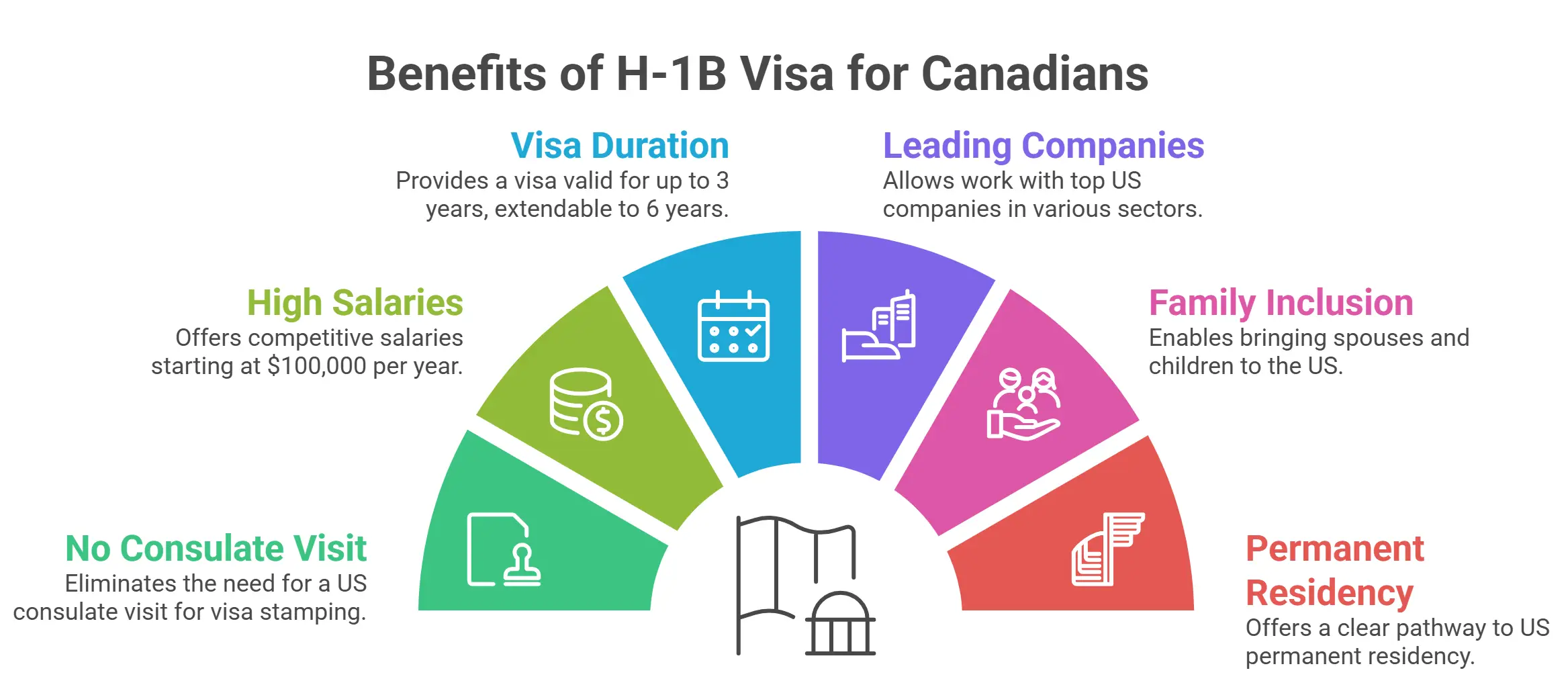
- No US consulate visit required for visa stamping
- Earn salaries starting at $100,000 per year
- Valid for up to 3 years, extendable to 6 years
- Work with leading US companies in IT, healthcare, engineering and finance
- Bring your spouse and children to the US
- Clear pathway to US permanent residency
*Planning to work in the US? Talk to Y-Axis for expert H-1B visa guidance and support.
What is the US H-1B Visa?
The US H-1B visa is a work visa that allows US employers to hire skilled foreign workers in professions such as IT, engineering, healthcare, finance, and architecture. The visa is employer-sponsored, which means a US employer must apply for you.
With an H-1B visa, you can:
- Live and work legally in the US
- Work in skilled professional jobs
- Change employers through H-1B transfer options
- Move to the US with your family members
- Apply for a US Green Card while working in the US
| Category | Details |
|---|---|
| Annual H-1B Cap | 85,000 visas per year — 65,000 regular + 20,000 for US Master's degree holders |
| Registration Fee | $215 per applicant |
| Visa Stamping for Canadians | Not required |
| Initial Visa Validity | Up to 3 years |
| Maximum Stay | Up to 6 years — can be extended further if applying for a Green Card |
| Premium Processing | $2,965 — decision within 15 business days |
| Family | Spouse and children can apply under H-4 status |
Do Canadian Citizens Need an H-1B Visa Stamp?
No. Canadian citizens do not need a visa stamp to enter the US on an H-1B visa. They can travel using their Canadian passport and H-1B approval notice without attending a US consulate appointment.
However, visa stamping is still required for:
- Non-Canadian citizens living in Canada, including permanent residents with foreign passports
- Family members on H-4 status who are not Canadian citizens before travelling to the US
US H-1B Visa Eligibility Requirements
To qualify for a US H-1B visa, you need a job offer from a US employer and a bachelor's degree in a field related to the role.
- You must be at least 18 years old
- Applicants must have a job offer from a US employer registered to sponsor H-1B workers
- The job must require at least a bachelor's degree in a field directly related to the role
- Without a degree, 12 years of relevant work experience may be accepted
- Your employer must pay at least the standard US Department of Labor wage for your role and location
*Want to check your eligibility for H-1B visa? Get a free assessment from Y-Axis.
Documents Required for a US H-1B Visa
To apply for a US H-1B visa from Canada, you must have a valid job offer from a US employer who will file the H-1B petition on your behalf. Applicants must submit educational documents, work experience records, and supporting employment documents as part of the application process.
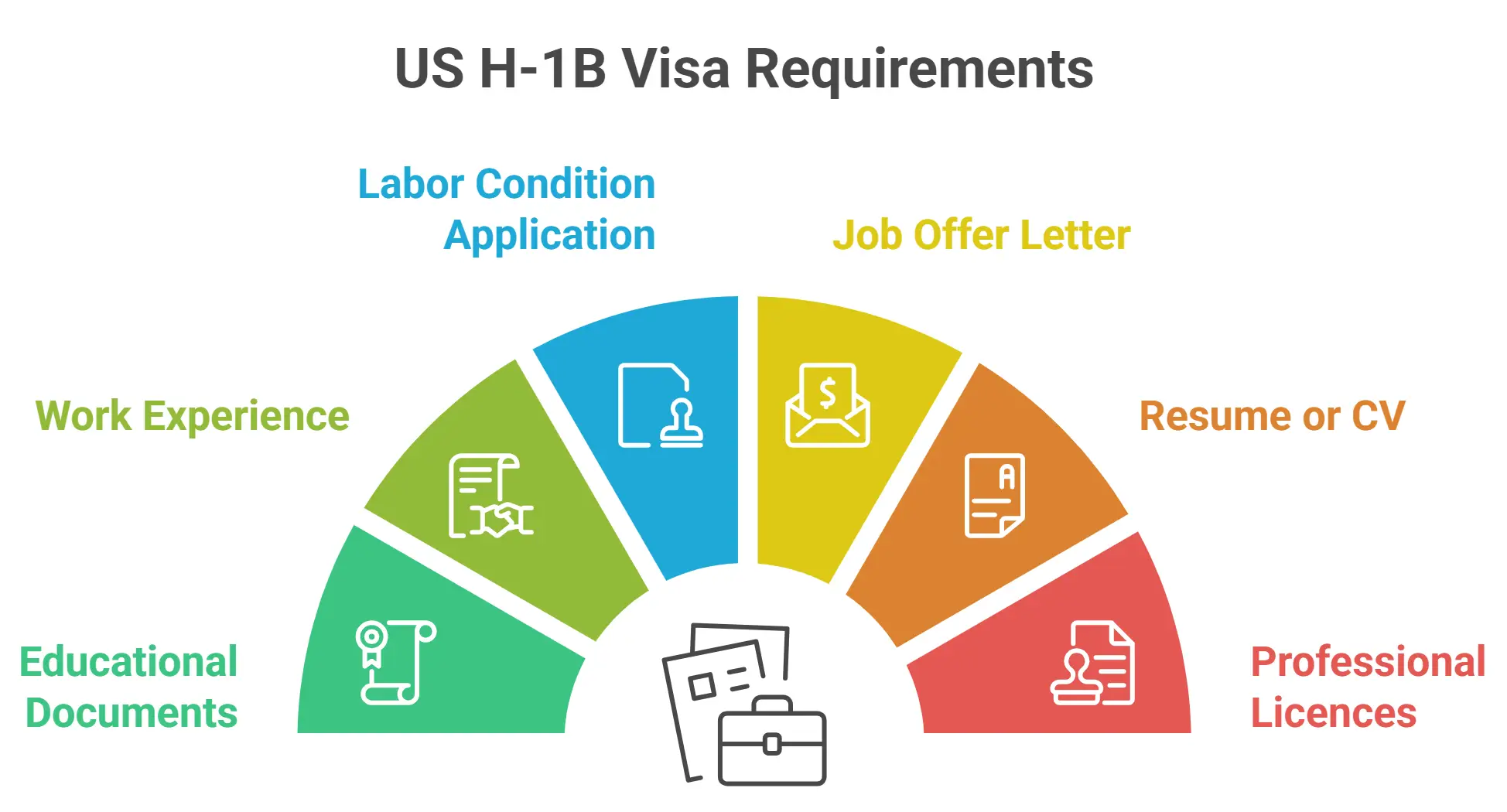
- Valid passport
- Bachelor's or Master's degree certificate and transcripts
- Proof of work experience if using experience in place of a degree
- Approved Labor Condition Application from the US Department of Labor
- Job offer letter showing your job title, salary and start date
- Resume or CV
- Professional licences or certifications required for your role
Note for Canadians: No DS-160 form, no consulate interview and no visa stamp required.
What is the US H-1B Visa Lottery and How Does It Work?
USCIS uses a selection process when registrations exceed the annual cap of 85,000 visas. In FY2026, 336,153 unique applicants registered and 118,660 were selected - a selection rate of approximately 35%.
From FY2027, USCIS replaced the old random lottery with a wage-based weighted selection system. Higher salary means more entries and a better chance of selection.
| Wage Level | Professional Level | Entries |
|---|---|---|
| Level IV | Senior experts and leadership roles | 4 entries |
| Level III | Mid-senior roles with significant responsibility | 3 entries |
| Level II | Qualified professionals with some experience | 2 entries |
| Level I | Entry level roles | 1 entry |
How to Apply for a US H-1B Visa from Canada?
Skilled professionals can apply for an H-1B visa after receiving a job offer from a US employer willing to sponsor them. The process includes employer registration, application processing, and travelling to the US for work.
Step 1: Get a job offer from a US employer willing to sponsor your H-1B visa.
Step 2: Your employer submits your H-1B registration and pays the required fee.
Step 3: If selected, your employer files your complete H-1B application with USCIS.
Step 4: USCIS reviews and processes your H-1B visa application.
Step 5: Receive your H-1B approval notice once the application is approved.
Step 6: Travel to the US and start working for your sponsoring employer.
*Want to apply for a US H-1B visa? Get expert guidance from Y-Axis professionals.
US H-1B Visa Validity and Extensions
The H-1B visa is usually granted for up to 3 years and can be extended to a maximum of 6 years. Skilled professionals applying for a US Green Card may qualify for additional extensions beyond 6 years.
- Initially valid for up to 3 years
- Extendable for another 3 years
- Additional extensions may be possible during the Green Card process
- You can continue working while your extension is being processed
- After 6 years, you must leave the US, apply for permanent residency, or switch to another visa
How to Extend an H-1B Visa:
Step 1: Check your eligibility for an extension
Step 2: Gather required documents such as your passport, approval notices, and employment records
Step 3: Your employer submits the extension application to USCIS
Step 4: Pay the required processing fees
Step 5: USCIS reviews the application and issues a decision
US H-1B Visa Fees
The cost of a US H-1B visa depends on the employer size, processing type, and government filing fees. Most H-1B visa costs are paid by the employer, while Canadians do not require a visa stamping fee.
| Fee Type | Amount (USD) |
|---|---|
| Registration Fee | $215 |
| Petition Filing Fee — Large employer | $780 |
| Petition Filing Fee — Small employer | $460 |
| Training Fee — Large employer | $1,500 |
| Training Fee — Small employer | $750 |
| Fraud Prevention Fee | $500 |
| Asylum Program Fee | $600 |
| Premium Processing (optional) | $2,965 |
| New Petition Fee (outside the US) | $100,000 |
| Visa Stamp Fee | Not applicable |
Note: The $100,000 fee applies to new H-1B petitions where you are applying from outside the US. It does not apply to extensions or transfers. Confirm with your employer if this applies to your case.
How Long Does the US H-1B Visa Take to Process?
US H-1B visa processing times depend on whether your employer chooses regular or premium processing.
| Processing Type | Timeline |
|---|---|
| Regular Processing | 2 to 6 months |
| Premium Processing | 15 business days |
USCIS may request additional documents, which can increase processing times. After approval, Canadians can travel directly to the US without attending a consulate appointment.
US H-1B Visa Salary Requirements
US employers sponsoring H-1B workers must pay salaries based on the job role, experience, and work location. Skilled professionals in sectors such as IT, healthcare, engineering, and finance often earn competitive salaries in the US.
| Sector | Typical Annual Salary (USD) |
|---|---|
| Software and IT | $130,000 – $180,000 |
| Engineering | $110,000 – $160,000 |
| Healthcare | $100,000 – $250,000+ |
| Finance and Accounting | $120,000 – $170,000 |
| Architecture | $80,000 – $120,000 |
| Scientific Research | $90,000 – $140,000 |
Also Read…
High-Paying Jobs in US for Skilled Professionals
US H-1B Visa vs TN Visa vs O-1 Visa: Which is best for Canadians?
The H-1B, TN and O-1 are the most common US work visa options for Canadians. Choosing the right visa depends on your occupation, employer situation and whether you plan to settle permanently in the US.
| Feature | H-1B | TN | O-1 |
|---|---|---|---|
| Who is Eligible | Specialty occupation with a degree | Approved professions under USMCA | Extraordinary ability in your field |
| Lottery | Yes | No | No |
| Visa stamp for Canadians | Not required | Not required | Not required |
| Validity | Up to 6 years | Up to 3 years renewable | Up to 10 years |
| Path to Green Card | Yes | Limited | Yes |
| Best for | Long-term US career and Green Card | Faster temporary work | Recognised experts avoiding lottery |
The TN visa is faster and simpler if your profession is on the approved list and you do not need a Green Card. The O-1 is a strong option for Canadians with recognised expertise who wants to avoid the lottery entirely.
H-4 Visa for Spouse and Children of H-1B Holders
Spouses and children under 21 of H-1B visa holders can live in the US under H-4 status. Canadian family members do not require visa stamping and can travel using their Canadian passport and supporting H-1B approval documents.
- Your spouse can apply for a work permit if your Green Card application has been approved or your H-1B has been extended beyond 6 years
- Children can study in US schools but are not allowed to work
- Non-Canadian family members must apply for an H-4 visa before travelling to the US
Cap-Exempt H-1B Employers - No Lottery Required
Some US employers are exempt from the annual H-1B visa cap, which means applicants do not need to enter the H-1B lottery. These employers can file H-1B petitions at any time of the year.
Cap-exempt employers include:
- Universities and colleges
- Nonprofit organisations affiliated with universities
- Nonprofit research organisations
- Government research organisations
| Feature | Cap-Subject Employer | Cap-Exempt Employer |
|---|---|---|
| Lottery required | Yes | No |
| Filing window | April 1 only | Any time of year |
| Annual cap | 85,000 visas | No cap |
| Best for | Private sector roles | Academic and research roles |
Pathway from H-1B to US Permanent Residency
The H-1B visa allows skilled professionals to apply for a US Green Card while working in the United States. This dual intent benefit makes the H-1B one of the most popular long-term work visa options for Canadians.
| Green Card Route | Eligibility | Employer Sponsorship |
|---|---|---|
| EB-2 | Master’s degree or strong professional experience | Required |
| EB-2 National Interest Waiver | Work that benefits the US | Not required |
| EB-3 | Bachelor’s degree or skilled workers | Required |
| EB-1A | Exceptional ability in your field | Not required |
*Want to migrate to US? Let Y-Axis guide you through application process.
When is the Best Time to Apply for a US H-1B Visa?
The best time to apply for a US H-1B visa is between January and early March, before the USCIS registration window opens. Preparing early gives you enough time to organize documents, secure employer sponsorship, and complete the registration process smoothly.
- January to February: Prepare important documents such as degree certificates, work experience records, passport copies, and job offer details.
- Early March: Your employer submits your H-1B registration during the USCIS registration period and pays the $215 registration fee.
- Late March: USCIS conducts the H-1B selection process and notifies selected employers by March 31.
- April 1 onwards: Selected applicants move forward with the complete H-1B petition filing process.
- October 1: Approved applicants can officially start working in the United States.
Key Things to Know About the H-1B Visa Process
The US H-1B visa offers skilled professionals a strong pathway to work in the United States. Understanding the latest H-1B process, timelines, and sponsorship requirements can help applicants and employers prepare with confidence.
For Applicants:
- The proposed wage-based H-1B selection system from FY2027 may favour higher-paying and experienced roles.
- Accurate documents help avoid delays and improve processing.
- Some new H-1B petitions filed from outside the US may involve higher government fees.
- Immigration rules can change regularly, so staying updated is important.
For Employers
- H-1B sponsorship involves filing costs and compliance requirements.
- Employers must follow US Department of Labour wage regulations.
- USCIS may request additional documents during processing.
- Retaining sponsored employees supports long-term workforce stability.
Common Mistakes to Avoid During the H-1B Visa Process
Avoiding common H-1B visa mistakes can help improve your application quality and reduce the chances of delays or rejection. Proper documentation, accurate information, and a qualifying job offer are important for a smoother USCIS review process.
- Applying for a job role that does not clearly qualify as a specialty occupation
- Submitting qualifications that do not match the H-1B job requirements
- Providing incomplete, incorrect, or inconsistent documents
- Leaving gaps in work experience or education history unexplained
- Employers not clearly demonstrating the offered salary and job details
- Failing to establish a valid employer-employee relationship with the sponsoring company
How can Y-Axis Help you?
Y-Axis supports Canadian professionals throughout the US H-1B visa process, from document preparation to application guidance and US entry support. Our team helps applicants understand the process and prepare the required documentation for a smoother application experience.
- Guidance on the US H-1B visa process
- Support with Labor Condition Application (LCA) requirements
- Guidance for H-1B extensions and renewals
- Support for H-1B to US Green Card transition
- Help with H-4 dependent applications
- Document preparation for US border entry
*Looking for complete support with your US H-1B visa from Canada? Talk to Y-Axis - the world's No. 1 overseas immigration consultancy.
Our Accreditations
.jpg) |
Don't know what to do ?
Get Free Counseling
Frequently Asked Questions