


Posted on December 11 2025
10 Best Countries to get Permanent Residency After Studying in Canada

By , Editor
Updated December 11 2025
Some of the best countries to get Permanent Residency after studying in Canada include Australia, New Zealand, the UK, Germany, Ireland, the Netherlands, Portugal, Singapore, the UAE and the United States. Australia offers around 185,000 skilled migration places yearly, while Germany continues hiring talent through the EU Blue Card. The UK offers PR after five years of sponsored work, and Ireland and the Netherlands are expanding skilled migration due to shortages in IT, healthcare and finance.
These countries recognise Canadian qualifications and offer clear pathways through points-based systems, employer sponsorship or skilled visas, making them strong options for graduates seeking faster PR and global career opportunities.
*Want to settle abroad after studying in Canada? Y-Axis helps you through every step of the way.
How to Choose the Best Country for Permanent Residency (PR) After Studying in Canada?
The best country for PR after studying in Canada depends on your eligibility, job skills and how quickly you want to settle. Each country has different visa rules, PR timelines and job market demand, so comparing requirements before applying is essential.
Your occupation, experience, and language skills will strongly influence which country offers the fastest and most suitable PR pathway.
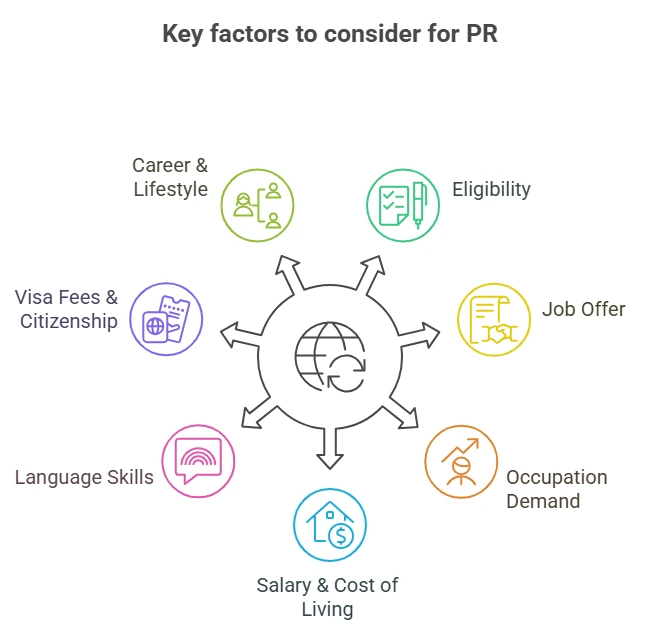
Some of the Key factors to consider for PR
- PR processing time and eligibility criteria
- Whether you need a job offer to qualify
- Skilled occupation demand and labour shortages
- Salary potential and cost of living
- Language requirements and workplace expectations
- Visa fees, PR steps and citizenship waiting period
- Career opportunities, lifestyle and long-term stability
Best 10 Countries to Get Permanent Residency (PR) After Studying in Canada
Many graduates explore PR options after studying in Canada because some countries offer faster processing, easier eligibility and clearer pathways. Several destinations recognise Canadian qualifications and actively recruit skilled workers in growing sectors like IT, healthcare, engineering and finance.
Some of the top countries that offer strong job markets, structured immigration pathways and long-term residency opportunities for graduates:
1. Australia
Australia is one of the most popular options for PR due to its points-based system and high demand for skilled workers. Jobs in IT, engineering, trades, healthcare and education have strong sponsorship and PR pathways. With Canadian education and English ability, graduates may qualify faster through visas like Skilled Independent (189), Skilled Nominated (190) or Regional (491).
2. New Zealand
New Zealand offers a clear Skilled Migrant pathway for graduates with relevant experience. It’s ideal for those seeking a simpler process and English-speaking environment. Roles in healthcare, engineering, agriculture and trades are highly prioritised, and PR eligibility can be reached faster with a recognised qualification and job offer.
3. United Kingdom (UK)
The UK allows graduates to secure PR through the Skilled Worker Visa, leading to ILR after five years. Employers actively hire skilled workers in sectors like healthcare (NHS), IT, engineering, finance and education. The UK is a strong option for those wanting global work experience in a familiar English-speaking market.
4. Germany
Germany offers the EU Blue Card for skilled workers, especially in IT, engineering, manufacturing and healthcare. English-speaking jobs are increasing, and many employers recognise Canadian qualifications. PR may be possible after a few years of work and language proficiency, making it attractive for those targeting Europe.
5. Ireland
Ireland’s Critical Skills Employment Permit provides a fast pathway to PR, especially for IT, healthcare, finance and engineering professionals. With large global companies like Google, Meta, Amazon and Pfizer hiring talent, it’s a top choice for skilled graduates seeking stability and high salaries.
6. Netherlands
The Netherlands offers the Highly Skilled Migrant Visa and EU Blue Card options for qualified professionals. With strong English usage in workplaces and demand in tech, logistics, finance and engineering, the country provides practical and structured pathways to long-term residency.
7. Portugal
Portugal offers flexible work visa options and a pathway to PR after residency. It’s popular among skilled professionals due to affordable living, increasing job opportunities and access to EU rights. Tech visas and startup pathways also make it attractive for graduates exploring innovation-focused careers.
8. Singapore
Singapore provides the Employment Pass for skilled workers in finance, tech, engineering, logistics and biotech. After gaining relevant work experience, students may apply for PR. With competitive salaries and global companies, it’s appealing for candidates seeking a fast-growing Asian market.
9. United Arab Emirates (UAE)
The UAE offers long-term residency options through skilled employment and Golden Visa programs. With tax-free salaries and demand in sectors like aviation, healthcare, IT and finance, it provides strong career opportunities, although it's not a traditional PR model.
10. United States (USA)
The U.S. offers pathways like the H-1B and employment-based Green Card for skilled workers. Careers in STEM, software engineering, healthcare and research have strong sponsorship opportunities. Though competitive, it remains one of the most attractive destinations for long-term career and migration potential.
Which Country Offers the Easiest PR After Studying in Canada?
The easiest PR country after studying in Canada depends on your skills, work experience and occupation demand. However, Australia and New Zealand are commonly seen as the easiest options because their points-based systems favour international graduates with English ability and recognised qualifications.
Germany and Ireland also offer simplified PR pathways through programs like the EU Blue Card and Critical Skills Permit, especially for IT, engineering, healthcare and finance roles. If you prefer an English-speaking environment, the UK is another strong choice, with PR (ILR) available after five years of sponsored skilled work.
*Not sure which country to choose after your studies in Canada? Get expert guidance from Y-Axis.
Can I Get Permanent Residency After Studying in Canada?
Yes, you can get Permanent Residency after studying in Canada, but eligibility depends on your work experience, occupation demand and visa pathway. Most graduates first work through a post-study work permit or skilled visa before meeting PR requirements.
Countries like Australia, Germany, the UK, Ireland and New Zealand offer clear pathways for skilled workers, especially in sectors like IT, healthcare, engineering and finance. With a recognised Canadian qualification and relevant experience, graduates often have better chances of meeting PR criteria in countries that prioritise international talent.
Top In-Demand Careers for PR After Studying in Canada
Having the right skills can make it easier to secure PR after studying in Canada, especially in countries facing major labour shortages. Jobs in technology, healthcare, engineering, trades and finance are among the most in-demand across countries like Australia, the UK, Germany, Ireland, and the U.S. If your qualification aligns with one of these priority sectors, you may have a faster and more straightforward PR pathway.
|
Sectors |
In-demand Job Roles |
|
Information Technology (IT) |
Software Developers, Cybersecurity Analysts, Data Analysts, Cloud Engineers |
|
Engineering |
Civil, Mechanical, Electrical, Aerospace, Robotics Engineers |
|
Healthcare |
Nurses, Physiotherapists, Medical Technicians, Aged Care Workers |
|
Finance & Accounting |
Accountants, Auditors, Financial Analysts, Tax Specialists |
|
Skilled Trades |
Electricians, Welders, Carpenters, Plumbers, HVAC Technicians |
|
Education |
Early Childhood Educators, STEM Teachers, Special Needs Teachers |
|
Supply Chain & Logistics |
Procurement Specialists, Logistics Coordinators, Transport Planners |
Eligibility Criteria for Permanent Residency After Studying in Canada
Eligibility criteria for PR after studying in Canada will vary depending on the country you apply to, but most skilled migration programs assess qualifications, work experience and demand for your occupation. A Canadian education and strong English skills can make the process easier, especially in countries with points-based systems or employer-sponsored pathways.
Key eligibility requirements include:
- A recognised qualification such as a diploma, bachelor’s or master’s degree.
- A job offer or relevant work experience in a skilled or in-demand occupation.
- Meeting language requirements (IELTS/TOEFL or country-specific exams).
- Proof of funds or minimum income based on visa category.
- A valid work visa or post-study work permit (if required by the country).
- A clean police clearance certificate and medical fitness.
- Meeting the minimum points score or eligibility threshold for the country’s PR pathway.
Step-by-Step Process to Apply for PR After Studying in Canada
The process to get Permanent Residency after studying in Canada depends on the country you choose, but most follow a similar structure. Planning early and meeting eligibility requirements improves your chances.
Step 1: Choose your destination country
Step 2: Check PR eligibility requirements
Step 3: Gain relevant work experience
Step 4: Meet language requirements
Step 5: Gather required documents
Step 6: Apply for a skilled visa or sponsorship pathway
Step 7: Wait for processing and approval
Step 8: Receive PR and complete settlement requirements
*Planning to apply for permanent residency after studying in Canada? Get expert guidance from Y-Axis professionals.
FAQs
Is it possible to get Permanent Residency after studying in Canada?
Yes, it is possible to get Permanent Residency after studying in Canada through pathways such as Express Entry, Provincial Nominee Programs (PNP), and work experience gained through the PGWP. A Canadian degree, skilled employment, and strong language scores increase PR chances. If CRS scores are low or competition is high, some graduates explore PR-friendly countries like Australia, New Zealand, or Germany for faster residency options.
Which country is the easiest to get PR after studying in Canada?
Some of the easiest countries to get PR after studying in Canada include Australia, New Zealand, and Germany because they offer straightforward skilled migration systems and high demand for international talent. Australia’s points-based system especially benefits students with Canadian education and work experience. The best country depends on your skills, occupation demand, and eligibility.
Can I get PR in Canada after studying or should I consider other countries?
Yes, you can get PR in Canada after studying if you qualify under Express Entry or a PNP and gain relevant work experience through a PGWP. If competition is high or CRS scores are low, it may be wise to explore alternative PR options in countries such as Australia, the UK, Germany, or Ireland. The right choice depends on job opportunities, immigration eligibility, and personal settlement goals.
What factors should I compare before choosing a country for PR after studying in Canada?
Key factors to compare include job opportunities, PR eligibility requirements, processing time, salary levels, language rules, and sponsorship pathways. You should also consider occupation demand lists, cost of living, taxes, and citizenship benefits. Countries like Australia and New Zealand use points systems, while the UK requires employer sponsorship. Matching your skills to each country’s labour demand helps you choose the best PR destination.
Is Australia a good option for PR after completing studies in Canada?
Yes, Australia is a strong PR option for graduates because its immigration points system values skilled work experience, English proficiency, and international education. High-demand fields include IT, healthcare, engineering, and trades. Students often apply through subclasses 189, 190, or 491, which can lead to PR. Many choose Australia for faster processing and clear settlement pathways.
Can I get PR in the UK after studying in Canada?
Yes, you can get PR in the UK after studying in Canada if you secure a Skilled Worker Visa. After five years of sponsored employment, you may qualify for Indefinite Leave to Remain (ILR), which is equivalent to PR. The UK has rising demand in healthcare, IT, finance, engineering, and teaching fields, making it an attractive PR alternative for Canadian graduates.
Is the United States a viable PR option for graduates after Canada?
Yes, the United States can be a viable PR option, particularly for those in technology, healthcare, engineering, or research. Common pathways include H-1B, TN (for eligible nationalities), and employment-based Green Cards. Although competitive, the U.S. offers high salaries and strong career growth. Success largely depends on employer sponsorship and occupation demand.
Can I apply for PR in Europe after studying in Canada?
Yes, you can apply for PR in Europe after studying in Canada, especially in countries like Germany, Ireland, Portugal, and the Netherlands. Many European countries offer the EU Blue Card for skilled professionals in IT, engineering, STEM, and healthcare. Some require local language knowledge, while others accept English-speaking applicants. Europe offers strong career growth and long-term residency pathways.
How long does it take to get PR after studying in Canada?
PR timelines vary by country. In Canada, graduates typically achieve PR within one to three years through PGWP work experience and immigration programs like Express Entry or PNP. Australia and New Zealand may offer PR within one to two years depending on points and skilled occupation demand. The UK provides PR (ILR) after five years, while European countries may take two to five years. Planning early improves your chances.
What skills help international students get PR faster after studying in Canada?
Skills in high-demand fields such as IT, engineering, nursing, trades, finance, and data science help international students secure PR faster after studying in Canada. Strong English proficiency, industry experience, certifications, and employer sponsorship further boost PR success. Countries prioritize skilled workers who meet labour shortages, making a strong skillset essential for achieving Permanent Residency in Canada or abroad.
Tags:
Canada PR
PR after study in Canada
Permanent residency
International students
Study to PR
Skilled migration
Work abroad
Immigration pathways
Best countries for PR
Visa options
Settlement abroad
Share
Latest Article
Popular Post
Trending Article

Posted On February 26 2026
Top 10 Countries for Hospitality Professionals: Salary, Demand & PR Opportunities Compared