


Posted on December 17 2025
Can international Students get PR in Canada?

By , Editor
Updated December 18 2025
Yes, International students can obtain Permanent Residency (PR) in Canada after completing a recognised program at a Designated Learning Institution (DLI) and meeting eligibility requirements. After graduation, they can apply for a Post-Graduation Work Permit (PGWP), which allows them to work in Canada for up to three years and gain skilled work experience. This Canadian work experience helps graduates qualify for PR through pathways such as Express Entry and Provincial Nominee Programs (PNPs).
Once students meet all requirements and their application is approved by IRCC, they are granted permanent residency, allowing them to live and work in Canada permanently.
*Want to apply for Canadian PR as a student? Get expert guidance from Y-Axis professionals.
Pathways to get Canadian PR for International Students
Canada has structured immigration pathways that allow international students to move from study to Permanent Residency (PR) after graduation. Some of the main pathways to get permanent residency are Express Entry, Provincial Nominee Programs (PNPs), and the Atlantic Immigration Program (AIP).
Main Pathways to get Canada PR for International Students are:
Express Entry
Express Entry is Canada’s main points-based immigration system for skilled workers and the most common PR route for international students. Applicants are ranked using the Comprehensive Ranking System (CRS) based on factors like age, education, work experience, and language ability.
It manages three main immigration streams:
- Canadian Experience Class (CEC): for those with Canadian work experience.
- Federal Skilled Worker Program (FSWP): for skilled professionals abroad or in Canada.
- Federal Skilled Trades Program (FSTP): for trade workers in eligible occupations.
*Want to apply for Canada Express Entry? Talk to Y-Axis for complete guidance.
Provincial Nominee Programs (PNPs)
Each Canadian province has its own Provincial Nominee Program (PNP) that selects candidates based on regional labour needs.
- International students with in-demand skills or job offers in a specific province have higher chances of getting nominated.
- A provincial nomination adds 600 CRS points, almost guaranteeing a PR invitation.
Atlantic Immigration Program (AIP)
The Atlantic Immigration Program helps graduates from designated institutions in Nova Scotia, New Brunswick, Newfoundland and Labrador, and Prince Edward Island to obtain PR if they have a job offer from a designated employer.
List of Eligible Courses for Permanent Residency (PR) in Canada
Canada offers a wide range of study programs that help international students become eligible for Permanent Residency (PR) after graduation. Many of these programs lead to in-demand occupations across sectors such as technology, healthcare, engineering, and business — all highly valued in Canada’s labour market. By choosing an eligible program, students can develop the right skills, gain valuable Canadian work experience, and enhance their PR prospects through immigration pathways like Express Entry or Provincial Nominee Programs (PNPs).
|
Field of Study |
Eligible PR Courses |
Occupations |
|
Computer Science & IT |
Software Engineering, Computer Science, Data Analytics, Cybersecurity, Information Systems |
Software Developer, Data Analyst, Systems Engineer, Cybersecurity Specialist |
|
Engineering |
Civil, Mechanical, Electrical, Chemical, Industrial, or Environmental Engineering |
Civil Engineer, Mechanical Engineer, Electrical Engineer, Project Engineer |
|
Health Sciences & Nursing |
Bachelor of Nursing, Practical Nursing, Medical Laboratory Technology, Physiotherapy |
Registered Nurse, Medical Lab Technologist, Physiotherapist, Health Services Manager |
|
Business & Finance |
Business Administration, Accounting, Finance, Marketing, Human Resource Management, MBA |
Accountant, Financial Analyst, Business Analyst, HR Specialist |
|
Artificial Intelligence & Cloud Computing |
Artificial Intelligence, Machine Learning, Cloud Computing, Data Engineering |
AI Engineer, ML Specialist, Cloud Architect, Data Scientist |
|
Supply Chain & Logistics |
Supply Chain Management, Operations Management, Logistics & Procurement |
Supply Chain Analyst, Logistics Coordinator, Operations Manager |
|
Construction & Project Management |
Construction Management, Quantity Surveying, Building Technology |
Construction Project Manager, Site Supervisor, Estimator |
|
Hospitality & Tourism Management |
Hotel Management, Culinary Arts, Tourism & Hospitality |
Chef, Restaurant Manager, Hotel Supervisor, Event Coordinator |
|
Education & Early Childhood Studies |
Early Childhood Education (ECE), Bachelor of Education (B.Ed.), Special Education |
Early Childhood Educator, Teacher, Education Coordinator |
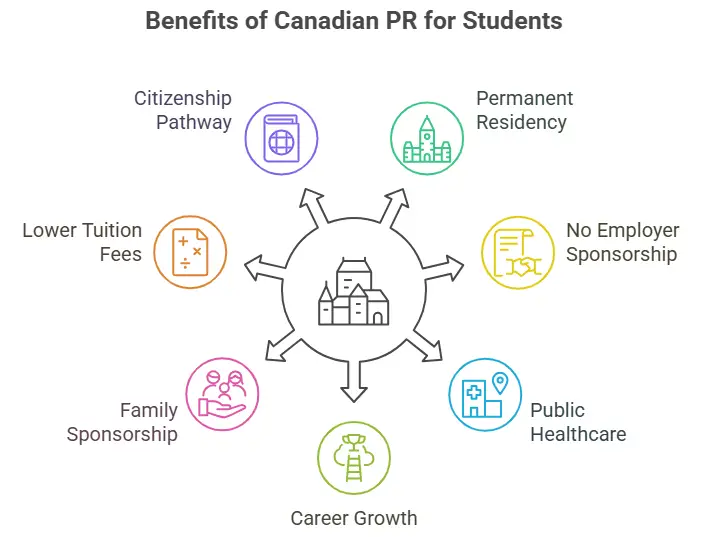
Benefits of Getting Canadian PR for International Students
Becoming a Canadian Permanent Resident (PR) gives international students long-term stability, broader career opportunities, and access to key social benefits. PR status allows graduates to fully integrate into Canadian society and plan their future with confidence.
- Live and work permanently
- No employer sponsorship required
- Access to public healthcare
- Career growth and mobility
- Sponsor eligible family members.
- Access lower domestic tuition fees for further studies.
- Pathway to Canadian citizenship.
Eligibility Criteria for International Students to Get PR in Canada
To qualify for Permanent Residency (PR) in Canada, international students must meet specific eligibility requirements. These criteria are assessed under Express Entry, Provincial Nominee Programs (PNPs), or other regional pathways.
Key eligibility requirements for Canada PR include:
- Education: You must complete a post-secondary program from a Designated Learning Institution (DLI) in Canada.
- Program Eligibility: Your study program must be full-time, at least 8 months long, and PGWP-eligible.
- Work Experience: Most PR programs require 1–2 years of skilled Canadian work experience in NOC TEER 0, 1, 2, or 3, usually gained through PGWP.
- Comprehensive Ranking System (CRS): You must meet the Comprehensive Ranking System (CRS) cut-off in Express Entry draws.
- Language Proficiency: Applicants must meet English or French language requirements through IELTS, CELPIP, TEF Canada, or TCF Canada, with higher scores improving CRS points.
- Proof of Settlement Funds: Proof of funds is required for FSWP but not for CEC applicants with Canadian work experience.
* Want to check your eligibility for Canada PR? Try the FREE Y-Axis Canada CRS Points calculator to get instant results!
Step-by-Step Process to Apply for PR in Canada for International Students
Step 1: Get Your Post-Graduation Work Permit (PGWP) and Gain Work Experience
Step 2: Gather Required Documents
Step 5: Create an Express Entry Profile or apply through PNP
Step 5: Receive an Invitation to Apply (ITA) or Provincial Nomination
Step 7: Submit PR Application with all supporting documents
Step 8: After approval, receive a Confirmation of Permanent Residence (COPR), officially granting Canadian PR
*Planning to apply for Canada PR? Y-Axis provides step by step guidance with expert support.
Processing time to get Canada PR for International Students
Canada PR processing times vary based on the immigration program and application completeness, but most student-to-PR pathways are processed within predictable timelines.
|
Pathway |
Average Processing Time |
|
Express Entry |
Up to 6 months |
|
Provincial Nominee Programs (PNPs) |
8–12 months, depending on the province |
|
Atlantic Immigration Program (AIP) |
6–12 months, based on employer and provincial approval |
Canada PR Costs for International Students
The total cost of applying for Canada PR includes government fees and mandatory third-party expenses, which may vary by applicant and family size.
|
Category |
Fee (CAD) |
|
PR Application Fee (per adult) |
950 |
|
Right of Permanent Residence Fee (RPRF) |
575 |
|
Biometrics Fee (per person) |
85 |
|
Language Test Fees |
Varies by test (IELTS, CELPIP, TEF, TCF) |
|
Medical Examination |
Varies by panel physician |
|
Police Clearance Certificates |
Varies by country |
How many points are required to get Canada PR for international students?
To get Canada PR through Express Entry, you must score at least 67 points on the Federal Skilled Worker Program (FSWP) eligibility grid to qualify for the Express Entry pool. After that, your profile is ranked using the Comprehensive Ranking System (CRS), and most international students typically need around 450–500+ CRS points to receive an Invitation to Apply (ITA), though cut-off scores vary with each draw.
Can international students get PR in Canada without a job offer?
Yes, international students can apply for Canada PR without a job offer through Express Entry, especially under the Canadian Experience Class (CEC), where eligibility is based on Canadian work experience, education, and language scores rather than employer sponsorship. However, a job offer can improve CRS points and is required for some Provincial Nominee Programs (PNPs) and the Atlantic Immigration Program (AIP).
Is Post-Graduation Work Permit (PGWP) required for getting Canada PR?
No, The PGWP is not mandatory for getting Canada PR, but it is one of the most effective pathways to PR because it allows international students to gain skilled Canadian work experience, which is a key requirement for CEC and highly valued under Express Entry and PNPs. Students without PGWP experience may still qualify, but their PR options are usually more limited.
Tips to Improve Canada PR Chances for International Students
Planning early and making informed choices during your studies can greatly improve your chances of getting Canada PR.
Key tips to increase your chances of Canadian PR include:
- Choose PGWP-eligible programs from a Designated Learning Institution (DLI).
- Gain at least 12 months of skilled Canadian work experience under NOC TEER 0–3.
- Aim for high language scores (CLB 9 or above) to boost CRS points.
- Apply through PNPs if CRS score is low under Express Entry.
*Want to migrate to Canada? Talk to Y-Axis, world’s number 1 overseas immigration consultancy for step-by- step assistance.
FAQs
Can international students get permanent residency (PR) in Canada?
Yes, international students can get permanent residency in Canada after completing a recognised Canadian degree or diploma. Studying alone does not grant PR, but it opens strong pathways such as the Canadian Experience Class and Provincial Nominee Programs. Canada actively selects graduates with Canadian education, skilled work experience, and language proficiency, making international students highly competitive PR applicants.
What are the main PR pathways for international students in Canada?
International students can apply for PR through Express Entry, Provincial Nominee Programs, and selected regional immigration streams. Most graduates first apply for a Post-Graduation Work Permit (PGWP) to gain skilled Canadian work experience. Several provinces also offer graduate-focused nomination streams. Each pathway evaluates education, work experience, language scores, and adaptability to Canada’s labour market.
Is studying in Canada enough to qualify for PR?
No, studying in Canada alone is not enough to qualify for permanent residency. International students must also meet PR requirements such as skilled Canadian work experience, English or French language proficiency, and eligibility under a recognised immigration program. However, a Canadian degree significantly strengthens PR eligibility by improving CRS scores and allowing access to post-study work permits and graduate immigration pathways.
How does Canadian work experience help international students get PR?
Canadian work experience is a key factor in PR selection. It is mandatory for the Canadian Experience Class and earns high CRS points under Express Entry. Skilled work experience shows strong labour market integration and increases PR competitiveness. Most international students need at least one year of full-time, skilled Canadian work experience after graduation to qualify for PR programs.
What is Post-Graduation Work Permit (PGWP)?
The Post-Graduation Work Permit (PGWP) allows international students to work in Canada after completing an eligible program at a designated learning institution. It helps graduates gain skilled Canadian work experience, which is essential for PR pathways such as the Canadian Experience Class and Provincial Nominee Programs. PGWP validity ranges from 8 months to 3 years, depending on the length of study.
Do international students need a job offer to get PR in Canada?
No, job offer is not mandatory for all PR programs. The Canadian Experience Class does not require a job offer if sufficient Canadian work experience is met. However, many Provincial Nominee Programs and regional pathways prefer or require a valid job offer. While not compulsory, having a Canadian job offer can improve PR eligibility and CRS ranking.
How long does it take for international students to get PR in Canada?
The PR timeline depends on the pathway chosen. Most international students take between 2 and 4 years from graduation to PR approval. This includes time spent gaining Canadian work experience and PR processing. Express Entry applications are usually processed within 6–12 months after receiving an invitation, while Provincial Nominee Programs may take longer.
Can part-time work during studies help with PR in Canada?
Part-time work during studies does not usually count toward PR points. However, it helps international students gain Canadian exposure, improve language skills, and build professional networks. The work experience counted for PR must be full-time and skilled, typically gained after graduation under a Post-Graduation Work Permit.
Which PR program is best for international students in Canada?
The Canadian Experience Class is widely considered the best PR option for international students with Canadian work experience. Provincial Nominee Programs are also effective, especially for students who studied and worked in a specific province. The best PR pathway depends on occupation, location, language scores, and work experience.
How can international students increase their chances of getting PR in Canada?
International students can improve PR chances by completing a recognised Canadian program, gaining full-time skilled work experience, and achieving strong English or French language scores. Applying under the right PR pathway, staying updated on immigration policies, and planning early during studies significantly increase the likelihood of obtaining permanent residency in Canada.
Tags:
Canada PR
International Students in Canada
PGWP
Express Entry
Canadian Experience Class
Provincial Nominee Program
Study to PR Canada
Share
Latest Article
Popular Post
Trending Article
Posted On March 05 2026
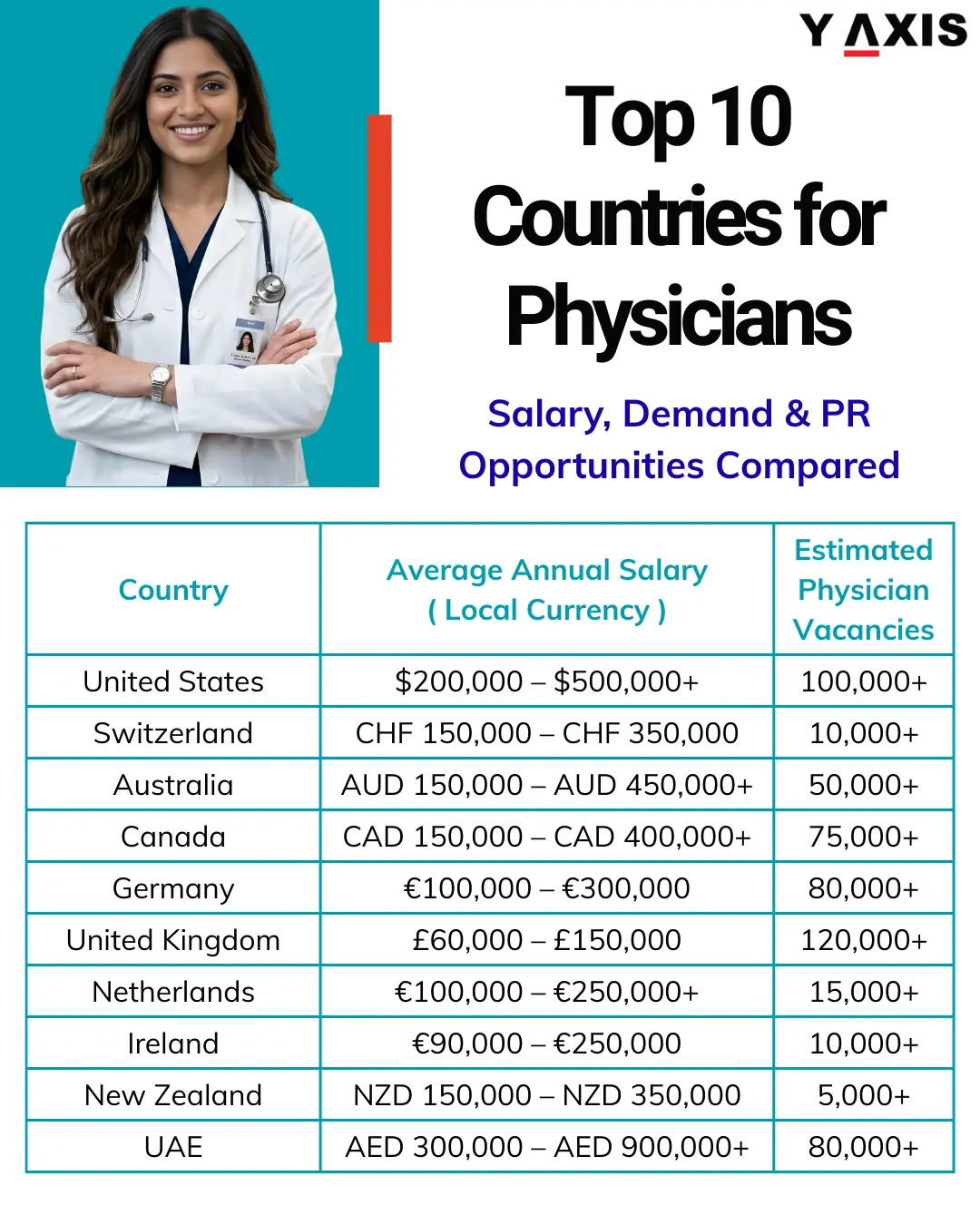
Top 10 Countries for Physicians: Salary, Demand & PR Opportunities Compared