
Posted on December 17 2025
Fast-Track Hiring Options in Germany for Skilled Professionals

By , Editor
Updated December 24 2025
Germany has four main fast-track hiring options to help fill more than 1.8 million job vacancies across high-demand sectors including IT, engineering, healthcare, logistics, manufacturing, and skilled trades. These shortages are expected to increase further, with vacancies projected to reach 7 million by 2035. To address ongoing labour shortages, the German government plans to introduce more fast-track hiring pathways.
With over €1 trillion being invested in infrastructure, energy transition, digitalisation, housing, and industrial modernisation, demand for skilled workers continues to rise. To support sustained economic growth, Germany relies on streamlined hiring processes and work visa pathways to attract international talent and strengthen its workforce.
*Looking for fast hiring options to work in Germany? Get expert guidance from Y-Axis.
Fast-Track Hiring Options for Skilled Professionals in Germany
Germany offers 4 main fast track hiring pathways designed to speed up hiring and simplify entry requirements. These pathways support both degree-qualified professionals and skilled trades workers searching for Germany jobs for skilled professionals.
The main fast-track hiring options include:
- Accelerated Skilled Worker Procedure (ASVP): Allows German employers to collaborate directly with immigration authorities to speed up qualification recognition and decision processes, often reducing approval timelines significantly.
- EU Blue Card: A fast-track option for highly qualified professionals with a recognised degree and a job offer that meets the required salary threshold, particularly in shortage occupations.
- Germany Skilled Worker Visa: Available to individuals with recognised vocational training or professional qualifications, especially in occupations experiencing long-term shortages.
- Opportunity Card (Chancenkarte): A points-based system allowing job seekers with recognised education or work experience to enter Germany and search for employment for up to one year.
Benefits of Fast-Track Hiring for Skilled Professionals in Germany
Fast-track hiring offers major benefits to skilled workers planning to relocate and work in Germany. The reduced processing time and prioritisation of labour market needs allow qualified applicants to start employment sooner compared to traditional visa routes.
Key benefits include:
- Faster visa approval and reduced wait times
- Simplified qualification recognition processes
- Priority application status for shortage occupations
- Clear long-term pathway to permanent residence and career stability
- Employer-supported documentation and onboarding
Who Is Eligible for Fast-Track Hiring in Germany for Skilled Professionals?
Eligibility for fast-track hiring depends on the visa category and whether the applicant meets the requirements under Germany’s Skilled Immigration Act. Skilled professionals applying for the Germany fast-track work visa must demonstrate that their qualifications, job offer, and salary meet Germany’s legal standards.
To qualify, applicants typically must:
- Hold a recognised qualification: Academic degrees must be recognised through ZAB, while vocational qualifications are evaluated through IHK FOSA or equivalent bodies.
- Have a valid job offer from a German employer: The position must match the applicant’s skills and profession.
- Relevant professional work experience: Employers may request proof of experience to confirm suitability for the role.
- Meet the required minimum salary level: Salary thresholds vary depending on the role and visa type, with lower requirements for shortage occupations under the EU Blue Card.
- Language requirements: Some regulated professions, especially in healthcare or public-facing roles, require German language skills at B1 or B2 level.
- Provide complete supporting documentation: Missing documents often delay processing.
Document Checklist for Fast-Track Work Visa in Germany
Preparing the correct documents is essential for faster processing and approval. Requirements may vary by visa category and embassy, but most skilled workers applying for the Germany fast-track visa should prepare the following:
- Valid passport (with remaining validity)
- Signed job offer or employment contract from a German employer
- Qualification recognition confirmation (ZAB or IHK FOSA result)
- Diploma, degree, vocational training certificates
- Academic transcripts or mark sheets (if applicable)
- Updated CV aligned with German standards
- Work experience certificates, reference letters, or proof of past employment
- Salary details (required for EU Blue Card and Skilled Worker Visa applications)
- German language certificate (only if required for specific regulated roles)
- Proof of health insurance valid from the date of entry
- Biometric passport-sized photos
Step-by-Step Fast-Track Procedure for Skilled Workers in Germany
The fast-track process follows a structured sequence designed to shorten waiting times and allow skilled professionals to begin working in Germany sooner. While some steps may vary based on visa type, the general process includes:
Step 1: Get your Qualifications Recognized
Step 2: Secure a Job Offer
Step 3: Employer Initiates the Accelerated Skilled Worker Procedure (ASVP)
Step 4: Wait for Federal Employment Agency Approval
Step 5: Receive the Pre-Approval Letter
Step 6: Submit your Visa Application
Step 7: Travel to Germany and Finalise Residence Permit
*Want to apply for fast German Work Visa? Get step-by-step support from Y-Axis.
Processing time and costs for fast-track Work Visa in Germany
Processing times for fast-track visas depend on how quickly your documents are recognised, how fast your employer submits the request, and the workload at the consulate where you apply. While timelines vary, fast-track routes are significantly quicker than standard German work visa processing.
Estimated Fast-Track Processing Times:
|
Visa Category |
Average Processing Time |
|
Accelerated Skilled Worker Procedure (ASVP) |
4–10 weeks |
|
EU Blue Card |
6–12 weeks |
|
Skilled Worker Visa |
8–16 weeks |
|
Opportunity Card (Chancenkarte) |
8–18 weeks |
Estimated Cost Breakdown:
|
Category |
Processing Cost (Approx.) |
|
Visa Application Fee |
€75–€100 |
|
ASVP Fee (Employer Pays) |
€411 |
|
Qualification Recognition Fees |
€200–€600 |
|
Certified Translations & Apostille |
€50–€300 |
|
Mandatory Health Insurance |
Depends on provider and coverage |
Top Sectors Hiring Skilled Workers in Germany
Germany continues to recruit skilled workers across various industries, particularly where long-term labour shortages have been officially identified. Digital transformation, increasing healthcare demand, renewable energy expansion, and advanced manufacturing are driving demand for experienced professionals.
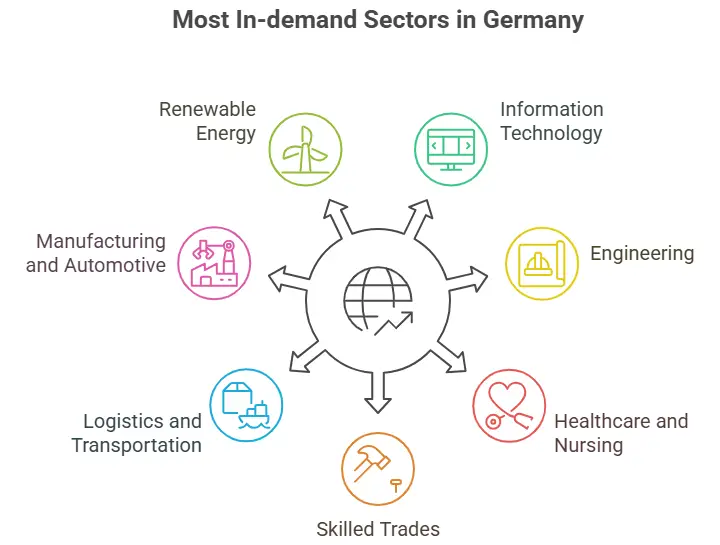
High-demand sectors offering fast-track hiring options to work in Germany with job opportunities include:
- Information Technology (IT)
- Engineering
- Healthcare and Nursing
- Skilled Trades
- Logistics and Transportation
- Manufacturing and Automotive
- Renewable Energy
Leading Companies Hiring Skilled Workers in Germany
Many employers in Germany actively recruit international professionals and support relocation through visa sponsorship, the EU Blue Card, or the Germany fast track visa process.
Some of the most notable companies hiring skilled workers include:
- Siemens: Specialising in automation, industrial engineering, energy systems, and digital technologies
- Bosch: Recruiting for roles in automotive systems, robotics, electronics, and software
- Volkswagen Group, Mercedes-Benz & BMW: Hiring automotive engineers, EV specialists, and manufacturing experts
- SAP: Recruiting cloud computing experts, cybersecurity talent, and software developers
- Deutsche Bahn (DB): Hiring for rail engineering, infrastructure projects, and logistics roles
- Charité & Helios Kliniken: Employing doctors, nurses, and specialised healthcare professionals
- DHL & Deutsche Post: Hiring logistics staff, supply chain analysts, and transport roles
- Infineon Technologies: Recruiting microelectronics, semiconductor, and hardware specialists
Pathways to Permanent Residence After Fast-Track Hiring
Fast-track hiring does more than support employment — it also creates a pathway toward long-term residence and settlement in Germany. Skilled professionals who enter Germany through fast-track hiring systems, the EU Blue Card or the Germany work visa for skilled workers may become eligible for permanent residence once they meet residency, employment, and language requirements.
Typical permanent residence pathways include:
- EU Blue Card Holders: Eligible for permanent residence after 21 months with B1 German language skills, or 33 months with basic level German (A1–A2).
- Skilled Worker Visa Holders: May apply after four years of qualified employment in Germany.
- Experienced Researchers and Highly Skilled Professionals: Some may qualify earlier depending on role and compensation level.
- Family Members: Spouses and dependents may also become eligible for permanent residency after meeting the required residency duration and language criteria.
Tips to Improve Your Chances of Successful Fast-Track Hiring
To increase your approval chances and avoid avoidable delays during the Germany fast track visa process, applicants should prepare documentation early and understand requirements clearly.
- Start qualification recognition early, as this is often the most time-sensitive step.
- Ensure your job offer closely matches your qualifications and professional experience.
- Verify that your salary meets the required threshold, especially if applying for the EU Blue Card.
- Prepare certified translations of documents not in German or English.
- Book embassy appointments early, especially during peak scheduling periods.
- Maintain communication with your future employer, as they play a critical role in the ASVP process.
*Planning to migrate to Germany? Get expert guidance from Y-Axis at every step of the process.
FAQs
What is the fast-track hiring program in Germany for skilled workers?
The fast-track hiring program in Germany allows skilled workers to move faster through the visa and hiring process. It speeds up qualification recognition, work permit approval, and visa appointments. This pathway is useful for applicants applying for the Germany work visa for skilled workers or the Germany fast track visa. It helps fill skilled labour shortages and allows qualified professionals to start working in Germany sooner.
Who is eligible for Germany’s fast-track work visa process?
You are eligible for the Germany fast-track hiring process if you have a valid job offer from a German employer and recognized qualifications. Skilled workers in IT, healthcare, engineering, logistics, and trades benefit the most. Eligibility also includes meeting the requirements for the Germany work visa for skilled workers or EU Blue Card. The employer must begin the fast-track process on behalf of the applicant.
How long does the Germany fast-track visa take?
The Germany fast-track visa typically takes around 2–4 months, depending on document readiness and embassy appointments. It is faster than the standard visa process and helps skilled workers start jobs sooner. Processing time may vary based on qualification recognition and employer paperwork. For many applicants, this pathway is one of the quickest ways to secure work authorization under the Germany fast track visa system.
What documents are required for the fast-track work visa in Germany?
Documents required for the Germany fast-track visa include a valid passport, job offer or contract, qualification recognition proof, educational certificates, CV, work experience letters, and police clearance. You may also need health insurance and financial proof. The employer must provide authorization documents to start the fast-track hiring process. Preparing documents early helps skilled professionals reduce delays when applying for the Germany work visa for skilled workers.
Do I need German language skills for the fast-track visa in Germany?
German language skills are not required for all skilled jobs, especially in IT and international companies. However, regulated fields like healthcare, teaching, and trades may require A2 or B1 level. Although optional for some roles, speaking German helps with visa processing, job applications, and long-term settlement. Learning the language increases hiring chances and improves success when applying for the Germany fast-track hiring pathway.
Which jobs are in demand under Germany’s fast-track hiring system?
Germany has high demand for skilled workers in IT, healthcare, engineering, skilled trades, construction, and logistics. Popular roles include software developers, nurses, welders, electricians, truck drivers, and mechanical engineers. These jobs qualify for the Germany fast-track visa due to ongoing skilled labour shortages. If your skills match one of these occupations, you may have a strong chance of securing work under the fast-track hiring in Germany program.
Can skilled workers apply for the EU Blue Card under fast-track hiring?
Yes, eligible skilled workers can apply for the EU Blue Card using the fast-track hiring process. To qualify, you need a recognized degree, a valid job offer, and the required minimum salary. The fast-track pathway can speed up approvals, making relocation easier. The EU Blue Card helps skilled workers secure long-term residency and flexibility when working in Germany. It is one of the most popular visa options for professionals.
Can I bring my family with the fast-track German work visa?
Yes, skilled workers approved under the Germany fast-track visa or EU Blue Card can bring eligible family members. Spouses and children may join once residence and work permits are issued. In many cases, spouses are allowed to work as well. To apply, you must provide proof of housing, insurance, and financial requirements. The fast-track system makes family relocation smoother for skilled professionals planning to work in Germany.
How much does the Germany fast-track hiring process cost?
The Germany fast-track hiring process has a fixed government fee of around €411, which is usually paid by the employer. However, applicants may have additional costs such as document translation, qualification recognition fees, visa fees, and travel expenses. In many cases, employers cover part or all of the required charges. While the fast-track option may cost slightly more than a standard visa pathway, it speeds up approval and helps skilled workers start working in Germany sooner.
Is it easy to get a job in Germany as a skilled worker?
Yes, getting a job in Germany can be easier if you have the right skills and qualifications, especially in high-demand sectors like IT, engineering, healthcare, trades, and logistics. Employers are actively hiring due to skilled labour shortages. If your qualifications are recognised and you secure a job offer, applying for the Germany work visa for skilled workers or the fast-track visa becomes straightforward. Learning basic German and preparing strong documents can improve your chances significantly.
Tags:
Germany Work Visa
Skilled Workers
Fast-Track Hiring
EU Blue Card
Germany Jobs
Work in Europe
Skilled Labour Migration
Canada to Germany Jobs
German Fast Track Visa
Skilled Professionals Germany
Share
Latest Article
Popular Post
Trending Article
Posted On March 07 2026
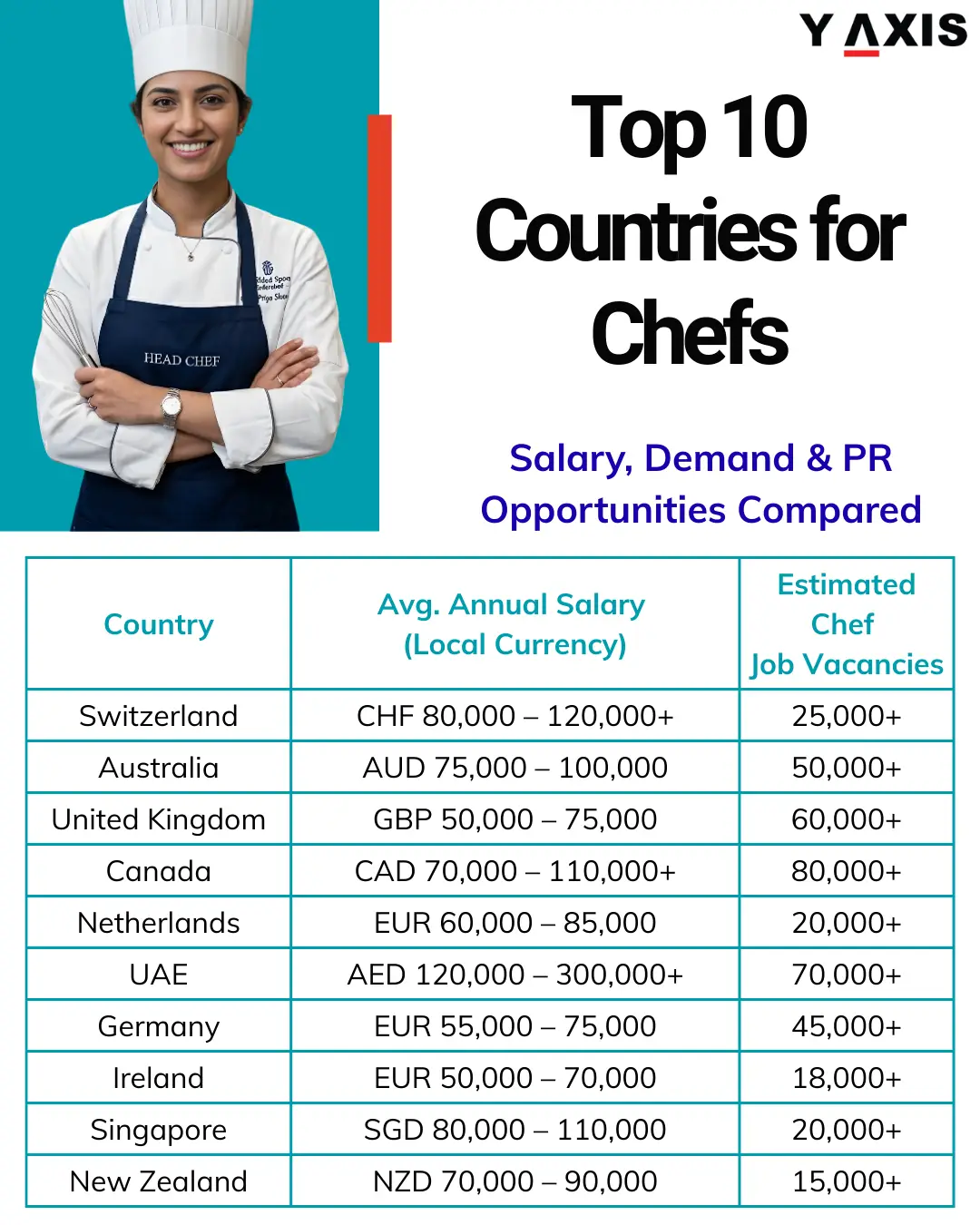
Top 10 Countries for Chefs: Salary, Demand & PR Opportunities Compared