

Posted on February 02 2026
Top 10 Countries for Teaching Professionals to Work Abroad: Salary, Demand & PR Opportunities Compared

By , Editor
Updated February 02 2026
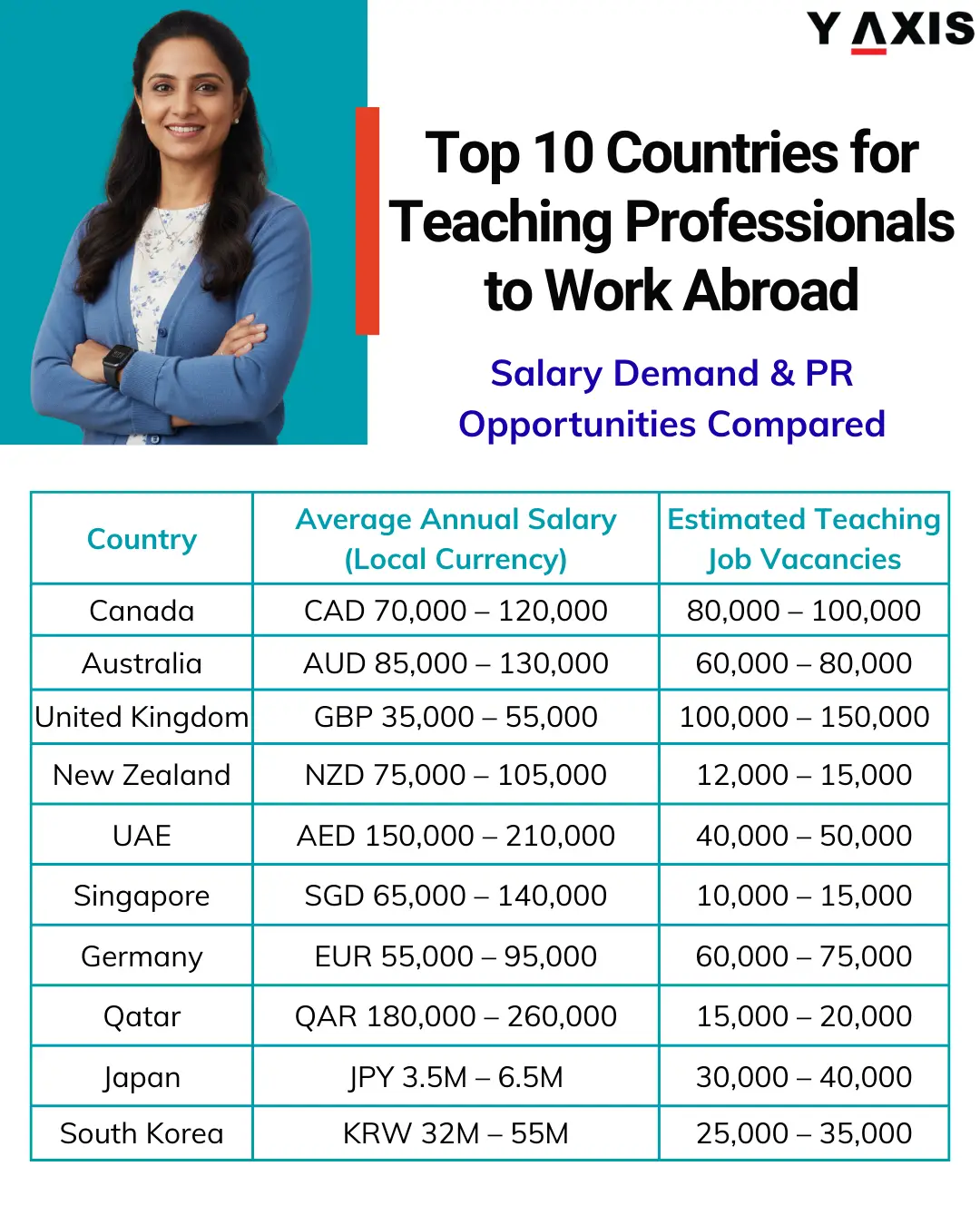
The top 10 countries for teaching professionals to work abroad are Canada, Australia, the United Kingdom, New Zealand, the United Arab Emirates, Singapore, Germany, Qatar, Japan, and South Korea. Teaching is among the most in-demand professions globally due to persistent teacher shortages, the expansion of international schools, and rising demand for English and STEM education.
Teaching jobs abroad offer high salaries, international classroom experience, and long-term career growth. Many countries also provide structured work visas and permanent residency pathways, along with attractive benefits and fast-track hiring options, making teaching abroad a stable and increasingly popular global career choice.
*Want to work abroad? Avail Y-Axis Resume Marketing Services to find the right job faster.
Key Factors for Choosing a Country for Teaching Jobs Abroad
Teaching jobs abroad are in high demand due to global teacher shortages, the rapid expansion of international schools, and increasing demand for English and STEM education. Many countries actively recruit qualified teachers and support overseas hiring through structured work visas and long-term employment options, making international teaching a stable and viable career path.
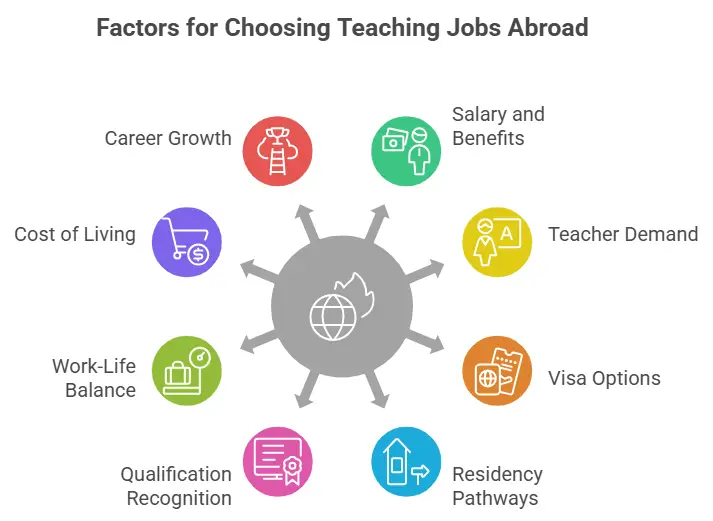
Key factors to consider when choosing teaching jobs abroad:
- Teaching salary, benefits, and allowances
- Demand for teachers across primary, secondary, ESL, STEM, and special education
- Work visa and visa sponsorship options for teaching jobs
- Permanent residency and settlement pathways
- Recognition of teaching qualifications and experience
- Work–life balance and classroom workload
- Cost of living compared to salary levels
- Long-term career growth and leadership opportunities
*Confused which country to choose to work abroad? Get expert guidance from Y-Axis professionals.
Top 10 Countries for Teaching Professionals to Work Abroad
Teaching professionals are increasingly in demand worldwide as countries with stable education systems and clear immigration policies expand hiring for teaching jobs abroad. Global teacher shortages and the continued growth of international schools are driving recruitment across primary, secondary, and specialist teaching roles.
Many countries actively recruit overseas teachers through competitive salary packages, recognised teaching qualifications, work visa sponsorship, and permanent residency pathways. These factors make teaching abroad a reliable option for long-term career growth and international experience, including opportunities in countries such as Canada, Australia, and the United Kingdom.
Top destinations for teaching professionals to work abroad include:
|
Country |
Average Annual Salary (Local Currency) |
Estimated Teaching Job Vacancies |
|
Canada |
CAD 70,000 – 120,000 |
80,000 – 100,000 |
|
Australia |
AUD 85,000 – 130,000 |
60,000 – 80,000 |
|
United Kingdom |
GBP 35,000 – 55,000 |
100,000 – 150,000 |
|
New Zealand |
NZD 75,000 – 105,000 |
12,000 – 15,000 |
|
UAE |
AED 150,000 – 210,000 |
40,000 – 50,000 |
|
Singapore |
SGD 65,000 – 140,000 |
10,000 – 15,000 |
|
Germany |
EUR 55,000 – 95,000 |
60,000 – 75,000 |
|
Qatar |
QAR 180,000 – 260,000 |
15,000 – 20,000 |
|
Japan |
JPY 3.5M – 6.5M |
30,000 – 40,000 |
|
South Korea |
KRW 32M – 55M |
25,000 – 35,000 |
*Want to work abroad? Get expert assistance from Y-Axis to find the right job faster.
Best Countries for Teaching Jobs Abroad
The best countries for teaching jobs abroad are those that combine strong demand for qualified teachers with competitive salaries, recognised teaching qualifications, and clear visa and permanent residency pathways. Teaching professionals looking to work abroad typically prioritise destinations that provide stable education systems, work visa sponsorship, attractive benefits, and long-term career security. Countries such as Canada, Australia, the United Kingdom, New Zealand, the United Arab Emirates, and Germany remain among the best options due to sustained hiring across public schools, private institutions, and international schools.
Some of the best countries for teaching professionals to work abroad include:
Teaching Jobs in Canada
Canada is one of the best countries for teaching jobs due to ongoing teacher shortages, a well-funded education system, and strong demand across provinces. Teaching opportunities are available in public schools, private institutions, and international schools, especially in STEM subjects, French immersion, early childhood education, and special education.
Canadian job market offers fast-track hiring options with competitive teaching salaries, recognised teaching qualifications, and structured work permit options. Teaching is considered a skilled occupation, with clear permanent residency pathways through federal and provincial immigration programs. These factors make Canada a stable and attractive destination for long-term teaching careers abroad.
|
Factor |
Details |
|
Teaching Job Market & Projected Vacancies |
Canada’s teaching job market is expected to remain strong, with over 100,000 teaching job vacancies projected over the next decade, driven by retirements, population growth, and ongoing shortages across primary, secondary, and special education roles. |
|
Investment in the Education Sector |
Canada is investing $1.7 billion to attract global talent, alongside continued federal and provincial funding for public education, skills development, and school infrastructure, supporting sustained demand for qualified teachers nationwide. |
|
Top Cities with Teaching Jobs |
Toronto, Vancouver, Calgary, Edmonton, Ottawa, Montreal, along with regional education hubs across multiple provinces. |
|
In-Demand Teaching Roles & Skills |
Primary and secondary teachers, Special Education (SEND), Mathematics, Science, Early Years educators, and French-language teachers. |
|
Required Qualifications & Teaching Experience |
A recognised teaching qualification is required to work in Canada. Provincial teacher certification is mandatory and varies by location. Teaching experience is not always required, though 1–3 years of experience is often preferred. |
|
Work Visa Options for Teaching Professionals |
Employer-sponsored work permits, Provincial Nominee Programs (PNPs), and Express Entry–linked pathways. |
|
Fast-Track Hiring Options |
Priority processing available through select provincial nomination streams and employer-sponsored work permits. |
|
PR / Long-Term Residence Opportunities |
Strong permanent residence pathways through Express Entry and Provincial Nominee Programs. |
|
Eligibility for Dependents |
Teachers may include their spouse and dependent children in eligible work visa and PR applications. |
|
Benefits for Family Members |
Spouse work rights, access to public education for children, and eligibility for provincial healthcare benefits. |
*Want to Work in Canada? Let Y-Axis guide you through application process.
Teaching Jobs in Australia
Australia is one of the best destinations for teaching jobs abroad, driven by nationwide teacher shortages and sustained demand across primary, secondary, and specialist subjects. Opportunities are strong in public schools, private schools, and international schools, particularly for STEM, special education, and early childhood teachers.
Australian job market offers fast-track hiring options with competitive teaching salaries, regulated working conditions, and internationally recognised teaching qualifications. Teaching is listed as a skilled occupation, with multiple work visa options and clear permanent residency pathways, making Australia a popular choice for educators seeking long-term career growth and settlement.
|
Factor |
Details |
|
Teaching Job Market & Projected Vacancies for the next decade |
Australia’s teaching job market remains stable, with over 80,000 teaching job vacancies projected over the next decade. Demand is driven by population growth, replacement hiring, regional teacher shortages, and rising enrolments across public and private schools. |
|
Investment in the Education Sector |
Australia’s $5 billion investment in universal early childhood education, along with continued education and infrastructure funding, supports teacher recruitment, particularly in regional and high-need areas. |
|
Top Cities with Teaching Jobs |
Sydney, Melbourne, Brisbane, Perth, Adelaide, and regional education hubs across Australia. |
|
In-Demand Teaching Roles & Skills |
Primary and secondary teachers, Mathematics, Science, English, Special Education, Early Years educators, and leadership roles. Teachers willing to work in regional areas are in especially high demand. |
|
Required Qualifications & Teaching Experience |
A recognised teaching qualification is required to work in Australia. Teaching experience is not mandatory, though 1–3 years of experience is often preferred. Overseas-trained teachers must have qualifications assessed—school teachers through AITSL and early childhood teachers through ACECQA. |
|
Work Visa Options for Teaching Professionals |
Employer-sponsored work visas, Skilled Independent visas, and state or territory nomination pathways. |
|
Fast-Track Hiring Options |
Priority processing is available for teachers in shortage occupations and for roles located in regional areas. |
|
PR / Long-Term Residence Opportunities |
Clear permanent residency pathways are available through skilled migration programs and employer-sponsored routes. |
|
Eligibility for Dependents |
Teachers may include their spouse and dependent children on eligible visa applications. |
|
Benefits for Family Members |
Spouse work rights, access to public education for children, and healthcare through Medicare, subject to visa conditions. |
*Planning to work in Australia? Let Y-Axis guide you through every step of the process.
Teaching Jobs in United Kingdom
United Kingdom remains a top destination for teaching professionals due to ongoing shortages in key subjects such as maths, science, special education, and secondary teaching. Teaching job opportunities are available across public schools, academies, and international schools throughout the UK.
The UK job market offers fast-track hiring options with structured teacher recruitment programs, competitive salaries, and recognised teaching qualifications. Schools can sponsor work visas, and teaching is considered a skilled occupation with pathways to long-term residence. These factors make the United Kingdom an attractive option for educators seeking international experience and career stability.
|
Factor |
Details |
|
Teaching Job Market & Number of Job Vacancies for Next Decade |
The UK teaching job market remains strong, with over 150,000 teaching job vacancies projected over the next decade. Demand is driven by retirements, rising student enrolments, teacher attrition, and persistent subject shortages. |
|
Investment in the Education Sector |
The UK plans to invest up to £40 billion by 2030 in education, supporting digital learning, AI-enabled innovation, skills development, and school infrastructure, which continues to drive long-term demand for qualified teaching professionals. |
|
Top Cities with Teaching Jobs |
London, Birmingham, Manchester, Leeds, Bristol, Nottingham, Leicester, Sheffield, Newcastle, and parts of the South East and Midlands. |
|
In-Demand Teaching Roles & Skills |
Primary teachers, secondary teachers (Maths, Science, Computing, English), SEN teachers, early years educators, and subject specialists. |
|
Required Qualifications & Teaching Experience |
UK schools typically require QTS or a PGCE with QTS. 1–2 years of classroom teaching experience is commonly preferred, especially by international and independent schools. Experience with British, IB, or Cambridge curricula is often an advantage. |
|
Work Visa Options for Teaching Jobs |
Skilled Worker Visa for eligible teaching roles sponsored by approved schools and education employers. |
|
Fast-Track Hiring Options |
Priority visa processing may apply for teaching roles listed on shortage or high-demand occupation lists. |
|
PR / Long-Term Residence Opportunities |
Teachers may qualify for Indefinite Leave to Remain (ILR) after completing the required residence period under the Skilled Worker route. |
|
Eligibility for Dependents |
Spouse and dependent children are permitted to accompany the primary applicant under UK dependent visa rules. |
|
Benefits for Family Members |
Spouse work rights, access to public education for children, and NHS healthcare, subject to visa conditions. |
* Want to Work in the UK? Let Y-Axis guide you through the steps.
Teaching Jobs in New Zealand
New Zealand is a popular choice for teaching professionals due to consistent teacher shortages and a supportive education system. There is strong demand for teaching jobs across primary, secondary, and specialist roles, particularly in STEM subjects, early childhood education, and special education.
New Zealand offers competitive salaries, recognised teaching qualifications, and a straightforward registration process. Teaching is listed on skills shortage pathways, with work visa options and clear routes to long-term residence, making it an attractive destination for teachers seeking work–life balance and career stability.
|
Factor |
Details |
|
Teaching Job Market & Number of Job Vacancies for the Next Decade |
New Zealand’s teaching job market is expected to remain strong, with over 15,000 teaching job vacancies projected over the next decade, driven by teacher shortages, population growth, and demand across regional areas. |
|
Investment in the Education Sector |
New Zealand aims to expand its international education sector to NZ$4.4 billion, strengthening long-term demand for qualified teaching professionals. |
|
Top Cities with Teaching Jobs |
Auckland, Wellington, Christchurch, Hamilton, and key regional centres. |
|
In-Demand Teaching Roles & Skills |
Primary and secondary teachers, Mathematics, Science, English, Technology, Early Childhood Education, and Special Education (SEN). |
|
Required Qualifications & Teaching Experience |
A recognised teaching qualification and relevant subject degree are required. Registration with the Teaching Council of New Zealand is mandatory. Teaching experience is not always required, though 1–3 years is typically preferred by schools. |
|
Work Visa Options for Teaching Professionals |
Accredited Employer Work Visa (AEWV) and sector-specific work visas. |
|
Fast-Track Hiring Options |
Priority processing available for roles listed on the Green List and other shortage occupation pathways. |
|
PR / Long-Term Residence Opportunities |
Clear permanent residence pathways through the Green List and Skilled Migrant Category. |
|
Eligibility for Dependents |
Teachers may sponsor their spouse and dependent children. |
|
Benefits for Family Members |
Spouse work rights, access to public education for children, and eligibility for public healthcare after meeting residence requirements. |
* Want to Work in New Zealand? Let Y-Axis guide you through the steps.
Teaching Jobs in United Arab Emirates
United Arab Emirates is one of the highest-paying destinations for teaching jobs abroad, with strong demand in international and private schools. Teaching job opportunities are available across primary, secondary, and specialist subjects, especially in British, IB, and American curriculum schools.
The UAE job market offers fast-track hiring options with tax-free salaries, housing allowances, medical insurance, and annual flight benefits. Schools regularly sponsor work visas, making relocation straightforward. While long-term residency options are limited compared to Western countries, the UAE remains a top choice for teachers looking to save money quickly and gain international teaching experience.
|
Factor |
Details |
|
Teaching Job Market & Number of Job Vacancies for the Next Decade |
The UAE teaching job market is expected to remain strong, with over 50,000 teaching job vacancies projected over the next decade. Demand is driven by the continued expansion of international schools, high workforce turnover, and steady enrolment growth across British, IB, American, and CBSE curricula. |
|
Investment in the Education Sector |
The UAE is investing over USD 9.2 billion in private and international education, supporting school expansion, modern learning infrastructure, and curriculum development, which sustains strong demand for qualified teaching professionals. |
|
Top Cities with Teaching Jobs |
Dubai, Abu Dhabi, Sharjah, and Al Ain. |
|
In-Demand Teaching Roles & Skills |
Primary and secondary teachers, Mathematics, Science, English, ICT, SEND, Early Years educators, and leadership roles. Experience with British, IB, American, or CBSE curricula is often preferred. |
|
Required Qualifications & Teaching Experience |
Schools typically require a bachelor’s or master’s degree in education or in the subject taught. 1–3 years of teaching experience is commonly required, particularly in private and international schools, though requirements vary by institution and curriculum. |
|
Work Visa Options for Teaching Professionals |
UAE employment visa and the Golden Visa. |
|
Fast-Track Hiring Options |
Visa processing is generally fast through employer sponsorship, especially for experienced teachers hired by established international schools. |
|
PR / Long-Term Residence Opportunities |
Long-term renewable residence options are available through employment visas and the Golden Visa scheme. |
|
Eligibility for Dependents |
Teachers may sponsor their spouse and dependent children. |
|
Benefits for Family Members |
Spouse work eligibility (subject to visa type), access to private education for children, and employer-sponsored healthcare benefits. |
* Want to work in the UAE? Avail Y-Axis Resume Marketing Services to find the right job faster.
Teaching Jobs in Singapore
Singapore is a leading destination for teaching professionals, particularly within international schools offering IB, British, and American curricula. Demand is strongest for experienced teachers in STEM subjects, English, and senior secondary roles.
Singapore offers competitive salaries, excellent school infrastructure, and a safe, high-quality living environment. Teaching qualifications and international experience are widely recognised, and schools sponsor work visas for qualified candidates. While permanent residency is selective, Singapore remains a top choice for teachers seeking professional growth, strong compensation, and global classroom exposure.
|
Factor |
Details |
|
Teaching Job Market & Number of Job Vacancies for the Next Decade |
Singapore’s teaching job market is expected to remain steady, with over 15,000 teaching job vacancies projected over the next decade, driven by sustained demand from international schools and subject-specific shortages. |
|
Investment in the Education Sector |
Singapore invests over SGD 14.8 billion annually in education, while continued private investment in digital learning and international curricula supports long-term demand for qualified teachers. |
|
Top Cities with Teaching Jobs |
Singapore (a city-state with centrally located schools and education institutions). |
|
In-Demand Teaching Roles & Skills |
Mathematics, Science, English, ICT, Early Years, SEN teachers, and experienced international school educators. |
|
Required Qualifications & Teaching Experience |
A bachelor’s or master’s degree in education or the subject taught is required. 2–5 years of teaching experience is commonly expected, particularly in international schools, where international curriculum experience is preferred. |
|
Work Visa Options for Teaching Professionals |
Employment Pass (EP) and S Pass through employer sponsorship. |
|
Fast-Track Hiring Options |
ONE Pass and Personalised Employment Pass (PEP). |
|
PR / Long-Term Residence Opportunities |
Permanent residency may be possible after several years of skilled employment, subject to eligibility criteria. |
|
Eligibility for Dependents |
Teachers may sponsor their spouse and dependent children under Dependant’s Pass rules. |
|
Benefits for Family Members |
Spouse work eligibility (subject to pass type), access to international schools, and employer-provided or private healthcare. |
* Want to Work in Singapore? Let Y-Axis guide you through the steps.
Teaching Jobs in Germany
Germany is an increasingly popular destination for teaching professionals, driven by the rapid growth of international and bilingual schools. There is strong demand for teaching job roles in STEM subjects, English, and IB or international curricula.
German job market offers fast-track hiring options with competitive salaries, strong labour protections, and widely recognised teaching qualifications. Schools sponsor work visas, and teaching roles can lead to long-term residence and permanent settlement options. With a high standard of living and a stable education system, Germany is a solid choice for teachers seeking career security and international experience.
|
Factor |
Details |
|
Teaching Job Market & Number of Job Vacancies for the Next Decade |
Germany’s teaching job market is expected to remain strong, with over 75,000 teaching job vacancies projected over the next decade. Demand is driven by retirements, the expansion of vocational education, and shortages in secondary and specialist subject areas. |
|
Investment in the Education Sector |
Germany’s Startchancen programme, which invests €20 billion over ten years across 4,000 schools, along with continued federal and state funding for public education, vocational training, and school infrastructure, supports sustained demand for qualified teaching professionals. |
|
Top Cities with Teaching Jobs |
Berlin, Munich, Frankfurt, Hamburg, Cologne, and other major education hubs. |
|
In-Demand Teaching Roles & Skills |
Secondary school teachers, Mathematics, Science, vocational education trainers, Early Years educators, and international school teachers. |
|
Required Qualifications & Teaching Experience |
A recognised teaching qualification is required. Overseas qualifications generally need formal recognition. Teaching experience is not mandatory, though 1–3+ years of experience is often preferred, particularly by international and private schools. |
|
Work Visa Options for Teaching Professionals |
EU Blue Card, employer-sponsored work visas, and residence permits for skilled professionals. |
|
Fast-Track Hiring Options |
Fast-track visa processing available for qualified professionals under shortage occupation and skilled migration routes. |
|
PR / Long-Term Residence Opportunities |
Permanent residence options are available after completing the required qualifying residence period. |
|
Eligibility for Dependents |
Teachers may sponsor their spouse and dependent children. |
|
Benefits for Family Members |
Spouse work rights, access to public education for children, and public healthcare coverage under statutory systems. |
*Want to work in Germany? Let Y-Axis guide you through every step of the process.
Teaching Jobs in Qatar
Qatar is a strong option for teaching professionals seeking high salaries and international school experience. Demand is concentrated in private and international schools following British, IB, and American curricula, particularly for experienced secondary and specialist teachers.
Qatar offers tax-free salaries, housing allowances, medical insurance, and annual flight benefits. Schools will sponsor work visas, making overseas recruitment straightforward. While permanent residency options are limited, Qatar is ideal for teachers aiming to maximise savings and build international experience over the short to medium term.
|
Factor |
Details |
|
Teaching Job Market & Number of Job Vacancies for the Next Decade |
Qatar’s teaching job market is expected to remain strong, with over 20,000 teaching job vacancies projected over the next decade, driven by the continued expansion of international schools, high teacher turnover, and sustained enrolment growth. |
|
Investment in the Education Sector |
Qatar plans to invest over $13.22 billion by 2034 in private and international education as part of its long-term development plans, supporting modern school infrastructure, curriculum expansion, and teacher recruitment. |
|
Top Cities with Teaching Jobs |
Doha, Al Rayyan, Al Wakrah, and surrounding education hubs. |
|
In-Demand Teaching Roles & Skills |
Primary and secondary teachers, Maths, Science, English, ICT, SEN, Early Years educators, and experienced international school teachers. British, IB, and American curriculum experience is highly valued. |
|
Required Qualifications & Teaching Experience |
Schools typically require a bachelor’s or master’s degree in education or the subject taught. 2–5 years of teaching experience is commonly expected, particularly in international and private schools. |
|
Work Visa Options for Teaching Professionals |
Employer-sponsored Qatar work visa. |
|
Fast-Track Hiring Options |
Fast-track visa processing is common for teachers through visa sponsorship hired by established international schools. |
|
PR / Long-Term Residence Opportunities |
Long-term residence options are limited but available through renewable employment visas and selective permanent residency programs. |
|
Eligibility for Dependents |
Teachers may sponsor their spouse and dependent children. |
|
Benefits for Family Members |
Spouse residency sponsorship, access to private education for children, and employer-provided healthcare benefits. |
*Want to work in Qatar? Let Y-Axis guide you through every step of the process.
Teaching Jobs in Japan
Japan remains a popular destination for teaching professionals, with steady demand in ESL programs, private language institutes, and international schools. Teaching job opportunities are strongest for English teachers and subject teachers with international school experience.
Japan offers fast-track hiring options with high-paying salaries, stable employment contracts, competitive salaries relative to living costs, and a safe, high-quality lifestyle. Schools sponsor work visas, and teaching experience in Japan is highly valued globally. While permanent residency takes time, Japan is well suited for teachers seeking cultural exposure, professional stability, and international classroom experience.
|
Factor |
Details |
|
Teaching Job Market & Number of Job Vacancies for the Next Decade |
Japan’s teaching job market is expected to remain steady, with over 40,000 teaching job vacancies projected for the next decade, driven by ongoing needs in English education, international schools, and private language institutions. |
|
Investment in the Education Sector |
Japan plans to host more than 400,000 international students and also plans to setup JPY 300 billion funds in education reform, digital learning, and internationalisation of schools, supporting demand for qualified teachers, particularly in English and international curricula. |
|
Top Cities with Teaching Jobs |
Tokyo, Yokohama, Osaka, Nagoya, Fukuoka, and other major metropolitan areas. |
|
In-Demand Teaching Roles & Skills |
English and ESL teachers, primary and secondary subject teachers, international school educators, and teachers with IB or international curriculum experience. |
|
Required Qualifications & Teaching Experience |
A bachelor’s degree is typically required. Teaching qualifications are preferred for international schools. 1–3 years of teaching experience is often expected, especially for licensed or subject-specific roles. |
|
Work Visa Options for Teaching Professionals |
Instructor Visa and Specialist in Humanities / International Services Visa through employer sponsorship. |
|
Fast-Track Hiring Options |
Highly Skilled Professional (HSP) Visa and faster processing is common for teachers hired through established school programs and international school networks. |
|
PR / Long-Term Residence Opportunities |
Permanent residency may be possible after meeting long-term residence and employment requirements. |
|
Eligibility for Dependents |
Teachers may sponsor their spouse and dependent children. |
|
Benefits for Family Members |
Spouse residency eligibility, access to public education for children, and national health insurance coverage (subject to visa conditions). |
*Want to work in Japan? Let Y-Axis guide you through every step of the process.
Teaching Jobs in South Korea
South Korea is a well-established destination for teaching professionals, particularly in ESL and public school teaching programs. Demand remains strong across primary and secondary education, with opportunities in public schools, private academies, and international schools.
South Korea offers competitive salaries, free or subsidised housing, medical insurance, and flight benefits. Schools sponsor work visas, making the hiring process efficient for overseas teachers. While long-term residency options are limited, South Korea is an attractive choice for teachers seeking stable contracts, good savings potential, and valuable international teaching experience.
|
Factor |
Details |
|
Teaching Job Market & Number of Job Vacancies for the Next Decade |
South Korea’s teaching job market is expected to remain stable, with over 35,000 teaching job vacancies projected for the next decade. Demand is driven by strong ESL programmes, public school hiring, and international school growth. |
|
Investment in the Education Sector |
Korean government plans to invest 5 trillion won ($3.7 billion) by 2030 to upgrade medical school infrastructure, alongside 1.4 trillion won ($1.25 billion) for AI talent development and 1.2 billion for AI education., sustaining demand for qualified teaching professionals. |
|
Top Cities with Teaching Jobs |
Seoul, Busan, Incheon, Daegu, Daejeon, Gwangju, and surrounding metropolitan areas. |
|
In-Demand Teaching Roles & Skills |
ESL and English teachers, primary and secondary teachers, international school educators, and subject specialists in Maths and Science. |
|
Required Qualifications & Teaching Experience |
A bachelor’s degree is typically required. Teaching qualifications are preferred for public and international schools. Teaching experience is not always mandatory, though 1–2 years of experience is often preferred. |
|
Work Visa Options for Teaching Professionals |
E-2 Teaching Visa and E-7 Specially Designated Activities Visa through employer sponsorship. |
|
Fast-Track Hiring Options |
E-2 (Foreign Language Instructor) visa, E-7 visa with streamlined visa processing common for teachers recruited through public school programmes and accredited private institutions. |
|
PR / Long-Term Residence Opportunities |
Long-term residence and permanent residency options may be available after extended skilled employment and residency. |
|
Eligibility for Dependents |
Teachers may sponsor their spouse and dependent children under eligible visa categories. |
|
Benefits for Family Members |
Spouse residency eligibility, access to public education for children, national health insurance, and employment rights subject to visa conditions. |
*Want to work in South Korea? Let Y-Axis guide you through every step of the process.
Job Outlook for Teaching Professionals over the Next Decade
The job outlook for teaching professionals over the next decade is expected to remain strong and positive worldwide. Ongoing teacher shortages, ageing workforces, and rising student enrolments are driving sustained demand across primary, secondary, and specialist education roles. Growth in international schools and increased focus on STEM, English, and special education are further expanding opportunities.
Many governments are increasing investment in education infrastructure, digital learning, and teacher recruitment to address skills gaps. Teaching is also increasingly recognised as a skilled profession, with several countries offering work visa sponsorship and permanent residency pathways. Overall, qualified teachers can expect stable employment prospects and long-term career growth globally.
*Want to work abroad? Sign up with Y-Axis Resume Marketing Services to find right job faster.
FAQs
What are the top 10 countries for teaching professionals to work abroad?
The top 10 countries for teaching professionals to work abroad include Canada, Australia, the United Kingdom, New Zealand, the United Arab Emirates, Singapore, Germany, Qatar, Japan, and South Korea. These destinations offer strong demand due to teacher shortages and expanding education systems. They provide competitive salaries, visa sponsorship, and roles across public, private, and international schools, with several countries also offering permanent residency pathways for long-term teaching careers.
Which country offers the highest salary for teaching jobs abroad?
The highest teaching salaries abroad are often found in Middle Eastern countries such as the United Arab Emirates and Qatar. These destinations typically offer tax-free salaries, housing allowances, medical insurance, and flight benefits, allowing teachers to save more. Singapore and Switzerland also offer high salaries in international schools, though living costs are higher. Salary levels depend on experience, subject specialisation, and curriculum expertise, but teachers seeking maximum savings usually prefer the Middle East.
Which countries have the highest demand for teachers?
Countries such as the United Kingdom, Canada, Australia, Germany, and New Zealand have some of the highest demand for teachers globally. Demand is driven by retirements, rising student enrolments, and shortages in Maths, Science, English, and Special Education. International schools across Asia and the Middle East also face continuous demand. Teaching jobs abroad are especially available for educators willing to work in regional areas or high-demand subjects.
Which countries offer permanent residency (PR) for teachers?
Several countries offer permanent residency pathways for teachers, including Canada, Australia, New Zealand, the United Kingdom, and Germany. Teaching is recognised as a skilled occupation in these countries, allowing educators to apply for PR through skilled migration programs or employer sponsorship. Teachers with recognised qualifications, work experience, and language proficiency have strong long-term settlement opportunities.
Are teaching jobs abroad available for international teachers?
Yes, teaching jobs abroad are widely available for international teachers. Many countries actively recruit overseas educators to address teacher shortages and expanding school systems. Work visa sponsorship is commonly provided by schools or governments, particularly for public schools and international schools. Qualified international teachers can find opportunities across multiple regions and education systems.
What qualifications are required to teach abroad?
Most countries require a recognised teaching qualification, such as a bachelor’s or master’s degree in education or the subject taught. Teaching licences or registration may be mandatory depending on the destination. International schools often prefer candidates with experience in British, IB, American, or Cambridge curricula. Teaching experience is sometimes optional but usually preferred.
Can ESL teachers find jobs abroad easily?
Yes, ESL teaching jobs abroad remain in high demand, especially in Asia and the Middle East. Countries such as Japan, South Korea, Vietnam, and the UAE regularly recruit English teachers. A bachelor’s degree and TEFL or TESOL certification are commonly required. ESL roles provide international experience and can lead to higher-paying teaching jobs abroad over time.
Which countries are best for international school teachers?
The best countries for international school teachers include the UAE, Singapore, Qatar, Germany, and Japan. These countries host large numbers of international schools offering British, IB, and American curricula. Salaries are competitive, and benefits often include housing and healthcare. International school experience is highly valued globally.
Is teaching abroad a good long-term career option?
Teaching abroad is a strong long-term career option for qualified educators. Many countries offer stable employment, professional growth, and competitive salaries. Teachers gain international experience, leadership opportunities, and global mobility. In countries with PR pathways, teaching abroad can also lead to permanent settlement and long-term career security.
Which countries are best for teachers seeking PR and settlement?
Canada, Australia, New Zealand, the United Kingdom, and Germany are among the best countries for teachers seeking PR and long-term settlement. These destinations recognise teaching as a skilled occupation and offer clear immigration pathways. They also provide family benefits, healthcare access, and public education options.
Do teaching jobs abroad include visa sponsorship?
Yes, many teaching jobs abroad include work visa sponsorship. Schools and education authorities regularly sponsor visas for qualified teachers, particularly in shortage subjects. Countries such as the UK, Australia, UAE, Singapore, and Japan offer employer-sponsored visas for teaching roles.
Are teaching salaries abroad higher than local salaries?
Yes, teaching salaries abroad can be higher than local salaries, especially in tax-free destinations like the UAE and Qatar. Western countries offer competitive pay combined with long-term benefits and PR options. Salary comparisons depend on cost of living, benefits, and savings potential.
Which subjects have the highest demand for teaching jobs abroad?
High-demand teaching subjects abroad include Maths, Science, English, Special Education, ICT, and Early Childhood Education. STEM and SEN teachers are especially sought after worldwide. Teachers in these fields often receive faster hiring and better visa options.
Can teachers move abroad with their families?
Yes, many countries allow teachers to relocate with their families. Dependent visas typically cover spouses and children, with benefits such as spouse work rights, education access, and healthcare. Teaching abroad is suitable for family relocation in many destinations.
Are teaching jobs abroad suitable for fresh graduates?
Yes, teaching jobs abroad are available for fresh graduates, particularly in ESL roles. However, international schools and public school systems often prefer experienced teachers. Fresh graduates can gain experience abroad and progress into licensed teaching roles over time.
What are the main benefits of teaching abroad?
Teaching abroad offers competitive salaries, international experience, career growth, and cultural exposure. Many roles include housing, healthcare, and relocation benefits. Teaching overseas also improves long-term employability and global career prospects.
How competitive is the global teaching job market?
The global teaching job market is competitive but favourable due to ongoing shortages. Qualified teachers with recognised credentials and in-demand skills enjoy strong hiring prospects. Flexibility in location and subject area improves success.
Which countries are best for saving money as a teacher?
The UAE and Qatar are among the best countries for teachers looking to save money due to tax-free salaries and benefits. Singapore and Switzerland also offer high salaries, though living costs are higher. Savings potential depends on lifestyle and benefits.
Are international teaching qualifications recognised globally?
Yes, many international teaching qualifications are recognised globally, especially those aligned with British, IB, American, or Cambridge curricula. Recognition depends on country regulations and employer requirements. Credential assessments may be required.
How can teachers apply for teaching jobs abroad?
Teachers can apply for teaching jobs abroad through school websites, recruitment agencies, government programs, and education job portals. The process usually includes qualification assessment, interviews, and visa applications. Professional guidance can simplify the process and improve outcomes.
Tags:
Teaching Jobs Abroad
Teacher Immigration
ESL Careers
International Schools
Education Jobs
Work Abroad
Teacher Salaries
Permanent Residency
Share
Latest Article
Popular Post
Trending Article
Posted On March 12 2026
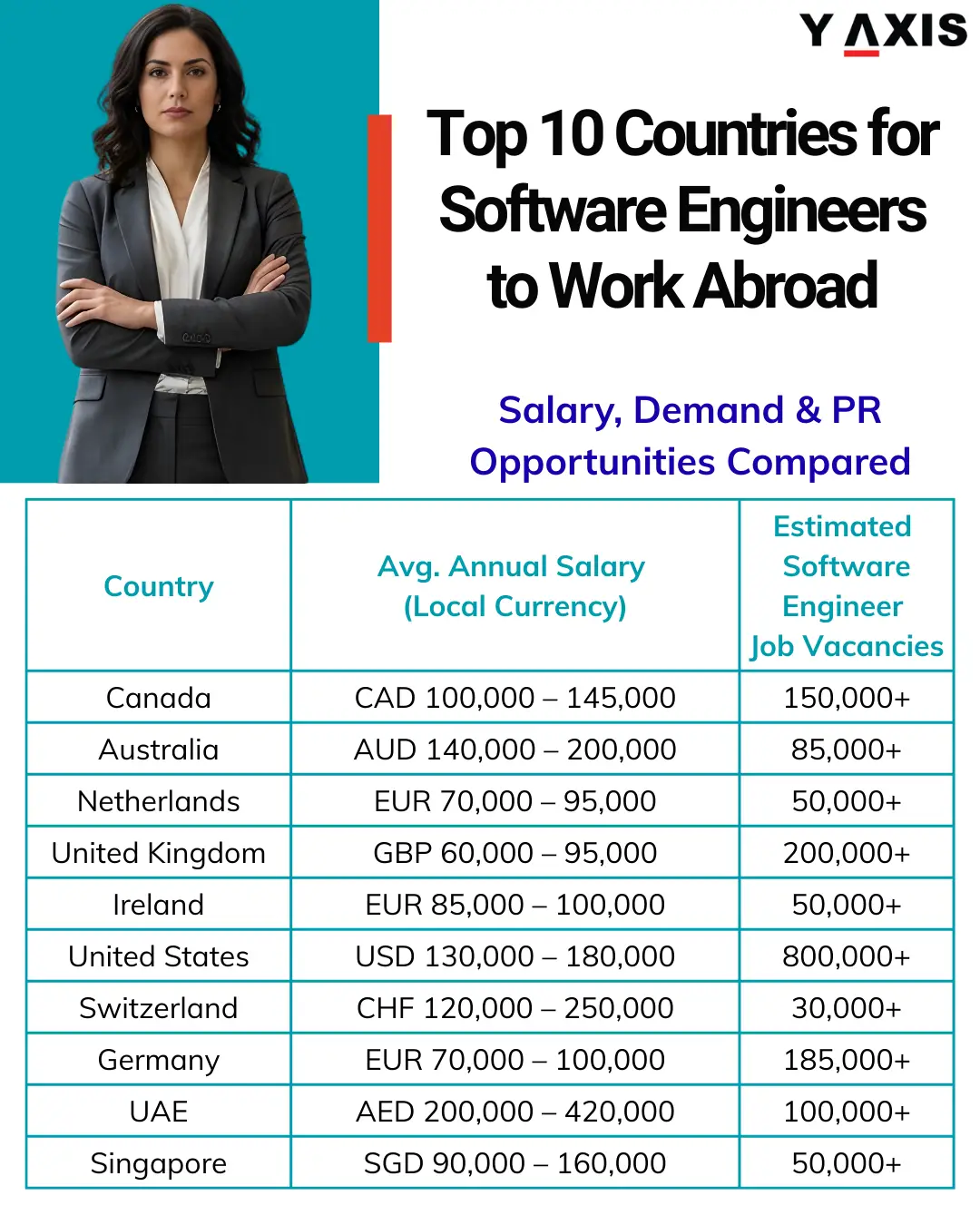
Top 10 Countries for Software Engineers to Work Abroad: Salary, Demand & PR Opportunities Compared