


Posted on December 11 2025
Which Intake Is the Best to Study in the UK?

By , Editor
Updated December 11 2025
The September intake is the best intake to study in the UK because it offers the most courses, the highest number of university seats, and the widest choice for international students. With more than 732,000 international students across 160+ UK universities, September is the main academic cycle where nearly all programmes open admissions. It also provides stronger scholarship options, earlier CAS timelines, smoother visa processing, and better opportunities for internships and part-time work.
January intake is a reliable alternative with good course availability, while the May intake is limited and suitable only when specific programmes are offered. The September intake remains the best choice for international students planning to study in the UK.
*Want to study in the UK? Let Y-Axis guide you through the application process.
What are the Intakes in the UK for International Students?
UK universities offer three main intakes for international students: September, January, and May. Each intake varies in course availability, application deadlines, and admission timelines, helping students choose the option that best matches their study goals and preparation.
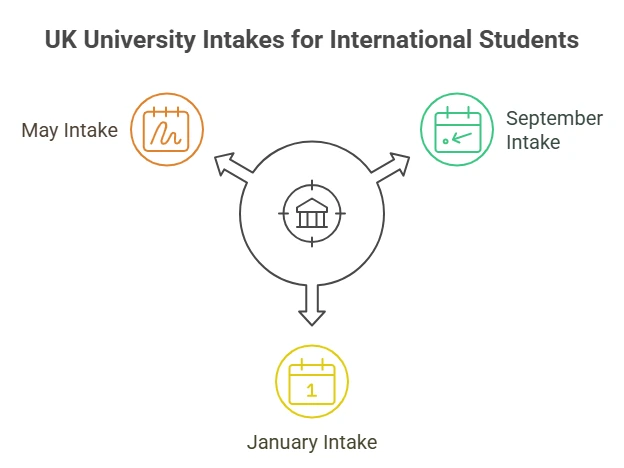
Main Intakes in the UK for International Students are:
1. September Intake (Main Intake)
The largest and most popular intake with full course availability.
- Offers the highest number of undergraduate and postgraduate programmes
- Most universities open complete admissions during this cycle
- More scholarship opportunities and internships
2. January Intake (Mid-Year Intake)
A good option if you need more time for documents or exam preparation.
- Good course options in Business, IT, Engineering, and Health
- Less competition with more flexible deadlines
- Ideal for students who missed September or need extra preparation
3. May Intake (Summer Intake)
A smaller intake available only for selected programmes.
- Limited course options, mostly in Business and Computing
- Offered by a smaller number of universities
- Faster admission process with less competition
Why September Intake is most preferred by international students in the UK?
The September intake is the most preferred by international students because it offers a wide range of courses and the highest number of universities open for admission. Nearly all UK universities open their full programmes during this period, giving students more freedom to choose the right course and pathway. As it aligns with the UK academic year, the September intake provides better access to scholarships, early CAS issuance, and smoother visa approvals, helping students plan their applications.
Students starting in September also have strong opportunities for internships and part-time work, as many academic and hiring cycles begin at this time. With wider course availability, structured timelines and more opportunities, the September intake remains the most preferred option for international students planning to study in the UK.
How to Choose the Right Intake to Study in the UK?
Choosing the right intake is an important part of planning your studies in the UK. Each intake September, January, and May has different timelines, course options, and advantages. Reviewing your academic readiness, course availability, and personal goals can help you choose the intake that suits you best.
Application timeline for the UK study intakes:
Each intake has its own application window, so preparing early helps ensure a smooth admission and visa process.
|
Intake |
Applications open |
Course Start |
|
September intake |
October – January |
September |
|
January intake |
April – September |
January |
|
May intake |
September – January |
May |
Key factors to consider when choosing a UK intake:
Several factors influence which intake is right for you, including course availability, competition, and scholarship options.
|
Intake |
Course availability |
Chances of admission |
Scholarship opportunities |
|
September intake |
Very High |
Balanced |
High |
|
January intake |
High |
High |
Medium |
|
May intake |
Limited |
High |
Limited |
Top Universities for Main UK Intakes for International Students
Many UK universities offer different intake options for international students, mainly in September and January. While September is the primary intake with the widest course availability, a few universities also open selected postgraduate programmes in January.
|
QS Rank |
University |
Main Intakes |
|
2 |
Imperial College London |
September |
|
4 |
University of Oxford |
September |
|
6 |
University of Cambridge |
September |
|
9 |
UCL (University College London) |
September, January |
|
31 |
King’s College London |
September, January |
|
34 |
University of Edinburgh |
September |
|
35 |
University of Manchester |
September, January |
|
51 |
University of Bristol |
September |
|
56 |
London School of Economics (LSE) |
September |
|
74 |
University of Warwick |
September |
Best Courses to Study in the UK for September and January Intakes
International students can find excellent course options in both the September and January intakes. September offers the widest selection of programmes, while January provides focused postgraduate choices for students who prefer a later start or need extra preparation time.
Some of the most in-demand courses available across both intakes include:
- Business & Management
- MBA
- Computer Science & IT
- Data Science & Artificial Intelligence
- Engineering
- Finance, Accounting & Economics
- Public Health & Healthcare Management
- Marketing & Human Resource Management
- Psychology
- Hospitality & Tourism Management
*Confused which course to study in the UK? Get personalised guidance from Y-Axis.
Which UK Intake Offers the Most Scholarships for International Students?
The September intake offers the highest number of scholarships in the UK because it is the primary academic intake when universities release their full yearly scholarship funding. Most major government, university, merit-based, and need-based scholarships are aligned with September deadlines, giving students broader options and better chances of securing financial support.
Although January and May intakes do offer some scholarships, the volume and variety are significantly lower, making September the strongest intake for students seeking maximum scholarship opportunities.
Also Read…
Top 10 Scholarships to study in the UK
Eligibility Requirements to Study in the UK for International Students
International students must meet specific eligibility requirements set by UK universities and immigration authorities. While each institution may have its own criteria, the core requirements for academic qualifications, English proficiency, financial proof, and visa documentation remain similar across most programmes. Some of the key eligibility requirements include:
- Academic Qualifications: Meet the required education level, such as Class 12 for UG programmes or a recognised bachelor’s degree for PG studies.
- English Proficiency: Provide valid IELTS, PTE, TOEFL, or Duolingo scores that match your university’s minimum score requirements.
- Supporting Documents: Submit an SOP, LORs, updated CV (for PG), a valid passport, and any additional materials like portfolios or work experience.
- Financial Proof: Show sufficient funds for tuition fees and living costs through bank statements, sponsorship documents, or an approved education loan.
- Confirmation of Acceptance for Studies (CAS): Accept your offer, fulfil all conditions, and submit required compliance documents to receive your CAS from the university.
- Visa Requirements: Apply for the UK Student Visa using your CAS and provide all required documents as per UKVI guidelines.
Step-by-Step Application Process to Study in UK Intakes
Step 1: Shortlist programmes based on your interests, eligibility, budget, and preferred intake.
Step 2: Check your eligibility criteria such as academic qualifications, English test scores, and any course-specific prerequisites.
Step 3: Arrange your SOP, LORs, CV (for PG), transcripts, passport, and English test scores.
Step 4: Apply through university portals or UCAS (for UG) before the intake deadlines.
Step 5: Submit any remaining documents to accept your conditional or unconditional offer.
Step 6: Pay the initial deposit to secure your seat and begin the CAS process.
Step 7: Complete compliance checks and receive the Confirmation of Acceptance for Studies.
Step 8: Apply for the Student Visa
*Looking for step by step assistance to study in the UK? Sign up with Y-Axis to guide you through the process.
FAQs
Which intake is best to study in the UK for international students?
The September intake is the best intake to study in the UK because it offers the widest range of courses, the most university options, and stronger scholarship opportunities. It aligns with the UK academic year, which helps with internships and part-time work. January is a good alternative with moderate course availability, while the May intake is limited. For most students, September provides the strongest overall advantages.
What is the difference between September, January, and May intakes in the UK?
September is the main UK intake, offering the most courses and universities. January intake provides a good selection of programs but fewer than September. May intake is available only at selected universities with limited courses. The primary differences include course availability, competition, scholarship opportunities, and application timelines. Understanding these differences helps students choose the intake that best fits their study plan and readiness.
Is September intake better than January intake in the UK?
Yes, September intake is generally better because it offers full course availability, more scholarships, and broader university participation. It aligns with the UK academic calendar, providing better opportunities for internships and campus activities. While January intake is still a strong choice, it has fewer overall options. For most students, September intake offers the greatest benefits.
Is January intake good for international students in the UK?
Yes, January intake is a good option for international students who need additional time for documentation or to complete previous studies. It offers popular programs such as Business, IT, and Engineering. Although the number of available courses is fewer than September, competition is lower and timelines are more flexible. It is suitable for students who missed September deadlines or prefer a mid-year start.
Are all courses available in every UK intake?
No, not all courses are available in every intake. September offers the most programs at both undergraduate and postgraduate levels. January includes many popular courses but excludes specialist fields like Medicine or Architecture. May intake is limited to selected universities and specific programs, often in Business or Computing. Students should check university-specific intake availability before applying.
How many intakes are there in UK universities for international students?
UK universities generally offer three intakes: September, January, and May. September is the largest intake with the widest course selection. January provides moderate course availability, while May is the smallest intake with a limited number of programs. Understanding how many intakes UK universities offer helps students plan applications and choose timelines that match their goals.
Which UK intake has more scholarships?
The September intake has the highest number of scholarship opportunities for international students. Universities, government programs, and external organizations typically launch major scholarship rounds for this intake. January intake offers fewer scholarships, and May intake provides very limited options. Students seeking financial support should prioritize applying for the September intake.
What is the timeline to apply for September and January intakes in the UK?
For the September intake, students should begin preparing 8–12 months in advance due to high demand and early deadlines. For the January intake, preparation should start 6–8 months before the program begins. Both timelines involve preparing documents, meeting English language requirements, and applying early for a UK student visa. Early preparation significantly increases admission and visa success rates.
Is the May intake in the UK a good option for international students?
May intake can be a suitable choice for students seeking faster admissions or smaller class sizes. However, it is the most limited intake, with fewer universities and fewer courses available. It is mostly offered for Business, Computing, and selected postgraduate programs. Students should select the May intake only if their desired program is offered.
Which intake is best for a UK student visa and faster processing?
The September intake typically provides the smoothest student visa process, as universities follow structured timelines and issue CAS letters early. January intake also offers stable processing but may face delays due to holiday-season workloads. May intake often sees faster processing because fewer students apply. Applying early for any intake increases visa success and avoids last-minute issues.
Tags:
UK Intakes
Study in UK
UK Admissions
UK University Intakes
January Intake UK
September Intake UK
May Intake UK
International Students UK
UK Study Guide
UK Education
Share
Latest Article
Popular Post
Trending Article

Posted On March 05 2026
Top 10 Countries for Physicians: Salary, Demand & PR Opportunities Compared