


Posted on November 19 2025
How to find Visa Sponsorship Jobs in Europe from Canada?

By , Editor
Updated January 23 2026
What Are Visa Sponsorship Jobs in Europe?
Visa sponsorship jobs in Europe are positions where employers help foreign professionals obtain work visas, allowing you to live and work legally. These opportunities are mainly in high-demand sectors like IT, Healthcare, Engineering, Renewable Energy, and Business Services, driven by labour shortages from an ageing workforce.
According to the Cedefop Skills Forecast, Europe will need over 104 million workers by 2035, mostly to replace retiring professionals, with many countries offering skilled migration pathways and relocation support.
Top countries hiring skilled professionals are Germany, Ireland, the Netherlands, Denmark, Sweden, and Finland, with leading employers Siemens, SAP, Bosch, BMW, Amazon Europe, and Accenture actively recruiting international talent.
Europe offers skilled professionals fast career progression, exposure to multinational work environments, and opportunities to gain international experience in diverse, growing sectors.
*Looking for jobs in Europe? Let Y-Axis help you every step of the way.
Most In-demand Sectors Offering Visa Sponsorship Jobs in Europe
Europe’s job market is diverse, with certain industries actively seeking skilled professionals from abroad. For Canadians looking for visa sponsorship jobs in Europe, targeting high-demand sectors can significantly increase your chances of landing a role.
From healthcare and IT to engineering and renewable energy, several industries offer strong opportunities for work visas and long-term career growth.
|
Sector |
Job Roles |
Average Annual Salary (€ ) |
|
Information Technology |
Software Engineer, DevOps Engineer, Data Scientist, Cloud Architect |
€55,000 – €75,000 |
|
Engineering & Innovation |
Mechanical Engineer, Electrical Engineer, Automation Engineer, R&D Engineer |
€55,000 – €80,000 |
|
Renewable Energy & Sustainability |
Renewable Energy Engineer, Project Manager (Green Energy), Sustainability Consultant |
€45,000 – €85,000 |
|
Business Services |
Management Consultant, Strategy Manager, Business Analyst |
€65,000 – €100,000 |
|
Healthcare |
Nurse, Medical Technologist, Healthcare Administrator |
€40,000 – €70,000 |
|
Hospitality & Tourism |
Hotel Manager, Operations Manager, Front-Office Manager |
€30,000 – €60,000 |
|
Education & Research |
University Researcher, Academic Lecturer, Lab Scientist |
€40,000 – €70,000 |
|
Finance & Insurance |
Financial Analyst, Risk Manager, Banking Associate |
€50,000 – €120,000 |
Top European Countries Offering Jobs with Visa Sponsorship
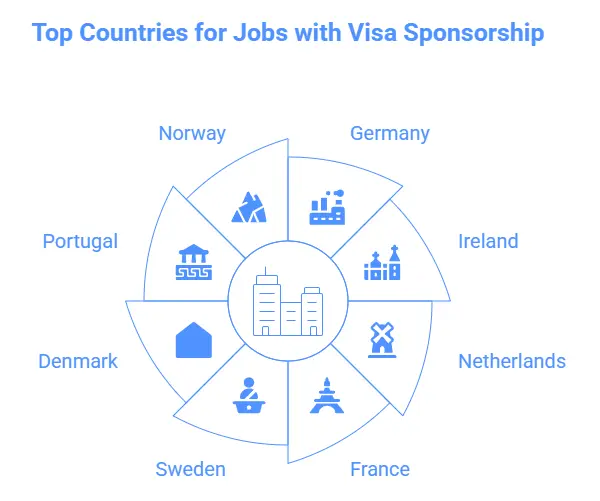
Europe offers a variety of opportunities for Canadians looking for visa sponsorship jobs. While demand varies by industry, certain countries stand out for their strong job markets, sponsorship programs, and welcoming policies for skilled foreign workers.
|
Country |
Key Industries |
Job Opportunities |
|
Germany |
IT, Engineering, Manufacturing, Healthcare, Renewable Energy, Finance |
Very High |
|
Ireland |
IT, Finance, Tech Startups, Engineering, Life Sciences |
High |
|
Netherlands |
IT, Finance, Logistics, Tech Startups, Sustainability, Engineering |
High |
|
France |
Healthcare, Engineering, Research, Renewable Energy, Hospitality & Tourism |
High |
|
Sweden |
IT, Engineering, Sustainability, Renewable Energy, Life Sciences |
Medium |
|
Denmark |
IT, Life Sciences, Clean Energy, Engineering, Finance |
Medium |
|
Portugal |
Tech, Tourism, Renewable Energy, Hospitality, Logistics |
Medium |
|
Norway |
IT, Engineering, Renewable Energy, Finance, Maritime & Shipping |
High |
Eligibility Requirements for Visa-Sponsored Jobs in Europe
To apply for a visa-sponsored job in Europe, you need to meet specific requirements that demonstrate your skills, experience, and suitability for international employment.
Meeting these criteria increases your chances of getting a sponsored role and starting your career in Europe successfully.
- Educational Qualifications: You must have a recognized degree, diploma, or professional certification relevant to your field, especially for skilled worker visas and the EU Blue Card.
- Work Experience: You must have relevant professional experience that matches your occupation and job role.
- Job Offer from a Sponsoring Employer: You must have a confirmed job offer from an employer authorized to sponsor foreign workers.
- Language Proficiency: You must meet the language requirements for your role. English is widely accepted, but some positions may require local language skills.
- Salary Thresholds: You must meet the minimum salary set by the visa type and country, such as the EU Blue Card requirements.
- Licensing / Credential Recognition: You must have validated licenses or credentials for regulated professions like healthcare, engineering, finance, and teaching.
- Additional Requirements: You must comply with country-specific regulations, such as background checks, medical clearances, or local registrations.
Leading Companies in Europe Offering Visa Sponsorship
Many European companies actively hire international talent and provide visa sponsorship to skilled professionals. Leading employers across sectors like Information Technology, Engineering, Healthcare, Renewable Energy, and Business Services seek experienced candidates to fill high-demand roles.
Companies such as Siemens, SAP, Bosch, BMW, Amazon Europe, and Accenture not only offer competitive salaries but also provide relocation support and career growth opportunities.
|
Sector |
Top Companies |
Chances of Visa Sponsorship |
|
IT & Software |
SAP, Amazon, Booking.com, Microsoft, IBM, Capgemini, Oracle, Accenture |
Very High |
|
Healthcare |
University Hospitals, Roche, Philips Healthcare, Novartis, Sanofi |
High |
|
Engineering & Innovation |
Siemens, Bosch, ABB, Rolls-Royce, Schneider Electric, Alstom, Airbus, Volkswagen |
High |
|
Renewable Energy & Sustainability |
Vestas, Siemens Gamesa, Ørsted, Enel Green Power |
High |
|
Business Services |
Deloitte, PwC, KPMG, EY, McKinsey & Company |
Very High |
|
Hospitality & Tourism |
Accor, Hilton, InterContinental, Radisson, Marriott, Wyndham, Hyatt |
Medium |
|
Education & Research |
ETH Zurich, KU Leuven, Technical University of Munich, Sorbonne University, University of Cambridge |
Medium |
|
Finance & Insurance |
HSBC, Deutsche Bank, ING, UniCredit, Barclays, Credit Suisse, UBS |
High |
How to Apply for Visa-Sponsored Jobs in Europe from Canada?
When applying for visa-sponsored jobs in Europe, you need a clear strategy. Focus on high-demand sectors, target employers offering sponsorship, and prepare a strong European-style CV and cover letter to increase your chances of landing a role and advancing your career.
Steps to Secure a Job in Europe:
Step 1: Identify High-Demand Sectors
Focus on sectors with strong visa sponsorship opportunities, such as IT, Engineering, Business Services, Renewable Energy, and Finance.
Step 2: Research Top Companies
Target companies known for hiring international talent and providing visa sponsorship.
Step 3: Prepare a European-Style CV & Cover Letter
Highlight your skills, achievements, and willingness to relocate.
Step 4: Use Trusted Job Portals
Apply only through verified career portals, LinkedIn, and job boards offering visa-sponsored roles, and track your applications in a spreadsheet.
Step 5: Network & Leverage Connections
Connect with European professionals, attend virtual events, and seek referrals to improve your chances.
Step 6: Prepare for Interviews
Research the company, practice sector-specific questions, and be ready to discuss relocation and work eligibility.
*Want to apply for jobs in Europe? Avail Y-Axis Resume Marketing Services to find right job faster.
Benefits of Working in Europe with Visa Sponsorship
Securing a visa-sponsored job in Europe offers numerous advantages for Canadians seeking international experience:
- Career Growth & International Experience
- Competitive Salaries
- Access to High-Demand Sectors
- Work-Life Balance
- Pathway to Permanent Residency
- Cultural Exposure & Quality of Life
- Stable Job market
- Healthcare & Social Benefits
- Job Opportunities Across Europe
Step-by-Step Visa Process for Sponsored Jobs in Europe from Canada
Step 1: Secure a Job Offer
Step 2: Get Your Certificate of Sponsorship
Step 3: Gather Required Documents
Step 4: Apply for the Work Visa
Step 5: Attend Interview and Biometrics (if required)
Step 6: Wait for Visa Processing
Step 7: Once your visa is approved, relocate to your destination country and start work under your sponsor.
How Can Y-Axis Assist You?
Y-Axis, the world’s No.1 overseas consultancy with over 25 years of experience, helps you secure a visa-sponsored job in Europe from Canada.
Our Support Includes:
- Job Search Assistance: Connect with verified European employers in high-demand sectors.
- Application Guidance: Tailor your CV, cover letter, and profile to European standards.
- Visa & Relocation Support: Step-by-step guidance through visas and relocation.
- Career Coaching: Prepare for interviews and boost your chances of success.
With Y-Axis, you get expert support at every step, helping you land a visa-sponsored job in Europe and advance your international career.
1. What are visa sponsorship jobs in Europe?
Visa sponsorship jobs in Europe are roles where employers support foreign professionals in obtaining work visas or permits, enabling them to live and work legally. These positions are common in high-demand sectors such as Information Technology, Healthcare, Engineering, Renewable Energy, and Business Services.
Employers provide sponsorship to attract skilled international talent, allowing professionals to gain international experience, work in multinational environments, and advance their careers. For Canadians and other international workers, visa-sponsored jobs in Europe offer structured pathways to employment, relocation support, and legal authorization to work.
2. Which sectors offer the most visa sponsorship jobs in Europe?
High-demand sectors for visa sponsorship jobs in Europe include Information Technology, Engineering, Healthcare, Renewable Energy & Sustainability, Finance, and Business Services. These industries face labour shortages due to an ageing workforce and economic expansion, increasing the demand for international professionals.
Companies such as Siemens, SAP, Amazon Europe, Bosch, and Accenture frequently offer visa sponsorship to skilled workers seeking to build careers in Europe.
3. How can Canadians apply for visa-sponsored jobs in Europe?
Canadians can apply by targeting high-demand sectors, preparing a European-style CV, and identifying employers offering visa support. Applications can be made through trusted job portals, company websites, and LinkedIn.
Networking with European professionals, joining virtual job fairs, and seeking referrals can further improve chances of securing an interview and job offer.
4. What are the eligibility requirements for visa sponsorship jobs in Europe?
Eligibility requirements typically include recognized educational qualifications, relevant work experience, and a confirmed job offer from a European employer.
Applicants may also need to meet language requirements, salary thresholds such as those for the EU Blue Card, and undergo credential evaluation if applying for regulated professions.
5. Which countries in Europe hire skilled professionals with visa sponsorship?
Germany, Ireland, the Netherlands, Denmark, Sweden, and Finland actively hire skilled workers with visa sponsorship. These countries experience ongoing labour shortages in IT, Engineering, Healthcare, Renewable Energy, and Business Services.
Top employers include Siemens, SAP, BMW, Amazon Europe, Bosch, and Accenture, all known for hiring international talent.
6. What is the process to get a work visa through employer sponsorship in Europe?
The process begins with securing a job offer from an employer authorized to sponsor foreign workers. The employer provides sponsorship documentation or work authorization.
The applicant then submits a visa application along with required documents such as passport, qualifications, and work experience certificates. Some countries may require biometrics, interviews, or medical checks before approving the visa.
7. How long does it take to secure a visa-sponsored job in Europe?
It typically takes 2–6 months from application to receiving a job offer and obtaining visa approval. Sectors with labour shortages, such as IT, Engineering, and Healthcare, may have faster timelines.
Factors affecting duration include application quality, interview scheduling, visa processing, and employer requirements.
8. What are the benefits of working in Europe with visa sponsorship?
Benefits include legal work authorization, competitive salaries, access to high-demand sectors, and exposure to international work environments.
Professionals also gain relocation support, healthcare benefits, social protection, and, in many cases, pathways to permanent residency.
9. Do visa-sponsored jobs in Europe require local language skills?
Language requirements vary by country and sector. English is widely accepted in Ireland, the Netherlands, and Nordic countries, especially in IT, Engineering, and Business Services.
However, positions in Healthcare, Government, or customer-facing roles in Germany, France, or Spain may require proficiency in local languages.
10. Can international professionals gain permanent residency through visa-sponsored jobs in Europe?
Yes. Many European countries allow skilled workers to apply for permanent residency or EU Blue Card after 2–5 years of continuous employment.
This pathway offers long-term career security, family benefits, and access to social services for Canadians and other international applicants.
Tags:
visa sponsorship jobs in Europe
Share
Latest Article
Popular Post
Trending Article
Posted On February 26 2026
Top 10 Countries for Hospitality Professionals: Salary, Demand & PR Opportunities Compared