

Don't know what to do ?
Get Free Counseling
Last Updated: July 22, 2026
Study in Finland for International Students │ Top Universities & Visa Guide
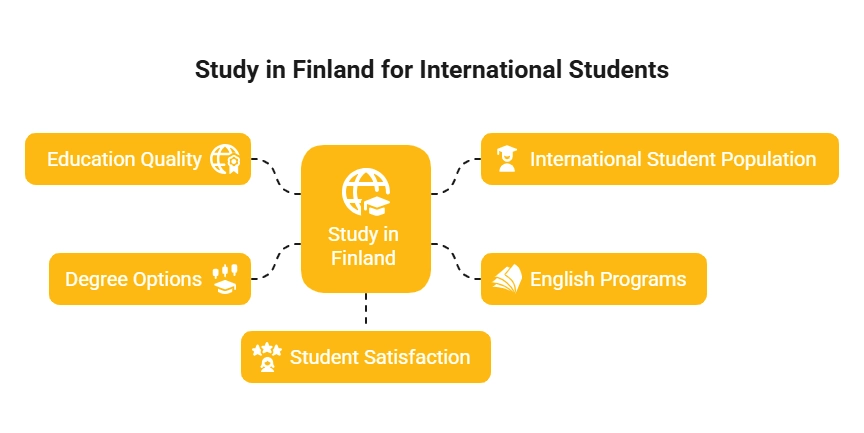
- Top 10 globally for higher education quality.
- Over 20,000 international students annually.
- 13 universities offering English programs.
- Bachelors and Master’s degrees in diverse disciplines.
- High student satisfaction with a focus on innovation and research.
Finland is an attractive destination for international students seeking high-quality education in a country known for its innovative teaching methods, strong academic culture, and vibrant student life. Studying in Finland offers a world-class education with various opportunities for career growth and personal development.
Why Choose to Study in Finland?
Studying in Finland offers numerous advantages, from exceptional education quality to opportunities for personal and professional growth. Finland has a reputation for innovation in teaching, research, and technology, with many of its universities ranking among the best in the world. Finland also offers an excellent work-life balance, a safe environment, and a culturally rich student life. Additionally, international students benefit from a unique social welfare system, affordable living costs, and the possibility of part-time work during their studies. Finland’s stunning natural beauty and friendly atmosphere make it an ideal place to live and study.
Top 10 Finland Universities for International Students
Here are some of the best universities in Finland for international students:
| # | QS World University Ranking (2025) | University Name | Approximate Tuition Fees (€) | Highlights |
|---|---|---|---|---|
| 1 | 112 | University of Helsinki | €13,000 - €18,000 | Finland’s oldest university, offering diverse programs, especially in social sciences and natural sciences. |
| 2 | 135 | Aalto University | €12,000 - €15,000 | Known for its engineering, technology, and business programs, Aalto is a leader in innovation. |
| 3 | 170 | University of Turku | €10,000 - €14,000 | Offers comprehensive programs in health sciences, arts, and technology. |
| 4 | 188 | University of Eastern Finland | €8,000 - €12,000 | Renowned for its biological sciences and education programs, with a strong focus on research. |
| 5 | 195 | University of Oulu | €10,000 - €15,000 | A leading university in information technology, engineering, and environmental sciences. |
| 6 | 220 | Tampere University | €10,000 - €12,000 | Known for its engineering, health sciences, and social sciences programs. |
| 7 | 240 | Hanken School of Economics | €12,000 - €18,000 | A top business school offering courses in business and economics, with a focus on international trade. |
| 8 | 250 | Lappeenranta-Lahti University of Technology (LUT) | €10,000 - €12,000 | Specializes in engineering, business, and sustainability studies, focusing on renewable energy. |
| 9 | 280 | University of Lapland | €8,000 - €10,000 | Known for its arts, tourism, and cultural studies programs. |
| 10 | 300 | Åbo Akademi University | €8,000 - €10,000 | Offers programs in humanities, natural sciences, and engineering, with an emphasis on multilingualism. |
Finland Student Visa
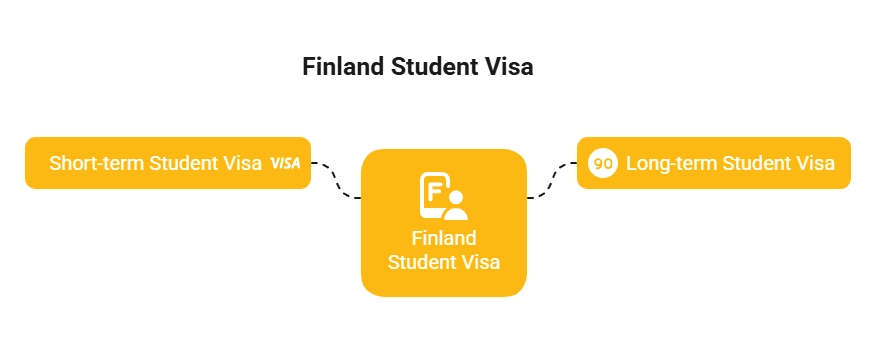
To study in Finland, international students must apply for a student visa. There are two types of Finland student visa:
- Short-term student visa: For courses lasting less than 90 days.
- Long-term student visa: For courses lasting more than 90 days, such as degree programs.
Both visa types require proof of enrollment, financial support, and health insurance.
Popular Courses in Finland for International Students
Finland offers a diverse range of programs for international students. Some of the most popular fields of study include:
| # | Course Name | Leading Universities in Finland | Estimated Tuition Fees (€ / Year) |
|---|---|---|---|
| 1 | Computer Science & Information Technology | Aalto University, University of Helsinki | €15,000 – €25,000 |
| 2 | Business Administration / MBA | Aalto University, Hanken School of Economics, Tampere University | €12,000 – €20,000 |
| 3 | Renewable Energy & Sustainability | LUT University, Aalto University | €13,500 – €22,000 |
| 4 | Forestry & Environmental Technology | University of Eastern Finland, Aalto University | €12,000 – €18,000 |
| 5 | Early Childhood Education | University of Helsinki, University of Turku | €10,000 – €12,000 |
| 6 | Tourism & Hospitality Management | Haaga-Helia UAS, Lapland University of Applied Sciences | €10,000 – €15,000 |
| 7 | Design & Digital Media | Aalto University, Tampere University | €18,000 – €25,000 |
| 8 | Biomedical & Health Sciences | University of Turku, University of Eastern Finland | €10,000 – €15,000 |
| 9 | General Engineering | Tampere University, University of Oulu | €8,000 – €15,000 |
| 10 | Business Analytics & Digital Business | Metropolia UAS, South-Eastern Finland UAS (XAMK) | €9,000 – €12,000 |
*Note: With a strong emphasis on innovation, many universities also offer interdisciplinary programs in sustainability, entrepreneurship, and artificial intelligence.
Best Master’s Degree Programs to Study in Finland (2025)
- Business Administration (MBA)
- Leading Universities: Aalto University, Hanken School of Economics, Tampere University
- Focus on: Leadership, strategy, finance, and entrepreneurship.
- Data Science
- Leading Universities: University of Helsinki, Aalto University, University of Turku
- Focus on: Data analysis, machine learning, artificial intelligence, and big data.
- Engineering
- Leading Universities: Aalto University, Tampere University, University of Oulu
- Focus on: Robotics, automation, software engineering, and sustainable technologies.
- Social Work
- Leading Universities: University of Helsinki, University of Tampere
- Focus on: Social justice, policy, and welfare systems.
- Renewable Energy & Sustainability
- Leading Universities: LUT University, Aalto University
- Focus on: Renewable energy systems, sustainability practices, and environmental engineering.
- Finance and Economics
- Leading Universities: University of Helsinki, Aalto University
- Focus on: Corporate finance, international finance, and economic analysis.
- Design & Digital Media
- Leading Universities: Aalto University, Tampere University
- Focus on: Graphic design, UX/UI, digital media production, and visual arts.
- Computer Science & Information Technology
- Leading Universities: University of Helsinki, Aalto University
- Focus on: Software development, computer engineering, and cyber security.
- Health Sciences
- Leading Universities: University of Turku, University of Eastern Finland
- Focus on: Biomedical sciences, healthcare management, and public health.
- Environmental Sciences
- Leading Universities: University of Eastern Finland, University of Helsinki
- Focus on: Environmental conservation, climate change research, and sustainable development.
These Master's degree programs in Finland provide high-quality education with a strong emphasis on research, innovation, and practical application, making graduates well-prepared for the global job market.
Eligibility Criteria for International Students Who Want to Study in Finland
To be eligible to study in Finland, international students must meet the following criteria:
- Valid passport and eligibility to enter Finland.
- Acceptance letter from a Finnish university or higher education institution.
- Proof of financial means to support living and tuition fees while studying.
- English proficiency (IELTS, TOEFL, or equivalent) for English-taught programs.
- Health insurance for the duration of your stay in Finland.
Specific eligibility requirements may vary depending on the course and university.
Requirements to Study in Finland
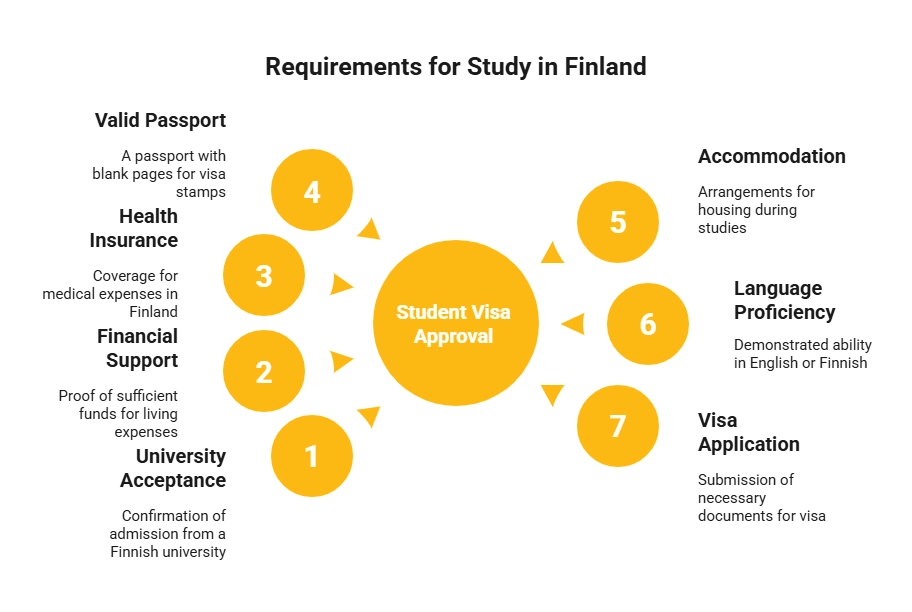
To apply for a student visa and study in Finland, you must meet the following general requirements:
- Acceptance from a Finnish university
- Proof of financial support (around €560 per month)
- Health insurance to cover medical expenses in Finland
- Valid passport with at least two blank pages
- Accommodation arrangements for the duration of your studies
- Proof of language proficiency (English or Finnish)
- Application for student visa and associated documents
Processing Fees of Finland Student Visa
| Visa Type | Fee (€) | Additional Costs |
|---|---|---|
| Finland Student Visa | €350 | Medical certificates, police certificates, biometric processing (additional costs may apply) |
*Note: The fee is non-refundable and must be paid upon application submission. Please check with the Finnish consulate for current fee details.
Processing Time of Finland Student Visa
Here’s the information in table format:
| Visa Type | Processing Time | Additional Information |
|---|---|---|
| Finland Student Visa | 2 to 3 Months | Apply well in advance, especially during peak application seasons. Ensure all documents are complete and accurate for faster processing. |
Admission Requirements to Study in Finland for International Students
To gain admission to Finnish universities, international students typically need:
- A high school diploma or equivalent for undergraduate programs.
- A bachelor’s degree for entry into master’s programs.
- Evidence of language proficiency in either English or Finnish (depending on the program).
- A valid passport and other relevant documentation.
Each university may have additional requirements, such as entrance exams or interviews.
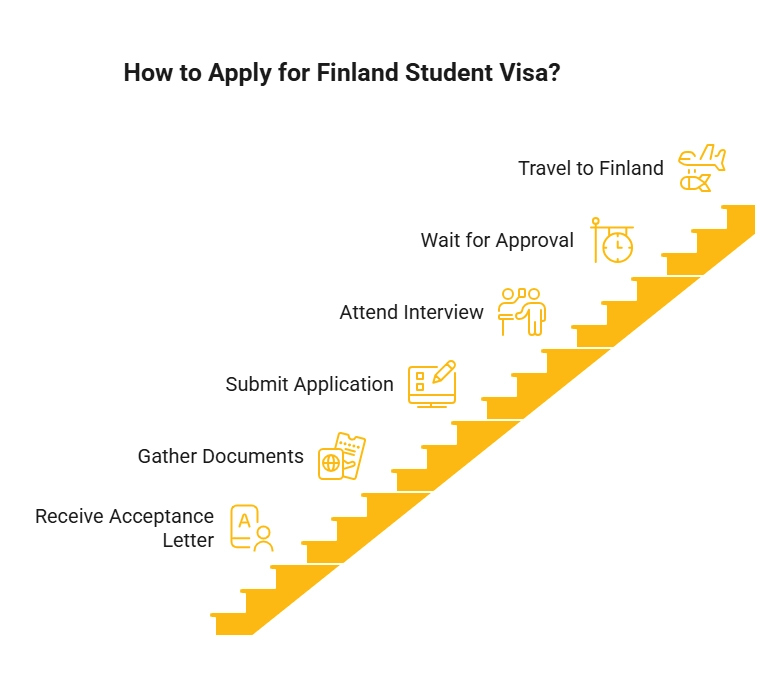
How to Apply for Finland Student Visa?
To apply for a Finland student visa, follow these steps:
Step 1: Receive an Acceptance Letter
The first step is to secure an acceptance letter from a recognized Finnish university or educational institution. This letter confirms that you have been admitted to a program and is a requirement for the visa application. Ensure you meet the university’s entry requirements and have all necessary documents, including language proficiency and academic records.
Step 2: Gather Required Documents
After receiving your acceptance letter, you need to gather the necessary documents. These typically include:
- Proof of financial support to demonstrate that you can support yourself during your studies (bank statements, scholarship documents, etc.).
- Health insurance that covers your stay in Finland.
- Accommodation proof, such as a rental agreement or university housing confirmation.
- Valid passport and other personal identification documents.
Step 3: Submit Visa Application
Submit your completed student visa application at your nearest Finnish embassy or consulate. Be sure to complete the application form accurately and submit it along with all the required documents. Some embassies may allow online submissions, while others may require in-person applications.
Step 4: Attend Visa Interview (if necessary)
In some cases, you may be required to attend a visa interview. This will typically involve confirming your purpose of stay, your financial ability, and your intent to return to your home country after your studies. Make sure to be prepared to answer questions about your course, accommodation, and future plans in Finland.
Step 5: Wait for Visa Approval
Once your application is submitted, the Finnish authorities will process it, which usually takes between 2 to 3 months. Ensure that you have provided all the necessary documents to avoid any delays. Check with the embassy for any additional documents they may require.
Step 6: Travel to Finland
Once your student visa is approved, you will receive a notification and can travel to Finland. Upon arrival, you may need to complete some post-arrival procedures, such as registering with local authorities or obtaining a residence permit. Once everything is in place, you can begin your studies and enjoy your time in Finland!
Scholarships for Studying in Finland
Finland offers various scholarships to help international students finance their education. Some popular scholarships include:
- Finnish Government Scholarship Pool
- University-specific scholarships for international students
- Erasmus Mundus and other EU-funded scholarships
*Note: Check with individual universities for specific scholarship opportunities and eligibility criteria.
Y-Axis – Expert Finland Study Visa Consultants
Y-Axis offers comprehensive support to students aspiring to study in Finland. Their assistance includes a range of essential services such as,
- Free Counseling: Free Counseling on university and course selection.
- Campus Ready Program: Fly to Finland with the best and ideal course.
- Course Recommendation: Y-Path gives the best suitable ideas about your study and career options.
- Coaching: Y-Axis offers IELTS live classes to help students clear with high scores.
- Finland Student Visa: Our expert team helps you to get a Finland student Visa.
Our Accreditations
.jpg) |
Don't know what to do ?
Get Free Counseling
Looking for Inspiration
Explore what Global Citizens have to say about Y-Axis in shaping their future
Frequently Asked Questions