

Posted on July 16 2026
Top 10 Countries for Pharmacists to Work Abroad: Salary, Demand & PR Opportunities Compared

By , Editor & Director
Updated July 16 2026
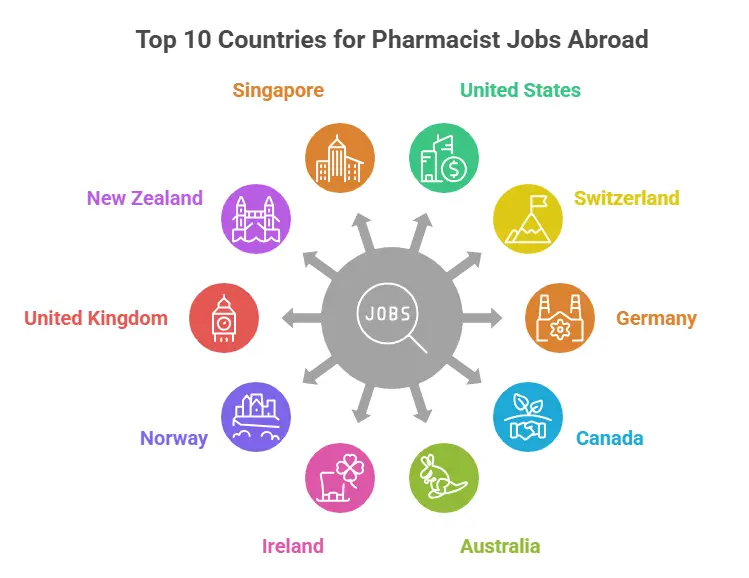
The best countries for pharmacists to work abroad are the United States, Australia, the United Kingdom, New Zealand, Ireland, Canada, Germany, Switzerland, Norway, and Singapore. These countries offer competitive salaries, strong demand for pharmacists, recognised licensing pathways, work visa options, and permanent residency (PR) opportunities. According to the World Health Organization (WHO), the global health workforce could face a shortage of around 11 million health workers by 2030. Rising healthcare needs, ageing populations, and expanding pharmacy services are increasing demand for pharmacists, prompting many countries to recruit pharmacists from overseas.
*Want to work abroad? Sign up with Y-Axis Resume Marketing Services to find right job faster.
Benefits of Working Abroad as a Pharmacist
Working abroad gives pharmacists access to higher salaries, strong job demand, and long-term career opportunities. Many countries also offer work visas, recognised licensing pathways, and permanent residency (PR) options for eligible pharmacists.
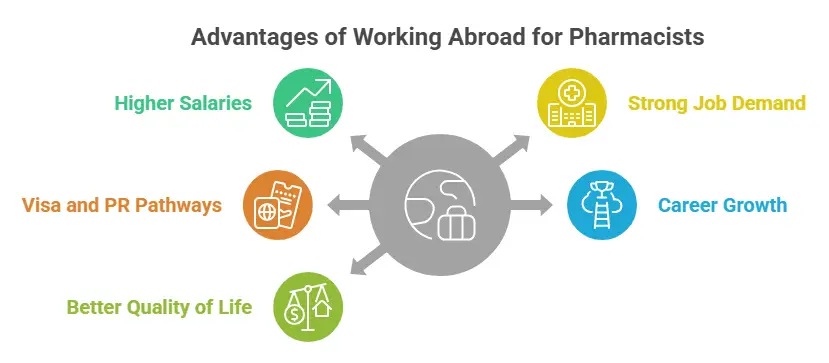
- Higher salaries with competitive pay and employment benefits.
- Strong job demand across hospitals, clinics, and community pharmacies.
- Work visa and PR pathways in several leading destinations.
- Career growth through advanced healthcare systems and specialised roles.
- Better quality of life with stable employment and work-life balance.
How to Choose the Right Country for Pharmacist Jobs Abroad?
Choosing the right country depends on your career goals, salary expectations, licensing requirements, and long-term immigration plans. Comparing these factors can help you identify the best destination for your pharmacy career.
- Job demand: Look for countries with strong demand for pharmacists and regular overseas recruitment.
- Salary and benefits: Compare average salaries, employment benefits, and the cost of living.
- Licensing requirements: Check the registration process, required exams, and language proficiency criteria.
- Work visa and PR options: Choose countries that offer clear work visa and permanent residency pathways.
- Career opportunities: Consider opportunities for specialisation, professional development, and career progression.
Top 10 Highest-Paying Countries for Pharmacists to Work Abroad
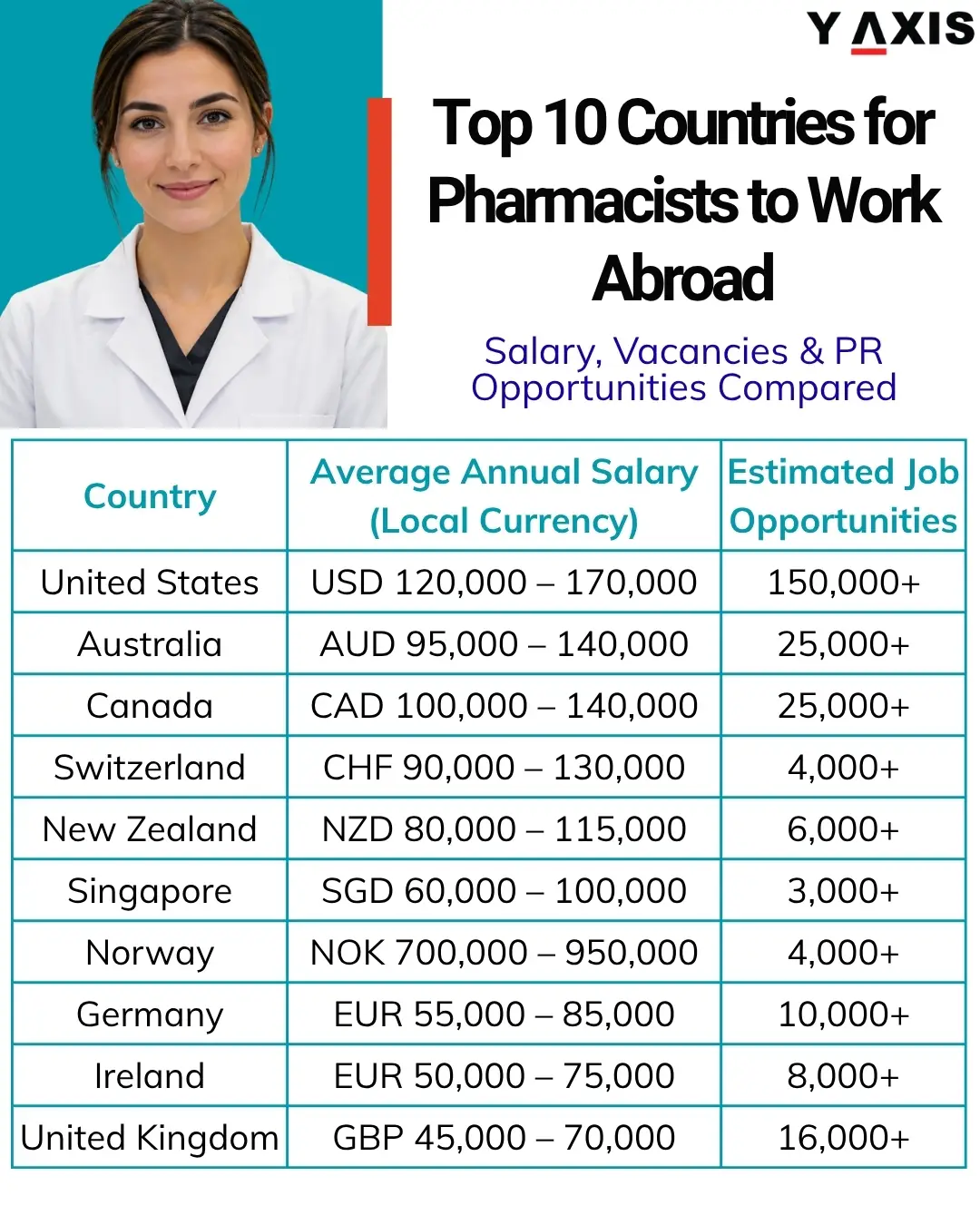
Pharmacists are among the most in-demand healthcare workers worldwide, creating strong career opportunities in countries with expanding healthcare systems. In leading destinations such as the United States, pharmacists can earn more than USD 120,000 annually, while countries including Australia, Canada, the United Kingdom, and Switzerland also offer competitive salaries. Along with attractive pay, these countries provide strong job demand, recognised licensing pathways, work visa options, and permanent residency (PR) opportunities.
|
Country |
Average Annual Salary (Local Currency) |
Estimated |
|
United States |
USD 120,000 – USD 170,000 |
150,000+ |
|
Australia |
AUD 95,000 – AUD 140,000 |
25,000+ |
|
Canada |
CAD 100,000 – CAD 140,000 |
25,000+ |
|
United Kingdom |
GBP 45,000 – GBP 70,000 |
16,000+ |
|
Germany |
EUR 55,000 – EUR 85,000 |
10,000+ |
|
Ireland |
EUR 50,000 – EUR 75,000 |
8,000+ |
|
New Zealand |
NZD 80,000 – NZD 115,000 |
6,000+ |
|
Switzerland |
CHF 90,000 – CHF 130,000 |
4,000+ |
|
Norway |
NOK 700,000 – NOK 950,000 |
4,000+ |
|
Singapore |
SGD 60,000 – SGD 100,000 |
3,000+ |
*Want to work abroad? Sign up with Y-Axis Resume Marketing Services to find right job faster.
Best Countries for Pharmacists to Work and Settle Abroad
Working and settling abroad as a pharmacist offers the opportunity to build a stable career and long-term future. Many countries provide competitive salaries, strong job demand, recognised licensing pathways, work visa options, and permanent residency (PR) opportunities for eligible pharmacists. Choosing the right destination depends on factors such as career growth, quality of life, and immigration pathways that align with your long-term goals.
Pharmacist Jobs in the United States
The United States offers some of the highest salaries for pharmacists, with annual earnings often exceeding USD 120,000. Pharmacists play a vital role in patient care by dispensing medications, managing drug therapies, administering vaccinations, and providing medication counselling. They work across community pharmacies, hospitals, specialty clinics, long-term care facilities, pharmaceutical companies, and research organisations.
The country's large healthcare sector and increasing demand for prescription and clinical pharmacy services continue to create employment across a wide range of practice settings. Pharmacists also build careers in clinical pharmacy, oncology, ambulatory care, infectious diseases, and research. High salaries, diverse career options, and advanced healthcare services make the United States a popular destination for pharmacists seeking international careers.
|
Factor |
Details |
|
Pharmacist Job Market & Estimated Opportunities for the Next Decade |
The US pharmacy sector is expected to generate more than 150,000 job openings over the next decade as healthcare demand grows, the population ages, and clinical pharmacy services continue to expand. |
|
Investment in Healthcare & Pharmacy Services |
The US Government and private sector invest more than USD 4.5 trillion annually in healthcare, supporting hospitals, pharmaceutical services, clinical care expansion, and workforce development across the country. |
|
In-Demand Pharmacist Roles & Skills |
Clinical, hospital, retail, and oncology pharmacists, along with pharmacists in the pharmaceutical industry, remain in high demand. Employers value skills such as medication therapy management, patient counselling, prescription review, and clinical support. |
|
Work Visa Options for Pharmacists |
Pharmacists can work in the United States through the H-1B Visa, employer-sponsored work visas, and EB-2 and EB-3 employment-based immigration pathways. |
|
Priority Hiring & Recruitment Pathways |
Employers recruit pharmacists through the H-1B Visa, employer-sponsored work visas, and EB-2 and EB-3 employment-based immigration pathways to address workforce shortages. |
|
PR / Long-Term Residence Opportunities |
Employment-based immigration pathways, including EB-2 and EB-3, offer overseas pharmacists a route to obtain a Green Card. |
|
Registration & Practice Requirements |
Overseas pharmacists must obtain FPGEC certification, pass the NAPLEX examination, and meet the licensing requirements set by the relevant state board before practising. |
|
Language Requirements |
Overseas pharmacists must meet English language requirements by completing TOEFL or another approved language assessment. |
|
Eligibility for Dependants |
Most work visas and employment-based immigration pathways allow spouses and dependent children to accompany the primary applicant. |
|
Benefits for Family Members |
Depending on the visa category, eligible family members may receive dependent visa status and access to education. |
*Want to work in the United States? Get expert guidance from Y-Axis professionals.
Pharmacist Jobs in Australia
Australia offers pharmacists a broad scope of practice within a modern and patient-focused healthcare system. Pharmacists contribute to medication management, preventive healthcare, chronic disease management, and vaccination services across community pharmacies, hospitals, aged care facilities, primary healthcare centres, and rural health services.
Growing healthcare needs and expanded pharmacy services continue to increase demand for pharmacists across the country. Australia also provides career pathways in clinical pharmacy, oncology, mental health, and aged care. Competitive salaries, strong employment demand, structured career progression, and a high quality of life have made Australia one of the most popular countries for pharmacists seeking to work and settle abroad.
|
Factor |
Details |
|
Pharmacist Job Market & Estimated Opportunities for the Next Decade |
Australia's pharmacy sector is expected to generate more than 25,000 job openings over the next decade, supported by workforce shortages, an ageing population, and rising demand for clinical and prescription pharmacy services. |
|
Investment in Healthcare & Pharmacy Services |
The Australian Government has committed more than AUD 140 billion to healthcare, supporting workforce expansion, aged care, pharmacy services, and improvements across the healthcare system. |
|
In-Demand Pharmacist Roles & Skills |
Clinical, hospital, retail, aged care, and community pharmacists remain in demand. Employers seek skills in medication management, patient counselling, prescription review, and clinical support. |
|
Work Visa Options for Pharmacists |
Pharmacists can apply through the Skilled Independent Visa (189), Skilled Nominated Visa (190), Employer Nomination Scheme (186), Skills in Demand Visa (482), and Skilled Work Regional Visa (491). |
|
Priority Hiring & Recruitment Pathways |
Pharmacists are recruited through skilled migration programs, employer-sponsored visas, and regional recruitment pathways to meet workforce demand across Australia. |
|
PR / Long-Term Residence Opportunities |
Permanent residency pathways include the Skilled Independent Visa (189), Skilled Nominated Visa (190), Employer Nomination Scheme (186), and the Skilled Work Regional Visa (491), which provides a pathway to permanent residency. |
|
Registration & Practice Requirements |
Overseas pharmacists must register with the Pharmacy Board of Australia and complete all required qualification assessment requirements before practising. |
|
Language Requirements |
Overseas pharmacists must demonstrate English language proficiency through IELTS, OET, or other approved English language tests. |
|
Eligibility for Dependants |
Skilled migration visas generally allow spouses and dependent children to accompany the primary applicant. |
|
Benefits for Family Members |
Depending on the visa conditions, eligible family members may receive work rights, access to education, and healthcare benefits. |
*Planning to Work in Australia? Let Y-Axis guide you through every step of the process.
Pharmacist Jobs in Canada
Canada has expanded the role of pharmacists, making them an important part of primary healthcare and patient care teams. In many provinces, pharmacists provide medication reviews, prescribe for minor ailments, administer vaccinations, and support chronic disease management. They work in community pharmacies, hospitals, primary care clinics, long-term care facilities, and the pharmaceutical industry.
Rising healthcare needs and an ageing population continue to increase demand for pharmacists across the country. Competitive salaries, a high standard of living, and permanent residency pathways have made Canada one of the most popular destinations for pharmacists looking to build a long-term career and settle abroad.
|
Factor |
Details |
|
Pharmacist Job Market & Estimated Opportunities for the Next Decade |
Canada's pharmacy sector is expected to create more than 25,000 job openings over the next decade, driven by healthcare workforce shortages, an ageing population, and growing demand across hospitals, community pharmacies, and long-term care facilities. |
|
Investment in Healthcare & Pharmacy Services |
The Canadian Government has committed nearly CAD 200 billion to healthcare funding over the next decade, supporting workforce development, patient care services, and the expansion of healthcare infrastructure. |
|
In-Demand Pharmacist Roles & Skills |
Clinical, hospital, community, retail, and long-term care pharmacists remain in demand. Employers seek skills in medication management, patient counselling, prescription review, and clinical support. |
|
Work Visa Options for Pharmacists |
Pharmacists can immigrate through Express Entry, Provincial Nominee Programs (PNPs), and employer-sponsored work permits. |
|
Priority Hiring & Recruitment Pathways |
Healthcare employers recruit pharmacists through Express Entry, Provincial Nominee Programs (PNPs), and employer-sponsored hiring to meet workforce needs across Canada. |
|
PR / Long-Term Residence Opportunities |
Express Entry and Provincial Nominee Programs (PNPs) provide permanent residency pathways, with healthcare occupations frequently prioritised in selection draws. |
|
Registration & Practice Requirements |
Overseas pharmacists must complete licensing and register with the pharmacy regulatory authority in the province or territory where they intend to practise. |
|
Language Requirements |
Overseas pharmacists must demonstrate English or French language proficiency through approved tests such as IELTS or TEF. |
|
Eligibility for Dependants |
Work permits and permanent residency pathways generally allow spouses and dependent children to accompany the primary applicant. |
|
Benefits for Family Members |
Depending on the visa or immigration pathway, eligible family members may receive work rights, access to public healthcare, and education benefits. |
*Want to work in Canada? Get expert guidance from Y-Axis professionals.
Pharmacist Jobs in the United Kingdom
The United Kingdom offers pharmacists a wide range of career options through the National Health Service (NHS) and the private healthcare sector. Pharmacists work in community pharmacies, hospitals, GP practices, care homes, and the pharmaceutical industry. The growing focus on primary care, medicines optimisation, and independent prescribing has expanded the role of pharmacists across the healthcare system.
Career pathways are available in clinical pharmacy, oncology, mental health, paediatrics, and other specialist areas. Competitive salaries, structured professional development, and a well-established healthcare system make the United Kingdom a popular destination for pharmacists seeking international career growth.
|
Factor |
Details |
|
Pharmacist Job Market & Estimated Opportunities for the Next Decade |
The UK pharmacy sector is projected to face more than 16,000 pharmacist shortages over the next decade, driven by rising healthcare demand and workforce gaps across NHS hospitals, community pharmacies, and clinical care services. |
|
Investment in Healthcare & Pharmacy Services |
The UK Government invests more than GBP 200 billion annually in the NHS and healthcare sector, supporting hospitals, community healthcare, digital health systems, and workforce expansion. |
|
In-Demand Pharmacist Roles & Skills |
Clinical, hospital, community, retail, and prescribing pharmacists remain in demand. Employers seek skills in medication management, prescription review, patient counselling, and clinical support. |
|
Work Visa Options for Pharmacists |
Pharmacists can work in the UK through the Skilled Worker Visa and Health and Care Worker Visa. |
|
Priority Hiring & Recruitment Pathways |
The NHS, community pharmacies, and healthcare employers recruit pharmacists through the Skilled Worker Visa and Health and Care Worker Visa to address workforce shortages. |
|
PR / Long-Term Residence Opportunities |
Overseas pharmacists may become eligible for Indefinite Leave to Remain (ILR) after completing the required residence period in the UK. |
|
Registration & Practice Requirements |
Overseas pharmacists must register with the General Pharmaceutical Council (GPhC) and meet all qualification and assessment requirements before practising. |
|
Language Requirements |
Overseas pharmacists must demonstrate English language proficiency through IELTS or other approved language tests. |
|
Eligibility for Dependants |
Skilled work visas generally allow spouses and dependent children to accompany the primary applicant. |
|
Benefits for Family Members |
Depending on the visa conditions, eligible family members may receive work rights, access to public education, and NHS healthcare. |
* Want to Work in the United Kingdom? Let Y-Axis guide you through the steps.
Pharmacist Jobs in Germany
Germany is home to one of Europe's largest pharmaceutical industries, offering pharmacists careers in both healthcare and life sciences. Pharmacists work in community pharmacies, hospitals, pharmaceutical manufacturing, research laboratories, quality assurance, and regulatory affairs.
The country's expanding healthcare services and strong pharmaceutical sector continue to drive demand for pharmacists across multiple practice areas. Germany also offers opportunities to contribute to drug development, clinical research, and pharmaceutical innovation. Competitive salaries, advanced healthcare infrastructure and a globally recognised pharmaceutical industry make Germany a strong choice for pharmacists seeking international career growth and long-term employment.
|
Factor |
Details |
|
Pharmacist Job Market & Estimated Opportunities for the Next Decade |
Germany's pharmacy sector is projected to face more than 10,000 pharmacist shortages over the next decade, driven by an ageing population and rising healthcare demand across hospitals, pharmacies, and elderly care services. |
|
Investment in Healthcare & Pharmacy Services |
The German Government invests more than EUR 500 billion annually in healthcare, supporting hospital modernisation, digital healthcare, and workforce expansion. |
|
In-Demand Pharmacist Roles & Skills |
Clinical, hospital, and community pharmacists, along with pharmacists in the pharmaceutical industry, remain in demand. Employers seek skills in medication management, prescription review, patient counselling, and clinical support. |
|
Work Visa Options for Pharmacists |
Pharmacists can work in Germany through the EU Blue Card, Skilled Worker Visa, and employer-sponsored work visas. |
|
Priority Hiring & Recruitment Pathways |
Employers recruit pharmacists through the EU Blue Card, Skilled Worker Visa, and employer-sponsored work visas to meet workforce needs across Germany. |
|
PR / Long-Term Residence Opportunities |
Overseas pharmacists may become eligible for permanent residence after completing the required residence period and meeting German language proficiency requirements. |
|
Registration & Practice Requirements |
Overseas pharmacists must complete formal qualification recognition (Anerkennung) and fulfil all licensing requirements before practising in Germany. |
|
Language Requirements |
Overseas pharmacists must demonstrate B2-level German language proficiency for registration and patient-facing employment. |
|
Eligibility for Dependants |
Skilled worker visas generally allow spouses and dependent children to accompany the primary applicant. |
|
Benefits for Family Members |
Eligible family members may receive work rights, access to public education, and comprehensive public healthcare coverage. |
Pharmacist Jobs in Ireland
Ireland is one of Europe's leading pharmaceutical and biotechnology hubs, creating diverse career paths for pharmacists in healthcare and the life sciences sector. Pharmacists work in community pharmacies, hospitals, primary care services, pharmaceutical manufacturing, quality assurance, and regulatory affairs. The country's strong pharmaceutical industry, growing healthcare investment, and increasing demand for pharmacy services continue to support employment across multiple sectors.
Ireland is home to many global pharmaceutical companies, offering opportunities beyond traditional pharmacy practice. Competitive salaries, English-speaking workplaces, and clear career progression make Ireland a popular destination for pharmacists seeking to work abroad.
|
Factor |
Details |
|
Pharmacist Job Market & Estimated Opportunities for the Next Decade |
Ireland's pharmacy sector is expected to create more than 8,000 job openings over the next decade, driven by healthcare workforce shortages and growing demand across hospitals, community pharmacies, and long-term care services. |
|
Investment in Healthcare & Pharmacy Services |
The Irish Government has committed more than EUR 27 billion to healthcare services, supporting long-term infrastructure development, workforce expansion, and improved access to healthcare. |
|
In-Demand Pharmacist Roles & Skills |
Clinical, hospital, community, and retail pharmacists remain in demand. Employers seek skills in medication management, prescription review, patient counselling, and clinical support. |
|
Work Visa Options for Pharmacists |
Pharmacists can work in Ireland through the Critical Skills Employment Permit, General Employment Permit, and employer-sponsored work permits. |
|
Priority Hiring & Recruitment Pathways |
Employers recruit pharmacists through the Critical Skills Employment Permit, General Employment Permit, and employer-sponsored work permits to meet workforce needs across Ireland. |
|
PR / Long-Term Residence Opportunities |
Overseas pharmacists may become eligible for Stamp 4 residence after meeting the required employment and residence requirements in Ireland. |
|
Registration & Practice Requirements |
Overseas pharmacists must register with the Pharmaceutical Society of Ireland (PSI) and complete all required qualification assessment requirements before practising. |
|
Language Requirements |
Overseas pharmacists must demonstrate English language proficiency through IELTS or other recognised language tests. |
|
Eligibility for Dependants |
Employment permits generally allow spouses and dependent children to accompany the primary applicant. |
|
Benefits for Family Members |
Depending on the employment permit conditions, eligible family members may receive work rights, access to public education, and healthcare services. |
Pharmacist Jobs in New Zealand
New Zealand offers pharmacists the opportunity to build rewarding careers in a healthcare system that emphasises accessible, community-based care. Pharmacists work in community pharmacies, public and private hospitals, primary healthcare services, aged care facilities, and rural health centres.
The country's focus on preventive healthcare, medication safety, and patient-centred services continues to increase demand for pharmacists across urban and regional areas. Pharmacists also collaborate closely with doctors, nurses, and other healthcare providers to improve patient outcomes. Competitive salaries, a healthy work-life balance, and a high standard of living make New Zealand an attractive country for pharmacists seeking international career growth.
|
Factor |
Details |
|
Pharmacist Job Market & Estimated Opportunities for the Next Decade |
New Zealand's pharmacy sector is expected to create more than 6,000 job openings over the next decade, driven by workforce shortages, an ageing population, and growing healthcare demand across hospitals and community services. |
|
Investment in Healthcare & Pharmacy Services |
The New Zealand Government has committed more than NZD 5.5 billion to healthcare system improvements, supporting workforce development, digital healthcare expansion, and patient care services. |
|
In-Demand Pharmacist Roles & Skills |
Clinical, hospital, community, and retail pharmacists remain in demand. Employers seek skills in medication management, patient counselling, prescription review, and clinical support. |
|
Work Visa Options for Pharmacists |
Pharmacists can work in New Zealand through the Accredited Employer Work Visa (AEWV), Skilled Migrant Category, and employer-sponsored work visas. |
|
Priority Hiring & Recruitment Pathways |
Employers recruit pharmacists through the Accredited Employer Work Visa (AEWV), Skilled Migrant Category, and employer-sponsored work visas to meet workforce needs across New Zealand. |
|
PR / Long-Term Residence Opportunities |
Residence pathways are available through the Green List and Skilled Migrant Category, based on qualifications and work experience. |
|
Registration & Practice Requirements |
Overseas pharmacists must register with the Pharmacy Council of New Zealand and complete all required qualification assessment requirements before practising. |
|
Language Requirements |
Overseas pharmacists must demonstrate English language proficiency through IELTS, OET, or other recognised language tests. |
|
Eligibility for Dependants |
Skilled work visas generally allow spouses and dependent children to accompany the primary applicant. |
|
Benefits for Family Members |
Depending on the visa conditions, eligible family members may receive work rights, access to public education, and healthcare services. |
Pharmacist Jobs in Switzerland
Switzerland offers some of the highest pharmacist salaries in Europe and is home to a globally recognised pharmaceutical industry. Pharmacists work in community pharmacies, hospitals, pharmaceutical companies, research institutions, and regulatory organisations.
The country's strong focus on pharmaceutical innovation, biotechnology, and precision medicine has created diverse career paths beyond traditional pharmacy practice. Switzerland is also home to several multinational pharmaceutical companies, providing opportunities in drug development, clinical research, and quality management. High salaries, world-class healthcare infrastructure, and a strong life sciences sector make Switzerland a top destination for pharmacists seeking international career advancement.
|
Factor |
Details |
|
Pharmacist Job Market & Estimated Opportunities for the Next Decade |
Switzerland's pharmacy sector is expected to create more than 4,000 job opportunities over the next decade, driven by growing healthcare demand, an ageing population, and increasing demand for pharmaceutical and patient care services. |
|
Investment in Healthcare & Pharmacy Services |
Switzerland invests more than CHF 90 billion annually in healthcare, supporting hospitals, pharmaceutical services, medical research, and workforce development. |
|
In-Demand Pharmacist Roles & Skills |
Clinical, hospital, community, retail, and pharmaceutical industry pharmacists remain in demand. Employers seek skills in medication management, patient counselling, prescription review, and clinical support. |
|
Work Visa Options for Pharmacists |
Pharmacists can work in Switzerland through an Employer-sponsored Swiss Work Permit, EU/EFTA Residence Permit, and skilled worker permits for non-EU nationals. |
|
Priority Hiring & Recruitment Pathways |
Employers recruit pharmacists through Employer-sponsored Swiss Work Permits, EU/EFTA Residence Permits, and skilled worker permits for non-EU nationals to meet workforce needs across Switzerland. |
|
PR / Long-Term Residence Opportunities |
Long-term residence opportunities are available after meeting the required residency period and integration requirements. |
|
Registration & Practice Requirements |
Overseas pharmacists must obtain qualification recognition through the relevant Swiss authority and meet all licensing requirements before practising. |
|
Language Requirements |
Applicants are generally required to demonstrate proficiency in German, French, or Italian, depending on the canton and workplace requirements. |
|
Eligibility for Dependants |
Eligible work permit holders may sponsor spouses and dependent children. |
|
Benefits for Family Members |
Depending on the permit conditions, eligible family members may receive access to education, healthcare, and residence benefits. |
Pharmacist Jobs in Norway
Norway offers pharmacists rewarding careers within a well-developed public healthcare system that prioritises medication safety and patient care. Pharmacists work in community pharmacies, hospitals, primary healthcare services, and medication management programmes across the country.
The growing demand for healthcare services and an ageing population continue to increase the need for pharmacists in both urban and regional areas. Pharmacists also contribute to public health initiatives, patient counselling, and chronic disease management. Competitive salaries, comprehensive employee benefits, a strong work-life balance, and a high standard of living make Norway an attractive country for pharmacists seeking to work abroad.
|
Factor |
Details |
|
Pharmacist Job Market & Estimated Opportunities for the Next Decade |
Norway's pharmacy sector is expected to create more than 4,000 job opportunities over the next decade, driven by an ageing population, increasing healthcare demand, pharmacist retirements, and the expanding role of pharmacists in clinical and community healthcare. |
|
Investment in Healthcare & Pharmacy Services |
The Norwegian Government invests more than NOK 260 billion annually in healthcare, supporting hospitals, primary healthcare, digital health services, pharmaceutical care, and workforce development. |
|
In-Demand Pharmacist Roles & Skills |
Clinical, hospital, community, retail, and primary care pharmacists are in demand. Employers seek skills in medication management, patient counselling, prescription review, clinical pharmacy, and pharmaceutical care. |
|
Work Visa Options for Pharmacists |
Skilled Worker Residence Permit, employer-sponsored residence permits. |
|
Priority Hiring & Recruitment Pathways |
Pharmacists are recruited through the Skilled Worker Residence Permit and employer-sponsored recruitment to support workforce needs across hospitals, community pharmacies, and healthcare services in Norway. |
|
PR / Long-Term Residence Opportunities |
Overseas pharmacists may become eligible for permanent residence after meeting the required residence period and other immigration requirements in Norway. |
|
Registration & Practice Requirements |
Overseas pharmacists must obtain authorisation from the Norwegian Directorate of Health and meet all qualification recognition requirements before practising. |
|
Language Requirements |
Overseas pharmacists must demonstrate B2-level Norwegian language proficiency to obtain authorisation and work in patient-facing roles. |
|
Eligibility for Dependants |
Eligible residence permit holders may sponsor spouses and dependent children. |
|
Benefits for Family Members |
Eligible family members may receive work rights, access to public education, and healthcare services, depending on the residence permit conditions. |
Pharmacist Jobs in Singapore
Singapore has established itself as one of Asia's leading healthcare and pharmaceutical hubs, offering pharmacists diverse career opportunities across healthcare and the life sciences sector. Pharmacists work in public and private hospitals, community pharmacies, specialty clinics, pharmaceutical companies, biotechnology firms, and biomedical research centres.
Continued investment in healthcare, pharmaceutical manufacturing, and biomedical innovation has strengthened demand for pharmacists across multiple industries. Pharmacists also contribute to clinical pharmacy, regulatory affairs, medication safety, and research. Competitive salaries, advanced healthcare facilities, and a globally connected pharmaceutical sector make Singapore a popular destination for pharmacists seeking international career growth.
|
Factor |
Details |
|
Pharmacist Job Market & Estimated Opportunities for the Next Decade |
Singapore's pharmacy sector is expected to create more than 3,000 job openings over the next decade, driven by healthcare expansion, an ageing population, and rising demand for clinical pharmacy services. |
|
Investment in Healthcare & Pharmacy Services |
The Singapore Government invests more than SGD 18 billion annually in healthcare, supporting hospitals, digital health systems, pharmaceutical services, and workforce development. |
|
In-Demand Pharmacist Roles & Skills |
Clinical, hospital, retail, and community pharmacists remain in demand. Employers seek skills in medication management, prescription review, patient counselling, and clinical support. |
|
Work Visa Options for Pharmacists |
Pharmacists can work in Singapore through the Employment Pass, S Pass, and employer-sponsored work permits. |
|
Priority Hiring & Recruitment Pathways |
Employers recruit pharmacists through the Employment Pass, S Pass, and employer-sponsored work permits to support Singapore's expanding healthcare sector. |
|
PR / Long-Term Residence Opportunities |
Overseas pharmacists may apply for Permanent Residency (PR) after meeting the required work and residency criteria in Singapore. |
|
Registration & Practice Requirements |
Overseas pharmacists must register with the Singapore Pharmacy Council (SPC) before practising in Singapore. |
|
Language Requirements |
Overseas pharmacists must demonstrate English language proficiency for registration and healthcare employment. |
|
Eligibility for Dependants |
Eligible work pass holders may sponsor spouses and dependent children, depending on the work pass type and salary requirements. |
|
Benefits for Family Members |
Depending on the applicable visa conditions, eligible family members may receive access to education and healthcare services. |
Job Outlook for Pharmacists over the Next 10 Years
The job outlook for pharmacists over the next 10 years is highly positive, with strong demand expected across hospitals, community pharmacies, primary healthcare, aged care, and the pharmaceutical industry. Ageing populations, rising rates of chronic diseases, expanding healthcare services, and greater access to medicines are increasing the need for pharmacy services worldwide.
Pharmacists are also taking on expanded clinical responsibilities, including medication management, patient counselling, vaccination services, and chronic disease support. Countries such as the United States, Canada, Australia, the United Kingdom, Germany, Ireland, and New Zealand are expected to continue recruiting pharmacists, creating excellent long-term career opportunities with competitive salaries and permanent residency pathways.
*Want to work abroad? Sign up with Y-Axis Resume Marketing Services to find right job faster.
Apply Now
FAQs
Which country is best for pharmacists to work abroad?
The best countries for pharmacists to work abroad include the United States, Canada, Australia, the United Kingdom, Germany, Ireland, New Zealand, Switzerland, Norway, and Singapore. These countries offer competitive salaries, strong demand for pharmacists, excellent healthcare systems, and long-term career growth. Many also provide work visa options and permanent residency pathways for eligible overseas pharmacists.
Which country pays the highest salary to pharmacists?
The United States offers some of the highest pharmacist salaries, with annual earnings ranging from USD 120,000 to USD 170,000. Switzerland, Canada, Australia, Germany, and New Zealand also offer competitive salaries. Actual earnings depend on experience, qualifications, employer, location, and the pharmacy sector, such as hospital, community, retail, or clinical pharmacy.
Which countries have the highest demand for pharmacists?
The United States, Canada, Australia, the United Kingdom, Germany, Ireland, New Zealand, Switzerland, Norway, and Singapore have strong demand for pharmacists. Healthcare workforce shortages, ageing populations, expanding clinical pharmacy services, and increasing demand for medication management continue to create employment opportunities across hospitals, community pharmacies, and pharmaceutical companies.
How can I work abroad as a pharmacist?
To work abroad as a pharmacist, you generally need a recognised pharmacy degree, professional registration or licence, language proficiency, and an approved work visa. Many countries also require qualification assessments or licensing examinations before overseas pharmacists can practise. Requirements vary depending on the destination country's pharmacy regulatory authority.
Can pharmacists immigrate to Canada?
Yes. Pharmacists can immigrate to Canada through Express Entry, Provincial Nominee Programs (PNPs), or employer-sponsored work permits. After meeting immigration requirements, overseas pharmacists must complete the required licensing process and register with the pharmacy regulatory authority in the province or territory where they plan to practise.
Are pharmacists in demand in Canada?
Yes. Pharmacists are in demand across many Canadian provinces because of healthcare workforce shortages, an ageing population, and growing demand for healthcare services. Employment opportunities are available in hospitals, community pharmacies, retail pharmacies, long-term care facilities, and specialised healthcare settings, with demand expected to remain strong over the next decade.
Do pharmacists need a licence to work abroad?
Yes. Most countries require overseas pharmacists to obtain professional registration or a licence before practising. The licensing process may include qualification assessment, language proficiency, document verification, and professional examinations. Requirements vary according to the destination country's pharmacy council or regulatory authority.
Which countries offer permanent residency for pharmacists?
Canada, Australia, New Zealand, Ireland, Germany, Norway, and the United Kingdom offer permanent residency or long-term residence pathways for eligible pharmacists. These pathways are available through skilled migration programs, employer-sponsored visas, or employment-based immigration, depending on the country's immigration policies and eligibility requirements.
Is IELTS required for pharmacists to work abroad?
Many countries require pharmacists to demonstrate language proficiency before registration or visa approval. Depending on the destination, accepted language tests may include IELTS, OET, TOEFL, TEF, or other recognised examinations. Language requirements vary based on the country's pharmacy regulatory authority and immigration rules.
What is the job outlook for pharmacists over the next 10 years?
The job outlook for pharmacists remains positive over the next decade. Rising healthcare demand, ageing populations, increasing chronic diseases, and expanding clinical pharmacy services are expected to create strong employment opportunities. Countries such as Canada, Australia, the United States, Germany, Ireland, and the United Kingdom are expected to continue recruiting pharmacists across multiple healthcare sectors.
Can overseas pharmacists work in Canada?
Yes. Overseas pharmacists can work in Canada after completing the required licensing process and registering with the pharmacy regulatory authority in the province or territory where they intend to practise. Canada offers opportunities in hospitals, community pharmacies, retail pharmacies, long-term care facilities, and the pharmaceutical industry for internationally qualified pharmacists who meet eligibility requirements.
What qualifications are required to work abroad as a pharmacist?
Most countries require a recognised pharmacy degree, professional registration, language proficiency, and successful completion of qualification assessments or licensing examinations. Some countries may also require relevant work experience before granting registration. Requirements vary according to the destination country's pharmacy regulatory authority and immigration rules.
Which pharmacist jobs are most in demand abroad?
Clinical pharmacists, hospital pharmacists, community pharmacists, retail pharmacists, oncology pharmacists, aged care pharmacists, and pharmacists in the pharmaceutical industry are among the most in-demand roles. Growing healthcare needs, medication management services, and expanding clinical pharmacy responsibilities continue to increase demand for these pharmacist specialisations worldwide.
What is the average salary of pharmacists abroad?
Pharmacist salaries vary by country, experience, employer, and job role. The United States offers annual salaries of USD 120,000–170,000, Canada CAD 100,000–140,000, Australia AUD 95,000–140,000, and the United Kingdom GBP 45,000–70,000. Countries such as Germany, Ireland, Switzerland, and New Zealand also offer competitive salaries and attractive employment benefits.
Can pharmacists move abroad with their family?
Yes. Many countries allow pharmacists to include spouses and dependent children in their work visa or permanent residency applications. Depending on the immigration program, eligible family members may receive work rights, access to public education, and healthcare benefits after moving to the destination country.
Which visa is best for pharmacists to work abroad?
The best visa depends on your destination country. Popular options include Express Entry and Provincial Nominee Programs (PNPs) in Canada, the Skilled Independent Visa (189) in Australia, the Skilled Worker Visa in the United Kingdom, the EU Blue Card in Germany, and employment-based visas in the United States.
Which skills are important for pharmacist jobs abroad?
Employers value skills in medication management, patient counselling, prescription review, clinical pharmacy, pharmaceutical care, communication, teamwork, and regulatory compliance. Knowledge of healthcare systems, patient safety, and evidence-based medication practices can also improve employment opportunities and career growth in international healthcare settings.
How long does it take to become a licensed pharmacist abroad?
The time required depends on the destination country and its licensing process. Qualification assessments, language tests, licensing examinations, and professional registration may take several months to over a year. Processing times vary according to the pharmacy regulatory authority and immigration requirements of each country.
Which countries are easiest for pharmacists to immigrate to?
Canada, Australia, New Zealand, Ireland, Germany, and the United Kingdom are among the most popular destinations for pharmacists seeking overseas employment. These countries offer skilled migration pathways, employer-sponsored visas, competitive salaries, and ongoing demand for pharmacists across multiple healthcare settings.
How can Y-Axis help pharmacists work abroad?
Y-Axis provides end-to-end support for pharmacists planning to work abroad. Services include profile evaluation, immigration guidance, visa application assistance, documentation support, job search guidance, and application management. Y-Axis also helps applicants understand country-specific requirements for working and settling abroad.
Tags:
Pharmacist Jobs Abroad
Best Countries for Pharmacists
Work Abroad for Pharmacists
Pharmacist Salary
Pharmacist Demand
Pharmacy Careers Abroad
Pharmacist Immigration
Permanent Residency for Pharmacists
Pharmacist Work Visa
Overseas Pharmacist Jobs
Share
Latest Article
Popular Post
Trending Article
Posted On September 16 2026
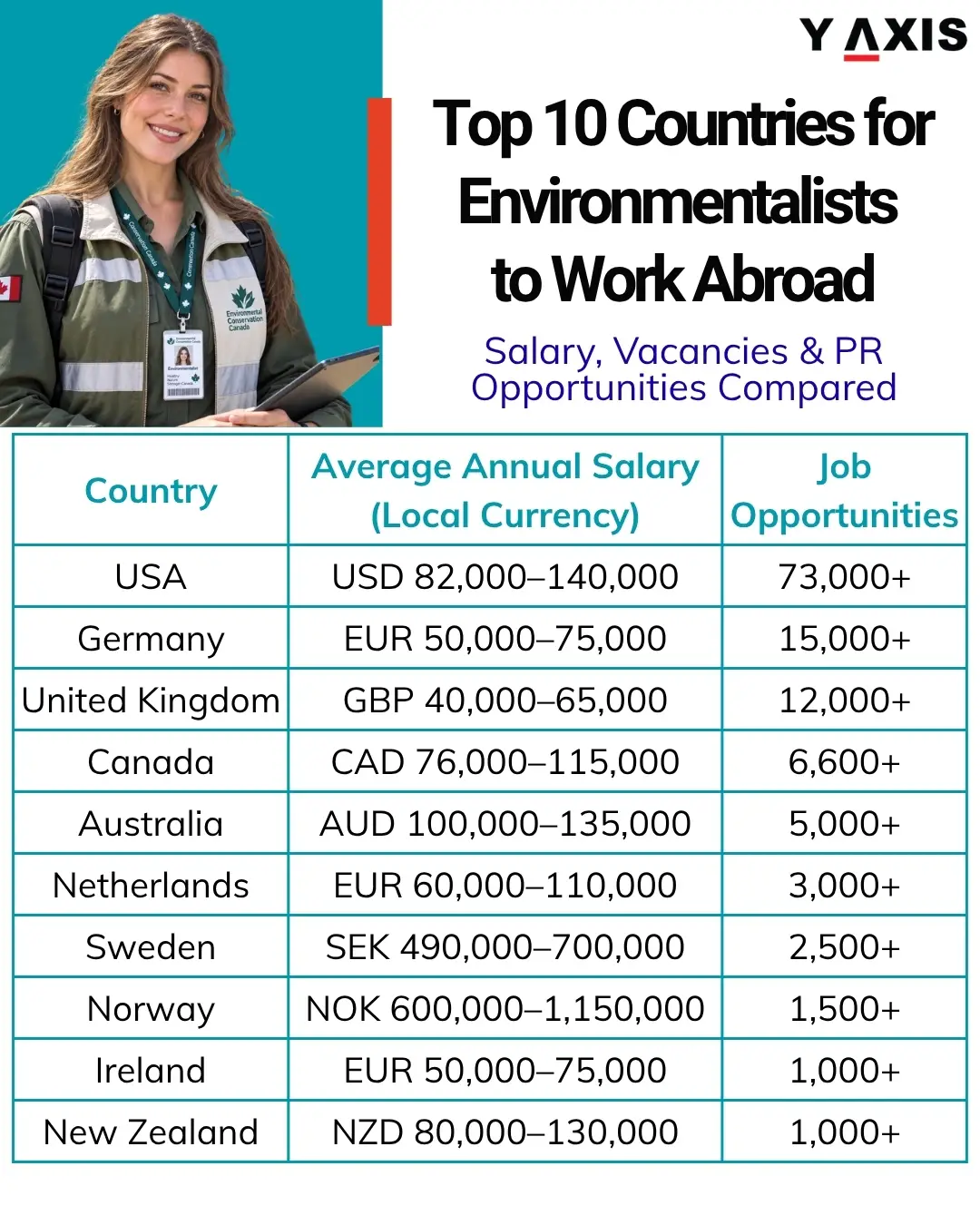
Top 10 Countries for Environmentalists to Work Abroad: Salary, Demand & PR Opportunities Compared