

Posted on October 20 2026
What Are the Different Types of Germany Visas to Immigrate?

By , Editor & Director
Updated October 22 2026
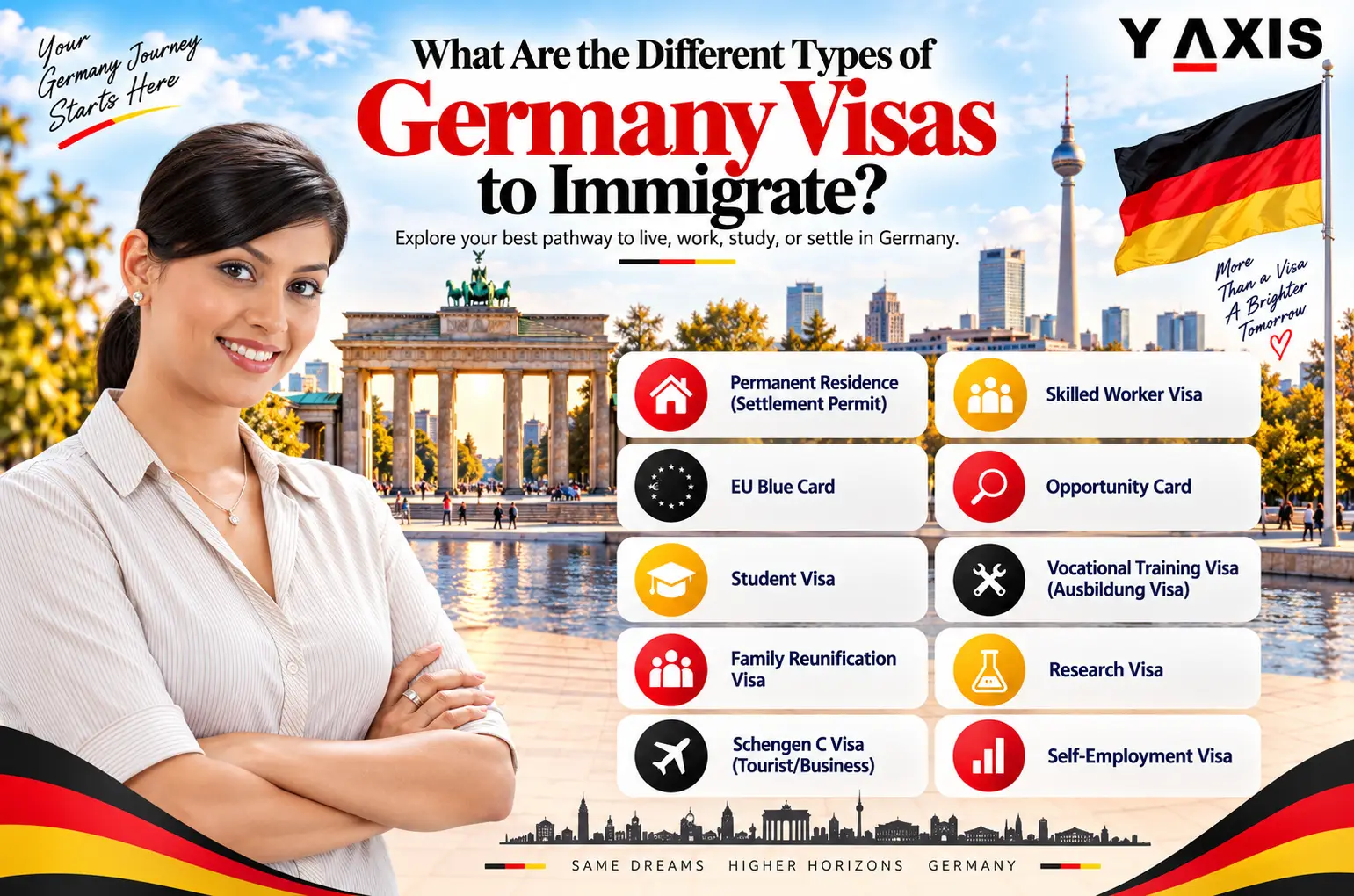
Germany offers several visa types for work, study, job search, vocational training, family reunification and self-employment. These include the Skilled Worker Visa, EU Blue Card, Opportunity Card (Chancenkarte), Student Visa, vocational training visa, family reunification visa and self-employment visa. The Opportunity Card allows applicants to search for work in Germany without a job offer. After meeting the required residence period and eligibility criteria, applicants can also apply for permanent residence through a settlement permit.
Canadian citizens can generally enter Germany without a visa and apply for a residence permit after arrival, while other foreign nationals may need a German national visa before travelling.
*Want to migrate to Germany? Book a free consultation with Y-Axis today.
Types of Germany Visas for Immigration
Germany offers different visa categories for employment, job searching, education, vocational training, family reunification and self-employment. Each visa type has specific eligibility requirements, required documents and application procedures.
|
Germany Visa Type |
Who Can Apply? |
Main Purpose |
|
Settlement Permit |
Foreign nationals meeting residence and eligibility requirements |
To live and work permanently in Germany |
|
Skilled Worker Visa |
Qualified professionals with a recognised qualification and job offer |
To work in Germany |
|
EU Blue Card |
Qualified professionals with a job offer meeting salary requirements |
To work in a qualified role and access a faster PR route |
|
Opportunity Card |
Applicants meeting qualification or points-based criteria |
To search for a job without an offer |
|
Student Visa |
Students admitted to a recognised German university |
To pursue higher education |
|
Vocational Training Visa |
Applicants with a confirmed training place |
To complete vocational training |
|
Family Reunification Visa |
Eligible family members of residents in Germany |
To join family in Germany |
|
Research Visa |
Researchers with a qualifying hosting agreement or contract |
To conduct research in Germany |
|
Self-Employment Visa |
Entrepreneurs and freelancers meeting applicable requirements |
To start a business or work independently |
Germany Visa Eligibility Requirements
Germany visa eligibility requirements vary by visa type. Applicants may need a valid passport, health insurance, proof of funds and documents supporting their reason for moving, such as a job offer, university admission or proof of family relationship. Work visa applicants may also need recognised qualifications and relevant experience.
- Valid passport: A valid passport for your planned stay in Germany.
- Job offer, admission or family relationship: A German job offer, university admission letter, vocational training agreement or proof of family relationship, depending on your visa type.
- Proof of funds: Evidence that you can cover your living expenses in Germany, where required.
- Qualifications and experience: Recognised degrees or vocational qualifications and relevant work experience, where required for your chosen visa.
- Opportunity Card: A recognised qualification or sufficient points under Germany’s points-based system, depending on the application route. A job offer is not required.
- Health insurance: Health insurance that meets German requirements.
- Visa application documents: A completed application form and the supporting documents required for your visa category.
*Not sure which Germany visa suits you? Get free eligibility assessment from Y-Axis today.
How to Apply for a Germany Visa from Canada?
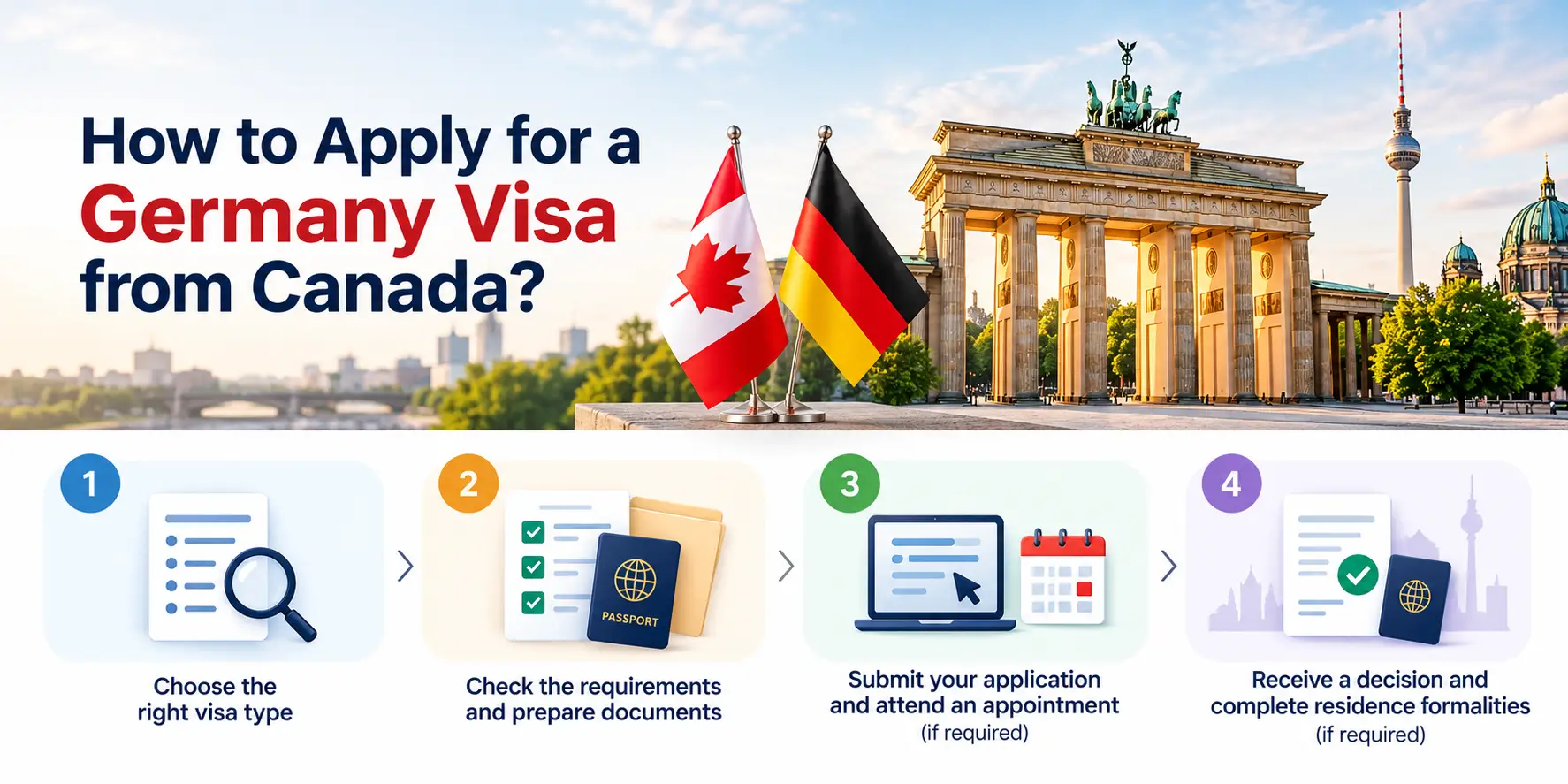
To apply for a Germany visa from Canada, choose your visa category, check the requirements, prepare the documents and submit your application. Canadian citizens can generally enter Germany without a visa and apply for a residence permit after arrival. Other applicants may need a national visa before travelling. Depending on the visa type, they may also need to attend an appointment to submit documents and provide biometrics.
Step 1: Choose the right visa type
Select a visa based on your purpose of moving to Germany, such as work, study, job search, vocational training or family reunification.
Step 2: Check the requirements
Review the eligibility criteria and required documents for your chosen visa category.
Step 3: Prepare your documents
Gather your passport, proof of funds, health insurance and supporting documents, such as a job offer or university admission letter, where required.
Step 4: Submit your application
Apply through the appropriate German mission or the German Consular Services Portal, depending on your visa category and application route.
Step 5: Attend an appointment
If required, submit your documents, provide biometrics and pay the applicable visa fee.
Step 6: Wait for a decision
The German authorities will review your application and inform you of the outcome.
Step 7: Apply for a residence permit
After arriving in Germany, register your address and apply for a residence permit through the local immigration office, if required.
*Want to apply for German Visa? Book a free consultation with Y-Axis today.
Germany Visa Fees and Processing Time
The cost of a Germany national visa (Type D) is generally €75, while processing times range from a few weeks to several months, depending on the visa category. Applying early and submitting all required documents helps you plan your move to Germany.
|
Germany Visa Type |
Estimated Processing Time |
|
Skilled Worker Visa |
4–8 weeks |
|
EU Blue Card |
2–6 weeks |
|
Opportunity Card |
4–8 weeks |
|
Student Visa |
4–12 weeks |
|
Vocational Training Visa |
4–12 weeks |
|
Family Reunification Visa |
8–16 weeks |
|
Research Visa |
3–8 weeks |
|
Self-Employment Visa |
8–16 weeks |
*Planning to migrate to Germany? Get expert guidance from Y-Axis professionals.
FAQs
What are the different types of Germany visas?
Germany offers short-stay Schengen visas for visits of up to 90 days within a 180-day period and national visas for longer stays. Long-term visa options include the Skilled Worker Visa, EU Blue Card, Opportunity Card, Student Visa, Vocational Training Visa, Family Reunification Visa, Research Visa and Self-Employment Visa.
Do Canadian citizens need a visa to move to Germany?
Canadian citizens can generally enter Germany without an entry visa and apply for a residence permit after arrival. However, visa-free entry does not automatically authorise employment or study, so applicants should confirm when they can begin these activities.
Can I move to Germany without a job offer?
Yes. The Opportunity Card (Chancenkarte) allows eligible applicants to search for work in Germany without a job offer. Applicants can qualify through a recognised qualification or, if they meet the relevant requirements, Germany’s points-based system.
What is the difference between the Skilled Worker Visa and the EU Blue Card?
The Skilled Worker Visa is for qualified applicants with recognised academic or vocational qualifications and qualifying employment. The EU Blue Card is for qualified professionals with a qualifying job offer that meets the applicable salary threshold and other requirements.
How long can I stay in Germany with an Opportunity Card?
An Opportunity Card can generally be issued for up to 12 months. During this period, holders can search for jobs and undertake permitted part-time work for up to 20 hours per week.
How much does a Germany visa cost?
The standard fee for a German national visa is generally €75 for adults and €37.50 for minors. A separate fee may apply when applying for a residence permit in Germany.
How long does it take to get a Germany visa?
Processing can take several weeks to a few months, depending on the visa category, application and German mission handling the case. Appointment availability and additional document checks can extend the waiting period.
Where do I apply for a Germany visa from Canada?
Apply through the German mission responsible for your place of residence in Canada. The correct mission and application procedure depend on your location and visa category. Canadian citizens who qualify for visa-free entry can generally apply for a residence permit after arriving in Germany.
Can I bring my family to Germany?
Yes. Eligible spouses and dependent children can apply for a family reunification visa to join qualifying family members in Germany. Requirements depend on the sponsor’s residence status and the family relationship.
How can I get permanent residence in Germany?
You can apply for a settlement permit after meeting the required residence period and other conditions, which may include qualifying employment, sufficient income, pension contributions and German language skills. Some routes, including the EU Blue Card, provide a faster pathway to permanent residence.
Tags:
Germany Visa
Germany Immigration
Germany Work Visa
Germany Study Visa
Germany Settlement Permit
Germany Opportunity Card
Germany EU Blue Card
Germany Working Holiday Visa
Germany Family Reunification Visa
Immigrate to Germany from Canada
Share
Latest Article
Popular Post
Trending Article
Posted On October 22 2026
What Are the Different Types of UK Visas to Immigrate?