

Posted on April 06 2026
Can I Study in Europe for Free as an International Student?

By , Editor & Director
Updated June 23 2026
Yes, you can study in Europe for free as an international student, especially at public universities in countries such as Germany, Norway, and Austria. Countries such as France and Austria offer affordable education with low tuition fees, while Finland and Sweden provide scholarships to help reduce costs. Fully funded scholarships like Erasmus Mundus, DAAD (Germany), and Eiffel Excellence (France) can cover tuition, living expenses, and travel. Universities such as Ludwig Maximilian University of Munich, Technical University of Munich, and Humboldt University of Berlin offer high-quality education with many English-taught programs.
Many European countries also provide post-study work options, allowing international students to stay and find jobs after graduation, along with part-time work opportunities during their studies. Overall, studying in Europe for free depends on choosing the right country, university, and scholarship, along with careful planning.
*Want to study in Europe for free? Let Y-Axis help you through application process.
Key Factors to consider before Studying in Europe for International Students
International students can study in Europe with low or no tuition fees in many countries. To plan effectively, it’s important to understand the key requirements, costs, and opportunities.
- Tuition Fees & Eligibility: Check which countries and universities offer low or no tuition and confirm your eligibility
- Cost of Living: Plan your budget for accommodation, food, transport, and daily expenses
- Admission Requirements: Prepare academic documents, language scores, and required applications
- Student Visa Requirements: Ensure you meet visa rules and have proof of funds
- Scholarships & Financial Support: Explore funding options to reduce your overall costs
- Post-Study Work Options: Look into countries that offer work opportunities after graduation
Top 10 Countries in Europe with Free or Affordable Education for International Students
International students can study in several European countries with low or no tuition fees, especially at public universities. While costs vary by country and program, these destinations offer good-quality education with manageable expenses.
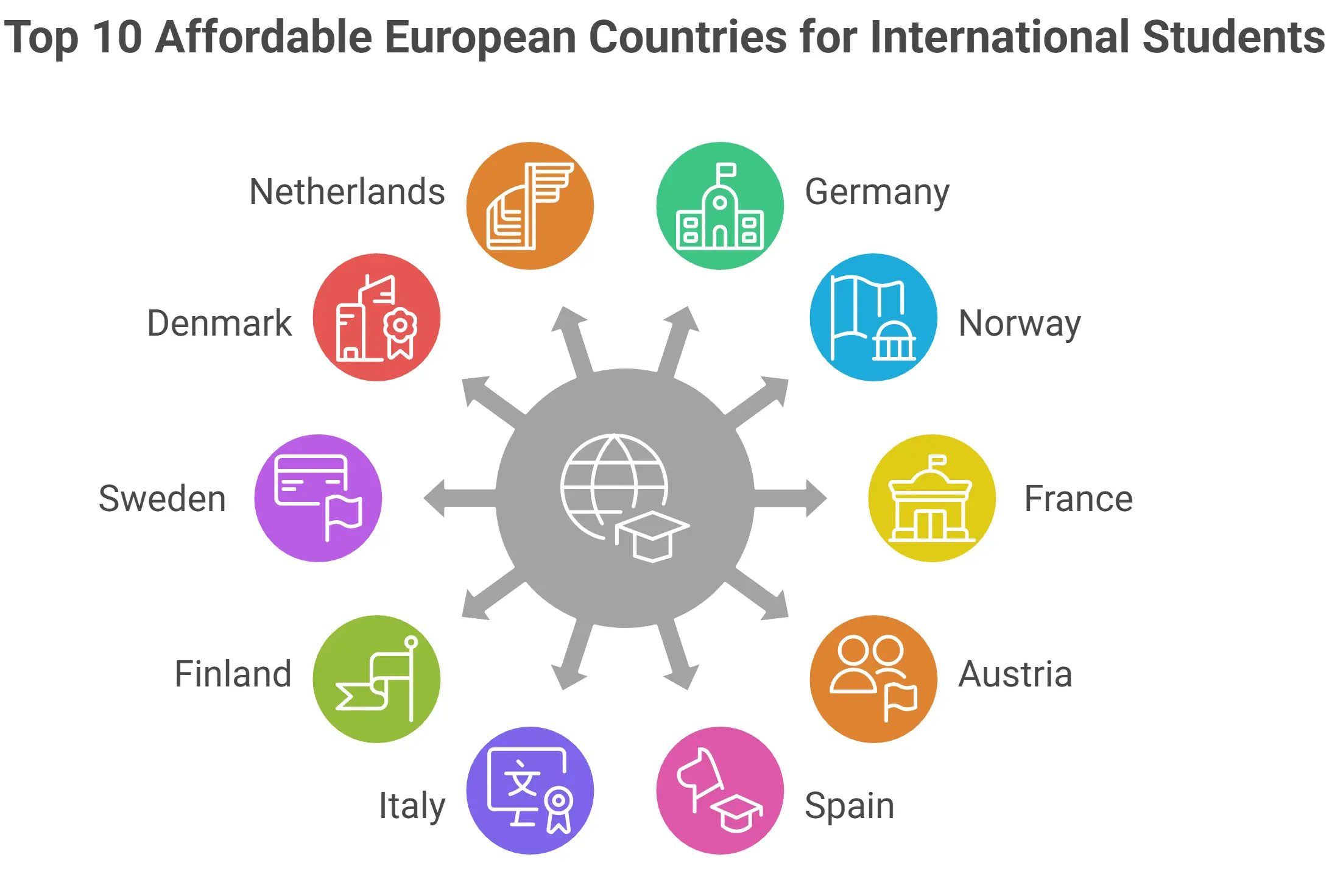
Some of the best countries in Europe offering free education along with scholarships for international students include:
- Germany: Public universities offer no tuition fees for most programs, with many English-taught courses and strong global recognition
- Norway: Tuition-free education at public universities, with a focus on high-quality research and modern learning
- France: Low tuition fees at public universities along with government-supported education and scholarship options
- Austria: Affordable tuition fees and a wide selection of programs across different fields
- Spain: Reasonable tuition costs with a growing number of English-taught courses for international students
- Italy: Low tuition fees combined with scholarships and financial aid based on need and merit
- Finland: Offers scholarships for international students, especially in English-taught degree programs
- Sweden: Known for quality education with scholarships that can reduce tuition fees significantly
- Denmark: High academic standards with scholarship opportunities for international students
- Netherlands: Moderate tuition fees with a wide range of English-taught programs and strong career opportunities
Best Universities in Europe with No Tuition Fees or Affordable cost for International Students
Many public universities in Europe offer high-quality education with low or no tuition fees, especially in countries like Germany, France, and Norway. These universities are globally recognized and provide a wide range of programs for international students.
List of top 10 universities in Europe with affordable costs or no tuition fees for international students:
- Technical University of Munich (Germany): No tuition fees at public level, strong programs in engineering, technology, and science
- Ludwig Maximilian University of Munich (Germany): Tuition-free education with a wide range of courses in arts, science, and business
- Heidelberg University (Germany): One of the oldest universities in Europe offering free education and strong research programs
- University of Oslo (Norway): Public university with no tuition fees and high-quality education
- University of Vienna (Austria): Affordable tuition fees with a wide selection of programs
- Sorbonne University (France): Low tuition fees with strong academic reputation and research opportunities
- University of Bologna (Italy): One of the oldest universities with affordable education and scholarship options
- University of Barcelona (Spain): Low-cost education with diverse programs and international student support
Read more…
Top Universities Offering 100% Scholarships to International Students
Top 10 Fully Funded Scholarships in Europe for International Students
International students can study in Europe for free through fully funded scholarships that cover tuition fees, monthly living expenses, and often travel and insurance. These scholarships are offered by governments and universities and are among the most popular options for studying in Europe.
List of top 10 fully funded scholarships in Europe for international students include:
- Erasmus Mundus Joint Master Degrees (Across Europe): Covers full tuition, travel costs, and a monthly stipend, with the opportunity to study in multiple European universities
- DAAD Scholarships (Germany): Covers tuition fees, monthly stipend, health insurance, and travel allowance for postgraduate students
- Swiss Government Excellence Scholarships (Switzerland): Provides full funding, including a monthly stipend, tuition support, and research grants for master’s and PhD students
- Romania Government Scholarship (Romania): Covers full tuition, accommodation, and a monthly stipend for international students, making it a fully funded option with basic living support
- Stipendium Hungaricum (Hungary): Covers full tuition, free accommodation or allowance, medical insurance, and a monthly stipend
- Swedish Institute Scholarships (Sweden): Covers full tuition, living expenses, insurance, and travel grants for eligible master’s programs
- VLIR-UOS Scholarships (Belgium): Fully funded scholarship covering tuition, travel, accommodation, and a monthly allowance
- Marie Skłodowska-Curie Actions (Across Europe): Offers full funding with a salary, mobility allowance, and research support for PhD and research candidates
- Chevening Scholarships (UK): Fully funded scholarship covering tuition, living expenses, and travel
- European University Institute (EUI) PhD Scholarships (Italy): Fully funded PhD program covering full tuition, a monthly stipend, travel allowance, and research support for international students
Eligibility Criteria to Study in Europe for International Students
To study in Europe for free, international students need to meet a few basic requirements set by universities and scholarship programs. These typically include academic qualifications, language proficiency, and the necessary documents for admission and visa approval.
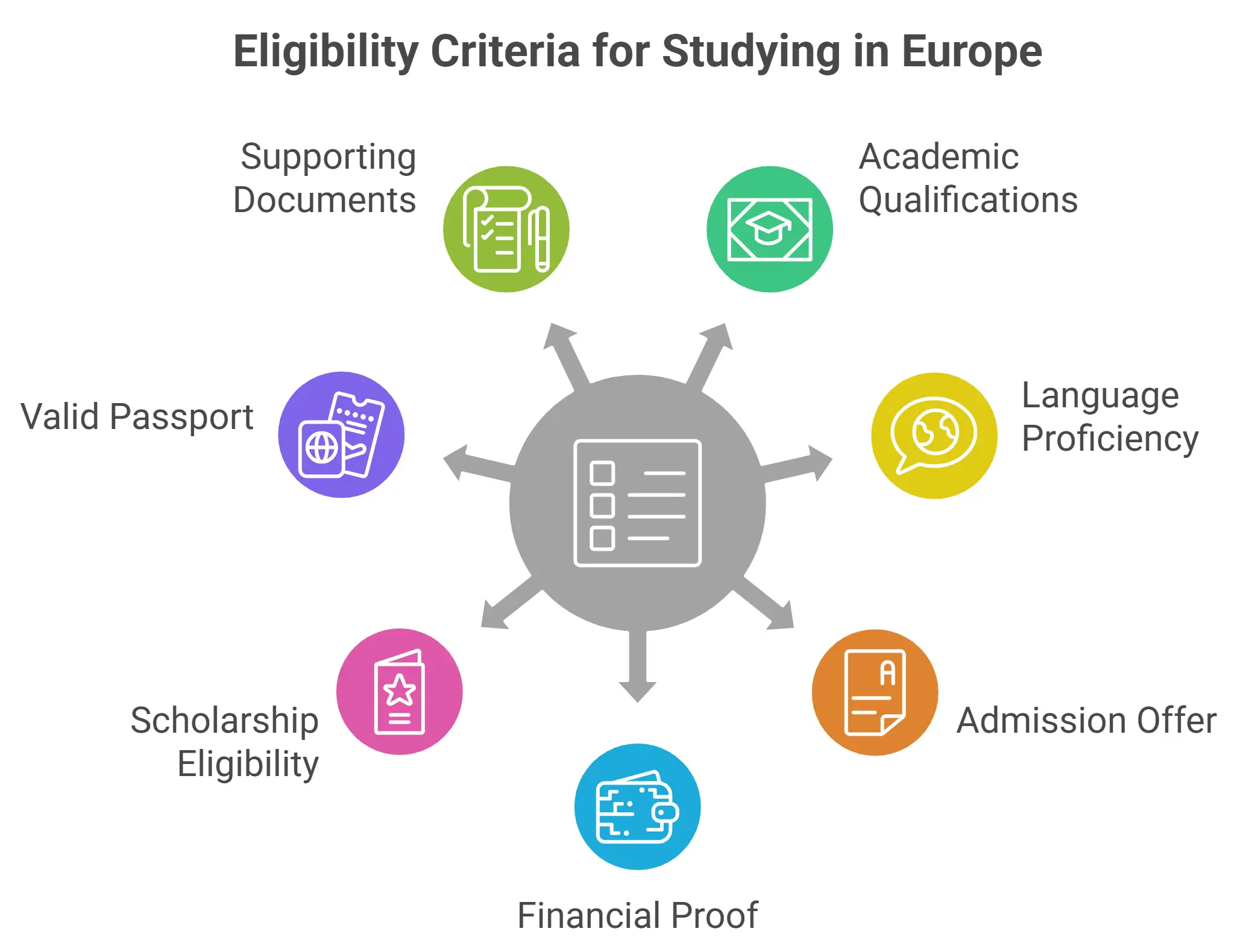
Key eligibility criteria for international students to study in Europe:
- Academic Qualifications: You must have the required previous education (high school for bachelor’s, bachelor’s degree for master’s)
- Language Proficiency: Proof of English (IELTS/TOEFL) or local language proficiency, depending on the program
- Admission Offer: You must secure admission to a recognized university or program
- Financial Proof: Required for visa purposes to show you can cover living expenses
- Scholarship Eligibility: Some scholarships require strong academic scores, leadership skills, or relevant experience
- Valid Passport: A valid passport is required for application and visa processing
- Supporting Documents: Includes SOP, CV, recommendation letters, and other required documents
*Planning to study in Europe? Let Y-Axis help you through application process.
Documents Required to Study in Europe for International Students
International students applying to universities in Europe need to prepare a set of standard documents for admission and visa processing. Having these ready in advance helps ensure a smooth application process.
Key documents required for international students to study in Europe:
- Academic Transcripts: Mark sheets and certificates from previous education
- Valid Passport: Required for application and visa purposes
- Statement of Purpose (SOP): Explains your academic background and study goals
- Curriculum Vitae (CV): Highlights your education, skills, and experience
- Letters of Recommendation: Usually required from teachers or employers
- Language Test Scores: IELTS/TOEFL or other required language certificates
- Admission Letter: Offer letter from the university
- Proof of Funds: Bank statements or financial documents for visa approval
- Health Insurance: Required in most European countries
- Passport-size Photographs: As per visa and university requirements
How to Study in Europe for Free as an International Student?
International students can study in Europe for free by choosing the right countries, applying to public universities, and meeting the required requirements. With proper planning and preparation, the process is simple and clear.
Step 1: Choose the right country and course based on tuition-free or low-cost options
Step 2: Check eligibility requirements, including academic qualifications and language criteria
Step 3: Prepare documents and complete required language tests
Step 4: Apply to universities through official portals before deadlines
Step 5: Apply for scholarships to support living expenses
Step 6: Receive your offer letter and apply for a student visa
Step 7: Plan your accommodation and travel before your course begins
*Want to study in Europe for free? Get expert guidance from Y-Axis.
Cost of Living in Europe for International Students
International students should plan for living expenses even if tuition fees are free. The overall cost depends on the country and lifestyle, but many European countries offer manageable options for students.
Average Monthly Cost by Country for International Students:
|
Country |
Estimated Monthly Cost (€) |
|
Germany |
700–1,100 |
|
France |
900–1,400 |
|
Netherlands |
1,000–1,500 |
|
Italy |
700–1,200 |
|
Spain |
700–1,200 |
|
Austria |
800–1,300 |
|
Finland |
900–1,400 |
|
Sweden |
900–1,400 |
|
Denmark |
1,100–1,600 |
|
Norway |
1,200–1,800 |
Intakes and Application Deadlines in Europe for International Students
International students planning to study in Europe should apply on time, as universities follow specific intake periods and deadlines. Applying early improves your chances of admission and scholarship opportunities.
Main intakes in Europe for international students:
- Fall Intake (September/October): Main intake with the highest number of courses and scholarships available
- Spring Intake (January/February): Limited programs compared to fall but still available in many countries
Application Timelines in Europe for international students:
|
Stage |
Timeline |
|
Research & Shortlist Universities |
September – December |
|
Prepare Documents & Apply |
December – March |
|
Receive Offers & Apply for Scholarships |
March – May |
|
Apply for Student Visa |
May – July |
|
Arrange Accommodation & Travel |
July – September |
Post-Study Work Opportunities in Europe for International Students
International students can stay and work in many European countries after completing their studies. Post-study work options allow graduates to gain experience, find jobs, and build long-term career opportunities.
Main post-study work options in Europe for International Students:
- Germany: Up to 18 months to stay and find a job after graduation
- France: Up to 2 years for master’s graduates to work or look for jobs
- Netherlands: 1-year “orientation year” to search for employment
- Sweden: Up to 12 months to stay and find a job
- Ireland: Up to 2 years stay-back option for eligible graduates
- Denmark: 3-year job search visa after graduation
Also Read…
Most In-demand Jobs in Europe for the next 10 years
Tips to Improve Your Chances of Studying in Europe for Free
- Start Early: Begin research and applications at least 6–9 months in advance
- Choose Public Universities: Focus on countries with low or no tuition fees
- Apply for Multiple Scholarships: Increase your chances of funding
- Prepare Strong Documents: A good SOP and CV can improve acceptance chances
- Check Language Requirements: Apply to programs that match your language skills
- Plan Your Budget: Manage living expenses even if tuition is free
FAQs
Can international students study in Europe for free?
Yes, international students can study in Europe for free, especially at public universities in countries like Germany and Norway. Many institutions offer free education in Europe or charge very low tuition fees for international students. However, while tuition may be free, students still need to cover living expenses such as accommodation, food, and insurance. Scholarships in Europe can help reduce these costs. By choosing the right country and university, international students can make studying in Europe highly affordable and accessible.
Which countries in Europe offer free education for international students?
Countries like Germany and Norway are well known for offering free education in Europe at public universities for international students. In addition, France, Austria, Italy, and Spain provide low-cost education with affordable tuition fees. Finland and Sweden also offer scholarships in Europe to reduce costs. The availability of free or low-cost education depends on the course and university. Overall, international students have several options to study in Europe for free or at a very low cost.
Is education completely free in Europe for international students?
Education in Europe is not completely free in every country or program. While many public universities offer free education in Europe, international students are still responsible for living expenses such as rent, food, and transport. Some English-taught programs may also charge tuition fees. However, scholarships in Europe can cover both tuition and living costs, making it possible to study in Europe for free with proper planning and financial support.
Do I need IELTS to study in Europe for free?
Many universities require IELTS or TOEFL as proof of English proficiency for international students. However, some universities accept alternative proof, such as a Medium of Instruction (MOI) certificate. Requirements vary depending on the country and program. If you plan to study in Europe for free, it is important to check the specific language requirements of your chosen university. Some programs taught in local languages may require additional language tests.
What are the cheapest countries in Europe for international students?
Germany, Italy, Spain, and Austria are among the cheapest countries in Europe for international students. Germany is especially popular because it offers free education in Europe at public universities. Italy and Spain provide low tuition fees and scholarships, while Austria offers affordable study options. Living costs vary by location, but these countries are considered budget-friendly. Choosing these destinations can help international students study in Europe for free or at a lower overall cost.
Can I work while studying in Europe as an international student?
Yes, international students can work part-time while studying in Europe. Most countries allow students to work up to 20 hours per week during the academic term. This helps cover living expenses such as rent and food. However, part-time income may not be enough to fully support your studies, so financial planning is important. Studying in Europe for free combined with part-time work can make education more affordable for international students.
Are scholarships available to study in Europe for free?
Yes, there are many scholarships in Europe available for international students. Programs like Erasmus Mundus, DAAD, and Swedish Institute Scholarships offer funding that can cover tuition fees, living expenses, and travel costs. These scholarships make it possible to study in Europe for free or at a significantly reduced cost. Applying early and meeting eligibility criteria improves your chances of receiving financial support.
How can I study in Europe for free as an international student?
To study in Europe for free, international students should choose countries with no or low tuition fees and apply to public universities. The process includes checking eligibility, preparing documents, and applying before deadlines. Scholarships in Europe can further reduce costs. Planning ahead and researching the right options are key steps to successfully studying in Europe for free.
What is the cost of living in Europe for students?
The cost of living in Europe for international students typically ranges from €700 to €1,500 per month depending on the country. Germany, Italy, and Spain are more affordable, while countries like the Netherlands and Norway are more expensive. Costs include accommodation, food, transport, and insurance. Even if you study in Europe for free, managing living expenses is essential.
Which universities in Europe offer free education?
Many public universities in Europe offer free or low-cost education for international students. Examples include Ludwig Maximilian University of Munich, Technical University of Munich, and Heidelberg University in Germany. These universities provide high-quality education with no tuition fees for most programs. Choosing the right university is key to successfully studying in Europe for free.
What are the eligibility criteria to study in Europe for free?
To study in Europe for free, international students must meet basic eligibility criteria set by universities and scholarship programs. These include having the required academic qualifications, such as a high school diploma for bachelor's or a degree for master's programs. Most universities also require proof of language proficiency like IELTS or TOEFL. Some scholarships in Europe may require strong academic performance and additional achievements. Meeting these criteria increases your chances of admission and financial support.
What documents are required to study in Europe?
International students need several documents to study in Europe for free. These include academic transcripts, a valid passport, a statement of purpose (SOP), a CV, and letters of recommendation. Language test scores such as IELTS or TOEFL are often required. For visa applications, proof of funds, health insurance, and an admission letter are necessary. Preparing these documents early helps ensure a smooth application process and improves your chances of studying in Europe.
When should I apply to study in Europe?
International students should apply at least 6–9 months before their intended intake. The main intake in Europe is the Fall intake (September/October), which offers the most courses and scholarships. Some universities also have a Spring intake (January/February). Applying early increases your chances of admission and receiving scholarships in Europe. Proper planning is important if you want to study in Europe for free.
Can I stay in Europe after graduation?
Yes, many European countries offer post-study work opportunities for international students. Countries like Germany, France, Ireland, and the Netherlands allow graduates to stay and look for jobs after completing their studies. The duration varies by country, usually between 1 to 2 years. This allows students to gain work experience and build their careers. Studying in Europe for free can lead to long-term career opportunities.
Is studying in Europe worth it for international students?
Yes, studying in Europe is worth it for international students due to its high-quality education, global recognition, and affordable costs. Many countries offer free education in Europe, making it accessible to students from different backgrounds. In addition, students benefit from cultural exposure, international experience, and career opportunities. With scholarships and work options, studying in Europe for free becomes a valuable investment for the future.
Are English-taught programs available in Europe?
Yes, many universities offer English-taught programs for international students. Countries like Germany, the Netherlands, Sweden, and Finland have a wide range of courses in English. This allows students to study in Europe for free without needing to learn a new language. However, some programs in local languages may require additional language proficiency. Choosing an English-taught program makes studying in Europe easier for international students.
Can I study in Europe without a scholarship?
Yes, international students can study in Europe without a scholarship, especially in countries where public universities offer free or low-cost education. Germany and Norway are popular options where tuition fees are minimal or free. However, students still need to cover living expenses. Scholarships in Europe can help reduce these costs, but they are not always mandatory. With proper planning, studying in Europe for free or at a low cost is possible even without scholarships.
Which courses are best to study in Europe?
Popular courses in Europe include engineering, business, information technology, healthcare, and data science. These programs are widely offered by top universities and often have strong career opportunities. Many of these courses are available at low or no tuition fees, especially in countries like Germany. Choosing in-demand courses can improve your chances of employment after graduation and make studying in Europe for free more beneficial.
Is it easy to get admission in European universities?
Getting admission in European universities is generally straightforward if you meet the eligibility criteria. Requirements include academic qualifications, language proficiency, and required documents. Some competitive programs may have additional requirements. Planning early and submitting a strong application improves your chances. Many universities also offer clear application processes, making it easier for international students to study in Europe for free.
What are the benefits of studying in Europe for free?
Studying in Europe for free offers several benefits, including access to high-quality education, globally recognized degrees, and affordable costs. International students can gain valuable skills, experience different cultures, and build global networks. Many countries also offer part-time work and post-study work opportunities. With scholarships and low tuition fees, studying in Europe for free is one of the best options for international students seeking quality education.
Tags:
Study in Europe
Free Education Europe
International Students
Tuition Free Universities
Study Abroad Europe
Scholarships Europe
Affordable Education
Universities in Europe
Share
Latest Article
Popular Post
Trending Article

Posted On October 22 2026
What Are the Different Types of UK Visas to Immigrate?